
No products in the cart.
How to Protect Home Gym Equipment from Winter Moisture in a Garage
Short answer: Before winter, look for the water source and monitor the garage rather than covering equipment and hoping for the best. Wipe visible moisture from the frame and attachments, keep the machine away from leaks and wet storage, and follow the exact manufacturer instructions for cleaning and lubrication. If you see recurring condensation, address the room’s moisture and temperature conditions; do not apply oil, solvents, or coatings to cables, pulleys, or painted surfaces unless the manual permits it.
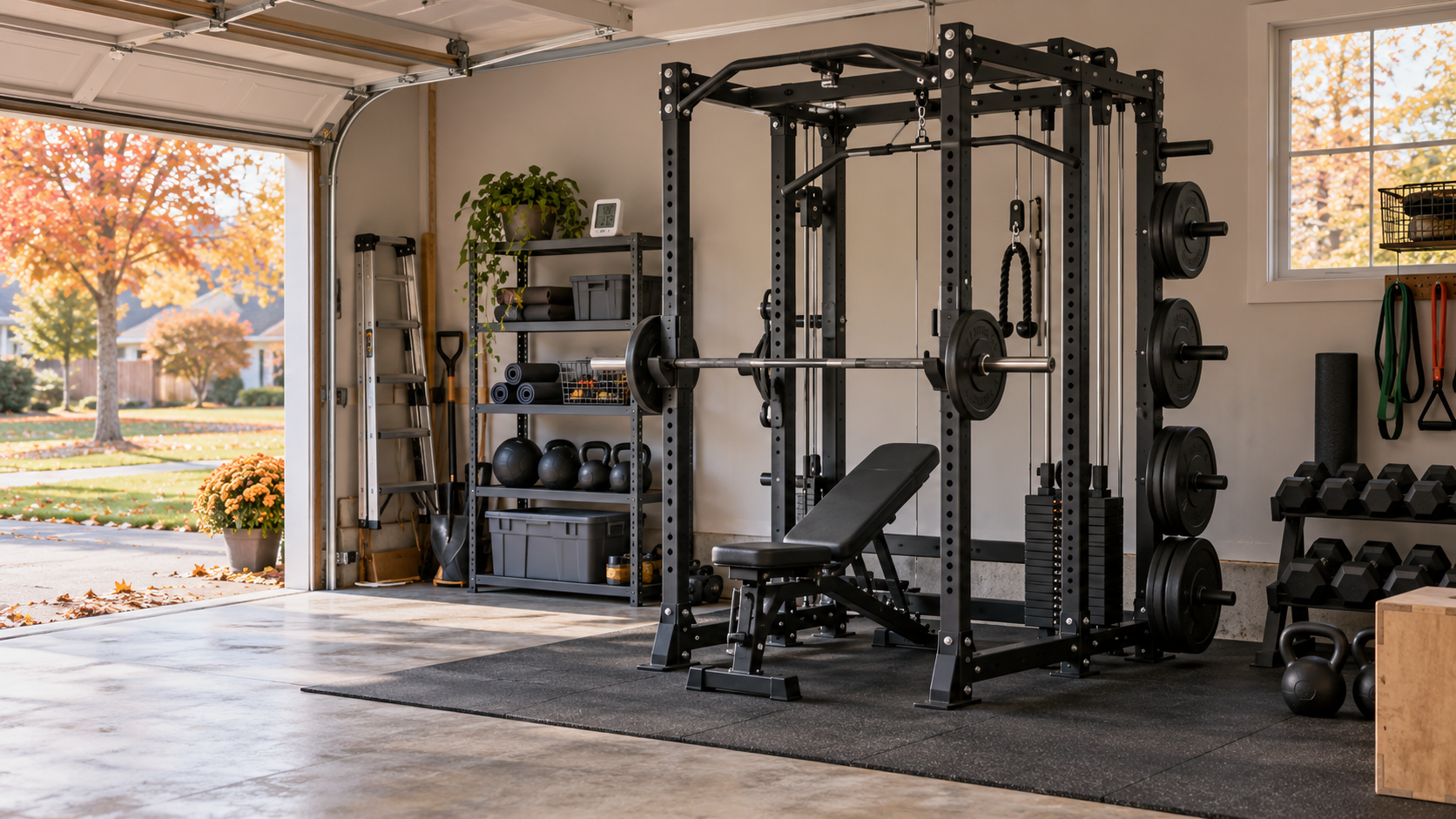
Illustration note: This AI-generated image is an illustrative garage-gym scene, not a product photograph, installation, or test.
Why a garage gym can get damp in cold weather
Cold weather alone does not tell you whether a garage is too damp. Moist air can leave water on a surface when that surface is colder than the air’s dew point. The U.S. Department of Energy describes this process for cold building surfaces in winter. In a garage, inspect the equipment and nearby walls after temperature swings, rain or snow storage, and workouts that add moisture. A single dry check on a mild afternoon may miss a recurring pattern.
Start by separating possible sources: roof or door leaks, meltwater brought in by shoes or tires, damp items stored beside the machine, and condensation on cold metal. This is a practical observation checklist, not a diagnosis of the building. If water is entering through the structure or the area stays persistently damp, resolve the building moisture problem before relying on equipment maintenance alone.
Make a simple inspection routine
- Check the room first. Look at the floor, lower wall edges, ceiling, door seals, and the area behind storage. Note water marks, puddles, or repeated dampness and when they appear.
- Inspect exposed equipment surfaces. Look over the frame, fasteners, weight-storage points, and accessories for droplets, residue, or new corrosion. Dry visible moisture with a clean cloth.
- Check moving parts without disassembly. Look for fraying, kinks, unusual slack, or damaged coating on accessible cable sections. Do not put fingers near a moving pulley or attempt repairs beyond the manual.
- Keep a short log. Record the date, room conditions if you have a hygrometer, visible moisture, and what changed outdoors or in the garage. A basic logger can help reveal a pattern, but it does not identify a leak or establish a safe humidity threshold for every building.
Reduce avoidable moisture around the machine
Keep the equipment clear of known drips and avoid placing wet coats, snow-covered gear, or damp mats against the frame. Dry the floor and accessories after use. Leave space to inspect behind the unit and keep stored items from blocking vents or hiding water marks. If you use a dehumidifier or heater, follow that device’s safety instructions and the building’s electrical requirements; do not aim a heat source at the machine or use equipment in a wet area.
Do not seal a garage or change its ventilation based only on a general article. Ventilation and moisture control depend on climate, building design, and the source of the water. If condensation persists, consult a qualified building professional about the garage itself. Never treat a damp wall, electrical outlet, or structural leak as a gym-equipment maintenance issue.
Clean and maintain only as the manual allows
Use the owner’s manual for the exact model to identify approved cleaning materials, inspection intervals, and lubrication points. A general-purpose spray can damage a finish or contaminate a grip surface, and lubricant on a cable or pulley can change how it operates. Do not repaint, sand corrosion, or adjust cable tension without model-specific directions. If rust is spreading, a cable is damaged, or a moving component binds, stop using the affected station and contact the manufacturer or a qualified service provider.
Before each session, check that the area is dry enough to stand securely, the machine is stable, and the parts you plan to use look intact. If moisture has reached electrical equipment, keep it disconnected and follow its manufacturer’s instructions. This checklist is preventive care; it does not certify a machine or replace inspection by a technician.
Is a multi-station rack a fit for your garage?
A large station gives you several exercise positions in one frame, but it also creates more surfaces and moving parts to inspect. The Waxman Smith Machine listing identifies model WAX-SM-S02 and describes a power cage, Smith machine, cable crossover, and pull-up station. The listing’s assembled dimensions and separate item-dimension fields conflict, so confirm the exact dimensions and service guidance with the seller before a close-fit purchase. A product listing does not establish that a damp or unheated garage is suitable for installation.

Waxman Smith Machine, model WAX-SM-S02
Listing describes a multi-station rack with cable crossover and pull-up station; check the current listing and manual for care and installation requirements. Price shown on October 7, 2026: $1,999.90 USD. Price and availability may change; see product page.
When to pause use
Stop using the affected station if a cable is visibly damaged, a fastener or frame component appears loose, corrosion compromises a moving part, or water has reached an electrical component. Keep people away from the equipment until the cause is addressed. Use the model’s instructions and contact Waxman for product-specific guidance; do not infer a repair method from another machine’s maintenance advice.
Sources: U.S. Department of Energy, Building America Best Practices Series, moisture and condensation explanation; Waxman WAX-SM-S02 product listing. The condensation source explains building-surface physics; it is not a gym-equipment specification.
Leave a Reply