
No products in the cart.
Do You Need to Train to Failure on a Leg Press?
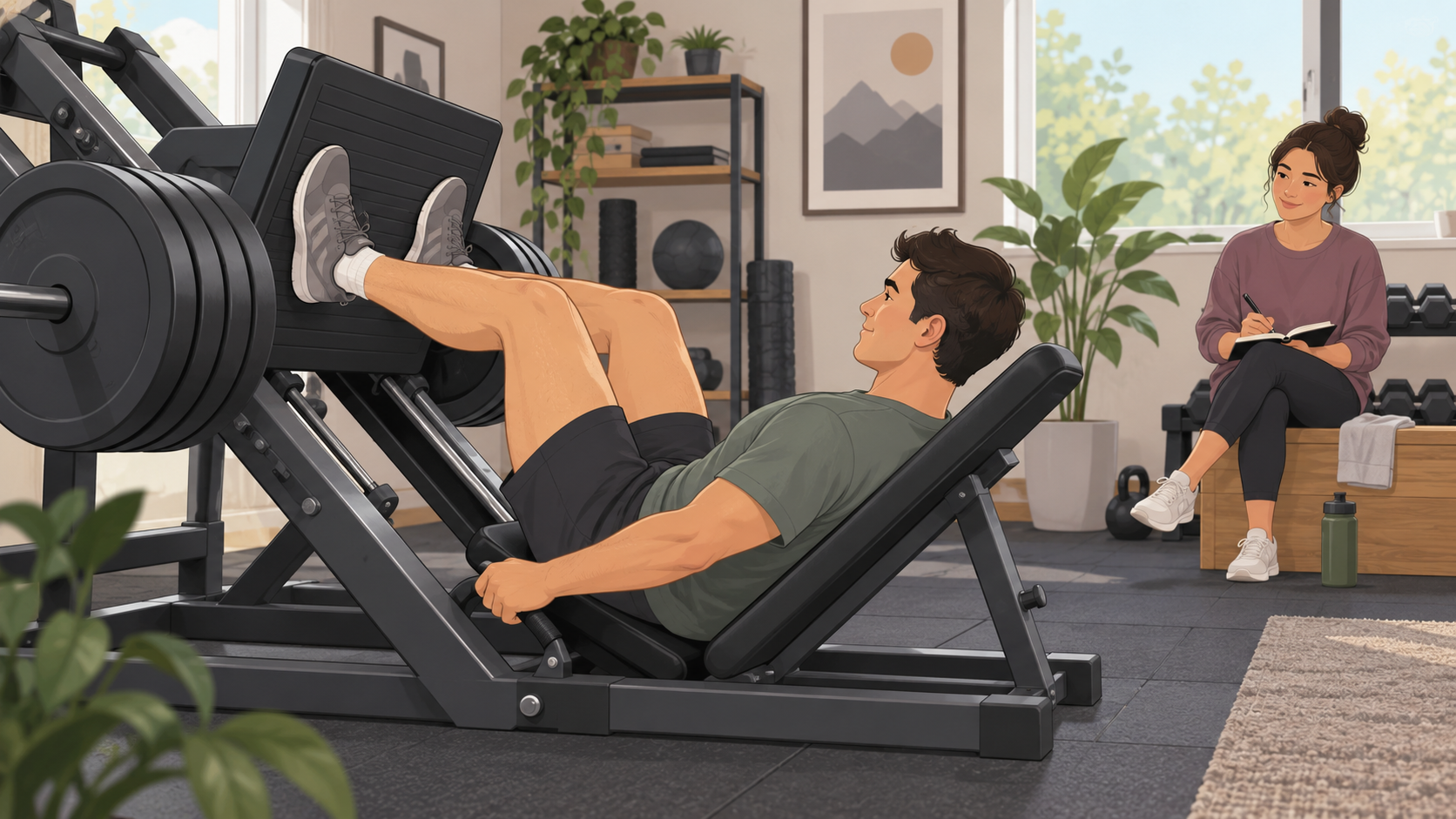
Cover image: AI-generated illustration for context. It is not a product photograph, workout demonstration, or tested result.
No: most people do not need to take every leg-press set to the point where another repetition is impossible. The American College of Sports Medicine’s 2026 resistance-training guidance says training to fatigue or momentary muscle failure did not consistently change outcomes for the average healthy adult. A set can still be challenging and useful when you stop while you can maintain controlled movement. This is general information for healthy adults, not an individual training prescription.
What “failure” means—and what it does not
In strength training, momentary muscular failure usually means you cannot complete another repetition through the intended range with the required technique. That is different from choosing to stop because you have reached your planned number of repetitions, feel the movement getting slower, or notice your setup changing. It is also different from pain, dizziness, or another warning sign; those are reasons to stop, not goals to train through.
People often treat the last possible repetition as proof a set worked. But ACSM’s 2026 evidence summary says failure training is not consistently necessary for the average healthy adult. That finding does not mean effort is irrelevant, nor does it prove every program produces the same result. Training response depends on the person, program, experience, and goal. The useful takeaway is simpler: failure is an optional technique, not a requirement you must satisfy on every set.
Why stopping short can be practical at home
A home session may happen when you are training alone, working around a busy schedule, or using a machine whose exact setup you are still learning. Repeatedly pushing to failure can make it harder to keep every repetition controlled, especially late in a set. On a loaded carriage, losing control of the movement or rushing an adjustment is a reason to stop. Use the manufacturer’s directions for the specific exercise mode, lockout procedure, safety limiters, and getting on or off; a general article cannot replace that manual.
Stopping short also makes it easier to repeat your setup from session to session. Record the machine mode, adjustment points, plates, completed repetitions, and why you stopped. If the last repetitions were smooth and you could clearly have continued, consider a small change to the planned load or repetition target next time. If your movement became inconsistent, keep the setup and choose a more manageable effort. This is a tracking method, not a promise that a particular number of repetitions or plates is right for everyone.
A simple way to judge the end of a set
- Choose a repeatable setup. Follow the exact machine instructions and set the safety controls before loading. Do not copy another user’s seat, foot, or depth position without checking whether it fits you and the equipment.
- Use controlled repetitions. Keep the movement within the range you can control. Do not bounce the carriage, force a lockout, or let a spotter substitute for the machine’s intended safety procedure.
- Stop when quality changes. End the set if you cannot maintain the planned movement, alignment, or a controlled return. You do not need to prove that no further repetition is possible.
- Log what happened. Note the mode, load, adjustments, repetitions, and how the final repetitions looked or felt. Compare only sessions with reasonably similar setups.
- Change one thing gradually. If the work feels consistently manageable and recovery is adequate, adjust the load or repetitions cautiously in a later session. Avoid changing several variables at once.
When a harder effort may not be appropriate
If you are new to resistance training, returning after a break, managing an injury or health condition, or uncertain about a machine’s controls, get individualized guidance from an appropriately qualified professional. Do not use a one-repetition maximum test or forced repetitions as a shortcut to choosing a starting load. Stop for sharp pain, dizziness, chest discomfort, unusual shortness of breath, or any symptom that concerns you; seek appropriate clinical advice.
Training to failure is a poor fit when it leads you to lose control, disregard a safety limiter, or continue through symptoms. More effort is not automatically better if it makes the session less safe or harder to repeat. If your goal is sport performance or a specialized program, the ACSM summary notes that more specific planning may be appropriate; ask a qualified coach rather than treating general healthy-adult guidance as a complete program.
How the 2026 guidance fits a home leg press
ACSM’s 2026 position stand summarizes evidence across resistance-training outcomes and emphasizes a plan that fits the person and can be followed consistently. It does not set a special machine-based failure rule or establish how much weight a particular leg press feels like. The number of plates is not directly comparable across machines because equipment design and setup differ. For a two-mode machine, choose either leg press or hack squat, follow its own instructions, and track that mode separately.
The WAXMAN Leg Press Hack Squat Machine listing describes a plate-loaded two-in-one unit with three-level adjustable safety limiters and bars for 2-inch Olympic-sized plates. Those listing details identify the product but do not prescribe a training load, prove that failure is safe, or replace the machine manual.
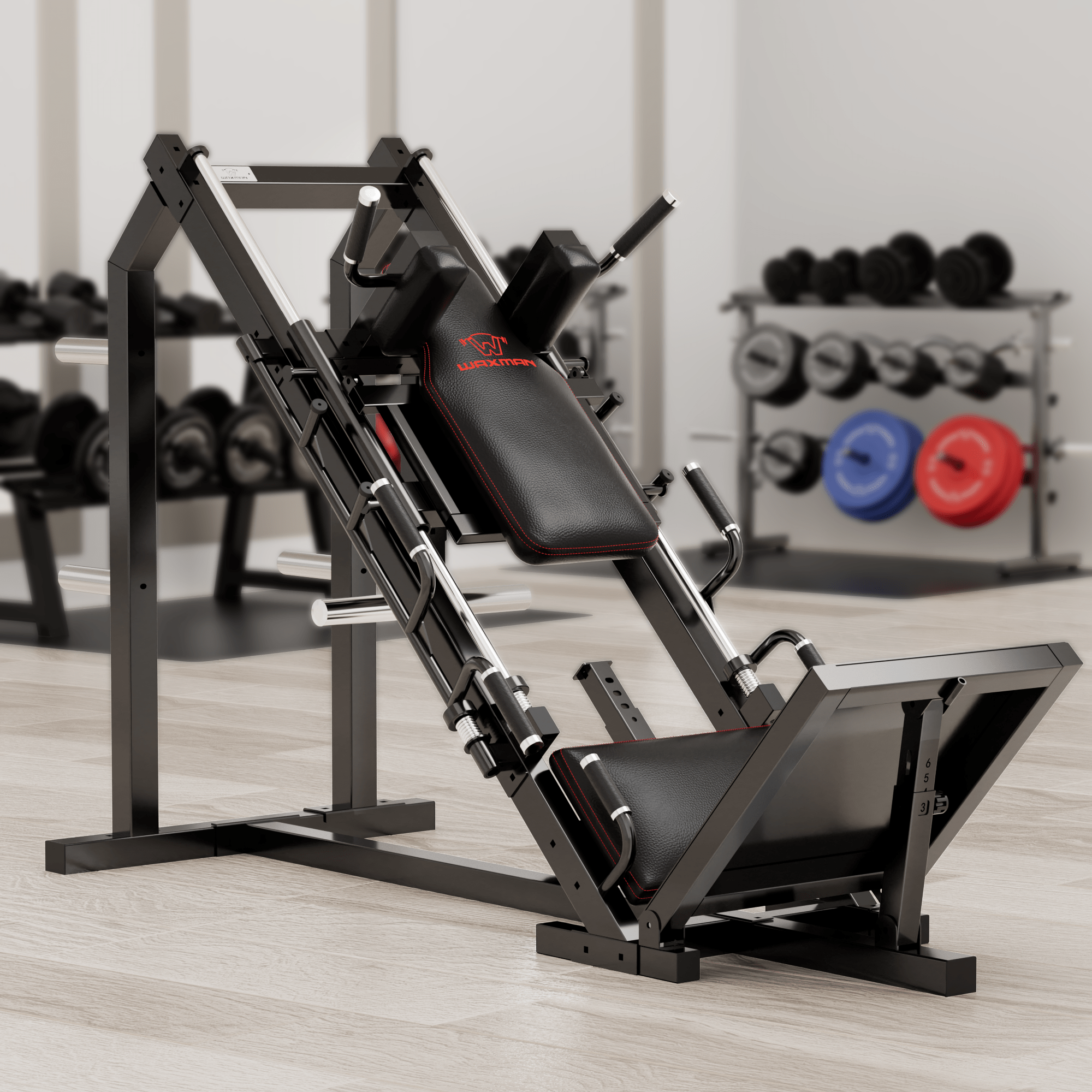
WAXMAN Leg Press Hack Squat Machine
Two exercise modes; three-level adjustable safety limiters; plate bars listed for 2-inch Olympic-sized plates.
$799.00 USD $1,499.00 USD
Price checked October 7, 2026. Price and availability may change; see product page.
Sources: American College of Sports Medicine, 2026 resistance-training guideline summary; Waxman product listing, checked October 7, 2026.
Written with Codex assistance; no coach review, workout test, or product test is claimed.
Leave a Reply