
No products in the cart.
Is Your Garage Gym Safe to Use in Winter? CO and Heater Checks
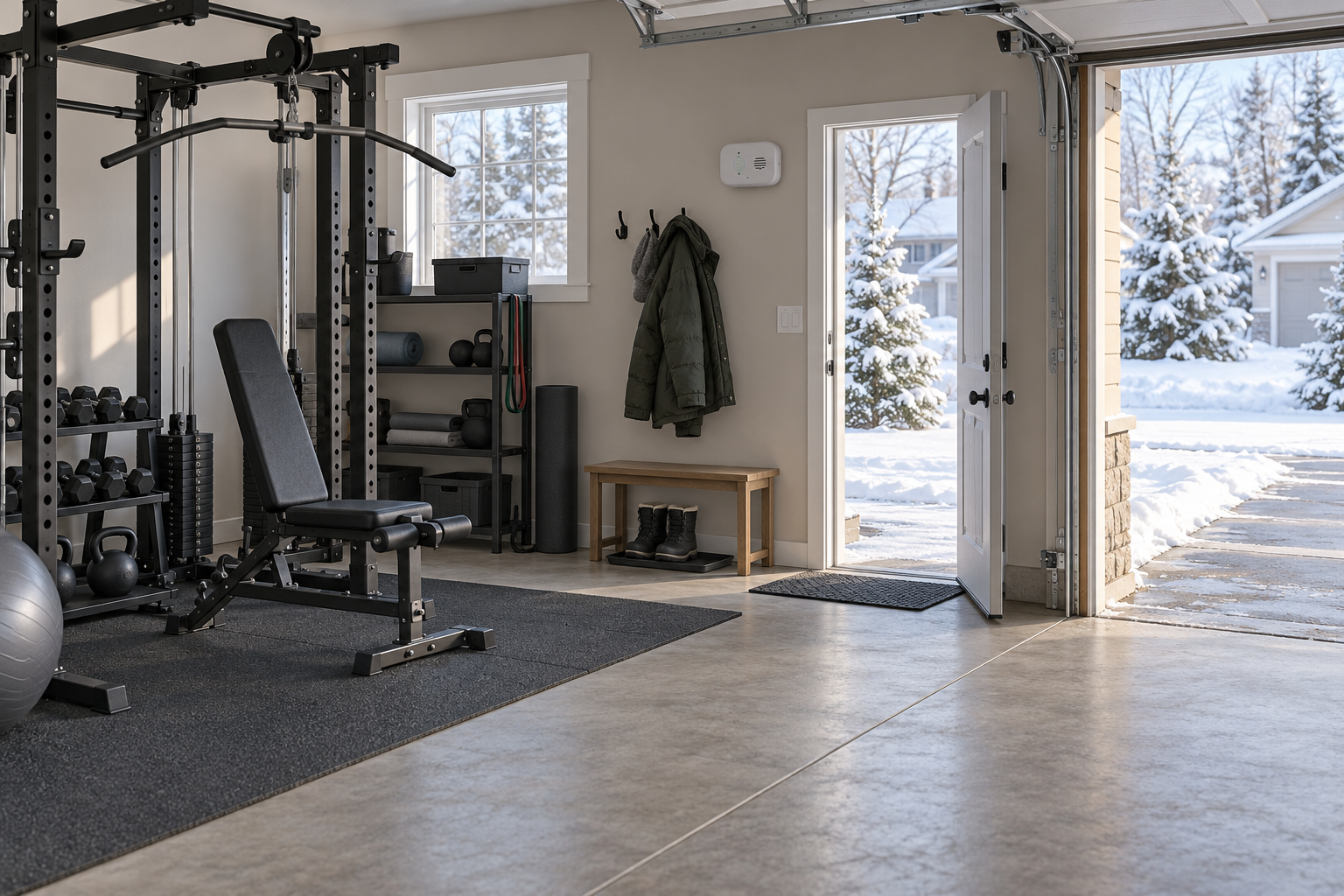
AI-generated illustration for this article; it is not a product photograph or a tested workout setup.
Quick answer: Before exercising in a cold garage, make sure the room is safe to occupy and the equipment and floor are usable. Never run a portable generator in a garage, even with the door open. Do not use outdoor heaters or grills indoors, and do not assume that an open garage door makes fuel-burning equipment safe. If a carbon monoxide (CO) alarm sounds, anyone feels suddenly ill, or the source of fumes is uncertain, leave immediately and call emergency services from outside. Skip the workout until the hazard is resolved.
Separate cold discomfort from a CO hazard
Cold air can make a garage gym uncomfortable, but carbon monoxide is a different and potentially life-threatening problem. CO is produced by fuel-burning equipment and engines. You cannot reliably detect it by sight or smell, so the absence of exhaust odor does not establish that the room is safe. The U.S. Consumer Product Safety Commission (CPSC) says portable generators must be operated outdoors, never inside a garage, home, basement, crawlspace, or shed. Opening a garage door or window does not make indoor generator use safe.
Likewise, do not bring a patio heater, grill, camp stove, or other outdoor combustion appliance into the garage to make a workout more comfortable. Follow the heater maker’s instructions and use only equipment approved for the specific indoor or outdoor setting. This article does not assess a particular heater installation, ventilation design, or local building code. If you are unsure whether a fixed fuel-burning appliance is properly installed or vented, stop using the room and ask a qualified professional.
Use a simple go-or-no-go check
Before each winter session, look for conditions that mean the garage is not ready:
- A generator, vehicle, grill, or outdoor heater has been operating in or near an attached garage or an opening into the home.
- A CO alarm is sounding, missing, unpowered, or showing a fault that you do not understand.
- Anyone has headache, dizziness, weakness, nausea, chest discomfort, confusion, or unusual shortness of breath while in the space.
- There is an unexplained combustion smell, smoke, a blocked appliance vent, or a suspected fuel-burning appliance problem.
- The floor is icy, wet, cluttered, or too dark to move safely around the machine.
For possible CO exposure, do not stay inside to troubleshoot or finish a set. Get everyone and pets outside to fresh air, call emergency services, and follow their instructions. Do not re-enter until responders or a qualified professional say it is safe. CO symptoms can resemble other illnesses, so this checklist is not a diagnostic tool.
Make the room safer before the next workout
Place and maintain CO alarms according to the alarm manufacturer’s instructions and applicable local requirements. CPSC advises having a working CO alarm in the home. An alarm is an important warning layer, not permission to operate a generator or unapproved heater in an enclosed space. Test alarms as directed, replace batteries or the unit when required, and do not cover or disable them.
If a storm causes a power outage, do not move a generator into the garage or onto an attached porch. CPSC says to operate portable generators outside and at least 20 feet from the home, with exhaust directed away from the home and openings. Follow the generator manual and safety alerts, especially in wet weather. If you cannot place or operate it as directed, choose another power plan and leave the garage gym closed.
For ordinary cold discomfort, use only a heater whose instructions expressly allow the intended location and operation. Keep required clearances around the heater, cords, and equipment; do not use a power strip with a portable electric heater if the manufacturer or safety guidance forbids it. Never drape clothing or towels over a heater. A space heater should not obstruct the exit path or sit where a bar, cable, or moving machine part could contact it. If those conditions cannot be maintained, train elsewhere.
Warm up only after the space passes the safety check
Once the room is safe, dry, and clear, dress in layers that keep you warm without catching on moving parts. Start with comfortable, easy movement, then rehearse the planned exercise with no load or a very light load. Increase effort gradually only if you feel well and the equipment works normally. This gradual warm-up is ordinary exercise preparation; it does not prevent CO poisoning and cannot compensate for an unsafe room.
For any machine, follow the instructions for its exact model and configuration. The Waxman Leg Press Hack Squat Machine listing describes a leg press and hack squat product; confirm the delivered unit’s manual, setup, and clearances before use. Its listing is not a substitute for the garage’s heater instructions or CO precautions.
When to cancel the session
Cancel or move the workout indoors if the room cannot be kept free of combustion hazards, an alarm is not functioning, an appliance or vent needs inspection, the floor is slippery, or the temperature makes you uncomfortable or unwell. People with health conditions that affect breathing, circulation, sensation, or temperature regulation should seek individualized clinical guidance about cold exercise. Safety takes priority over preserving a training schedule.
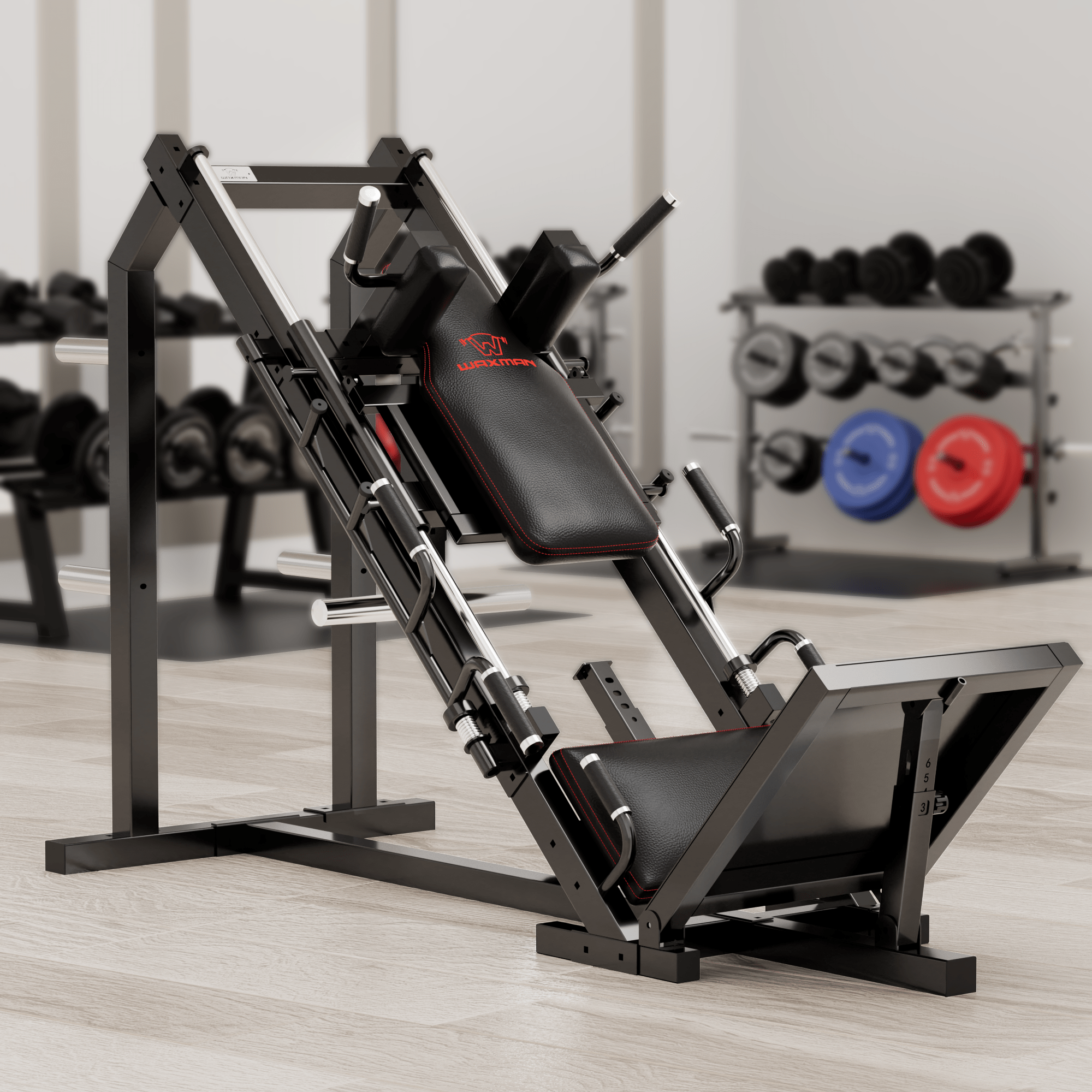
Waxman Leg Press Hack Squat Machine
Listing describes a two-in-one leg press and hack squat; verify the exact model instructions and installation requirements before use.
Current price: $799.00 USD (checked October 7, 2026). Price and availability may change; see product page.
Sources
- CPSC: Generators and Engine-Driven Tools
- CPSC: Winter storm carbon monoxide and fire safety tips
- CPSC: Indoor heating safety
Prepared with Codex assistance; no personal workout test or professional safety inspection is claimed. This general information does not replace emergency services, appliance instructions, or qualified inspection.
Leave a Reply