
No products in the cart.
Resistance Machines vs. Free Weights: How to Choose for a Home Gym
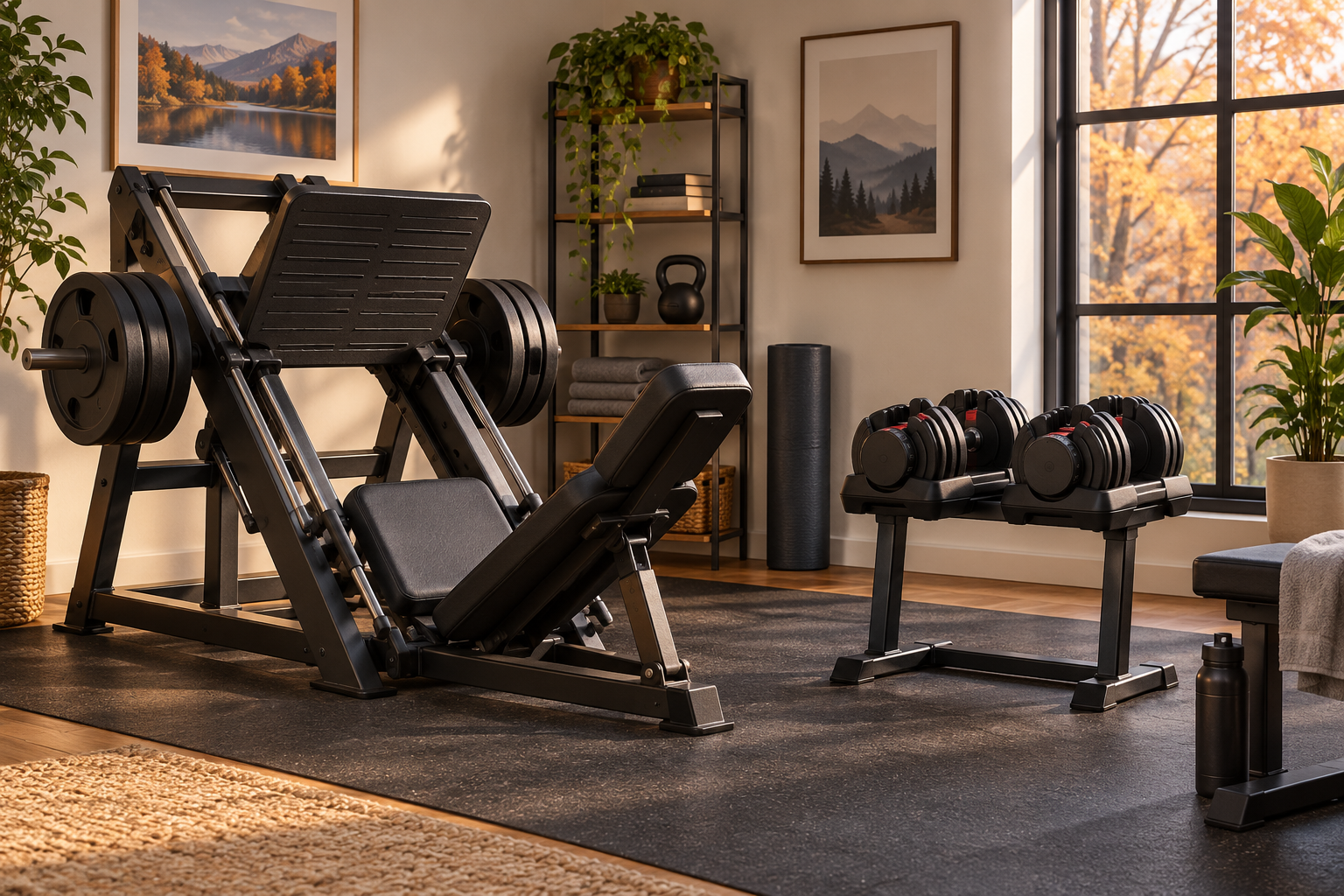
Cover illustration: AI-generated home gym scene; not an official product photo or the result of a comparative test.
Quick answer: Resistance machines and free weights can both be useful. A machine may make one movement easier to set up and repeat, while dumbbells or barbells allow a wider choice of movements and often ask you to control the implement through space. There is no single best tool for everyone. Choose based on the movements you need, your experience, available room, and whether you can use the equipment safely and consistently.
What the evidence says about choosing equipment
The American College of Sports Medicine’s 2026 resistance-training update reports that, for the average healthy adult, the type of equipment—machines versus free weights—did not consistently change outcomes in the reviewed evidence. That is not a promise that every machine and free-weight exercise produce identical results for every person. It means equipment choice alone does not determine whether a resistance program is worthwhile.
The practical priority is a routine that covers the major muscle groups and matches your goals. A plate-loaded leg press is primarily a lower-body movement; it does not replace pulling, pushing, and trunk exercises for the rest of the body. Conversely, a pair of dumbbells cannot automatically cover every exercise safely or conveniently. Think in terms of the movements your program needs rather than buying a tool because it is labeled “better.”
Compare the setup, not just the label
| Question | Machine | Free weights |
|---|---|---|
| What does setup involve? | Often requires positioning the seat, back support, safeties, and load for that machine. | Requires choosing and handling weights, plus a clear space and a stable movement setup. |
| What can it train? | Depends on the machine; one unit may support only a limited set of movements. | Many movement options are possible, but the user must select and learn them. |
| How much room? | Check the assembled footprint, delivery route, working clearance, and plate storage. | Check storage space and the clear area needed to lift, set down, and move safely. |
| What skill is needed? | Learn the exact adjustment, start position, range, and safety stops for that model. | Learn the technique and safe handling for each chosen exercise and load. |
These are practical differences, not universal claims that one option is safer or easier for every person. A machine can still be used with poor setup; free weights can be appropriate when the lifter has learned the movement and has enough space. If you are new to resistance exercise, Mayo Clinic recommends learning proper technique with a qualified fitness or health professional.
Check a home machine before committing
For a large plate-loaded machine, compare the stated assembled dimensions with the room and route to the final position. Leave the clearance required for the moving parts and for getting on and off. Confirm that your plates fit the bars: the Waxman listing describes 2-inch Olympic-size plate bars, which does not establish fit for every plate without checking its bore and the exact model. Read the manual for assembly, adjustment, load limits, and safety-stop use.
Do not infer the machine’s starting resistance from the amount of weight plates it can hold. Do not improvise missing setup instructions or assume that the same adjustment works across machines. If the manual or delivery information does not answer a decision-critical question, ask the seller or manufacturer before purchase or use.
Choose a simple mix that you will use
List the muscle groups and movements you want to train, then mark which equipment you can use with sound technique. If a machine covers a movement you prefer and fits your space, it can be one part of the plan. Add other movements—using free weights, bands, body weight, or other suitable equipment—to cover the remaining needs. The 2026 ACSM update emphasizes regular participation and individualizing training to goals, preferences, and safety rather than chasing a complicated or rigid plan.
- Write down your goal and the movements needed to support it.
- Check each tool’s actual exercises, fit, instructions, and storage needs.
- Choose loads and movements that let you keep control and good form.
- Start with a manageable routine and adjust gradually as your skill develops.
- Ask a qualified professional for guidance if pain, a health condition, or unfamiliar technique changes what is appropriate.
This article is general information for healthy adults, not an individualized exercise prescription. Stop if an exercise causes pain and get appropriate advice. For a large machine, the exact manufacturer manual and safety instructions take priority over generic guidance.
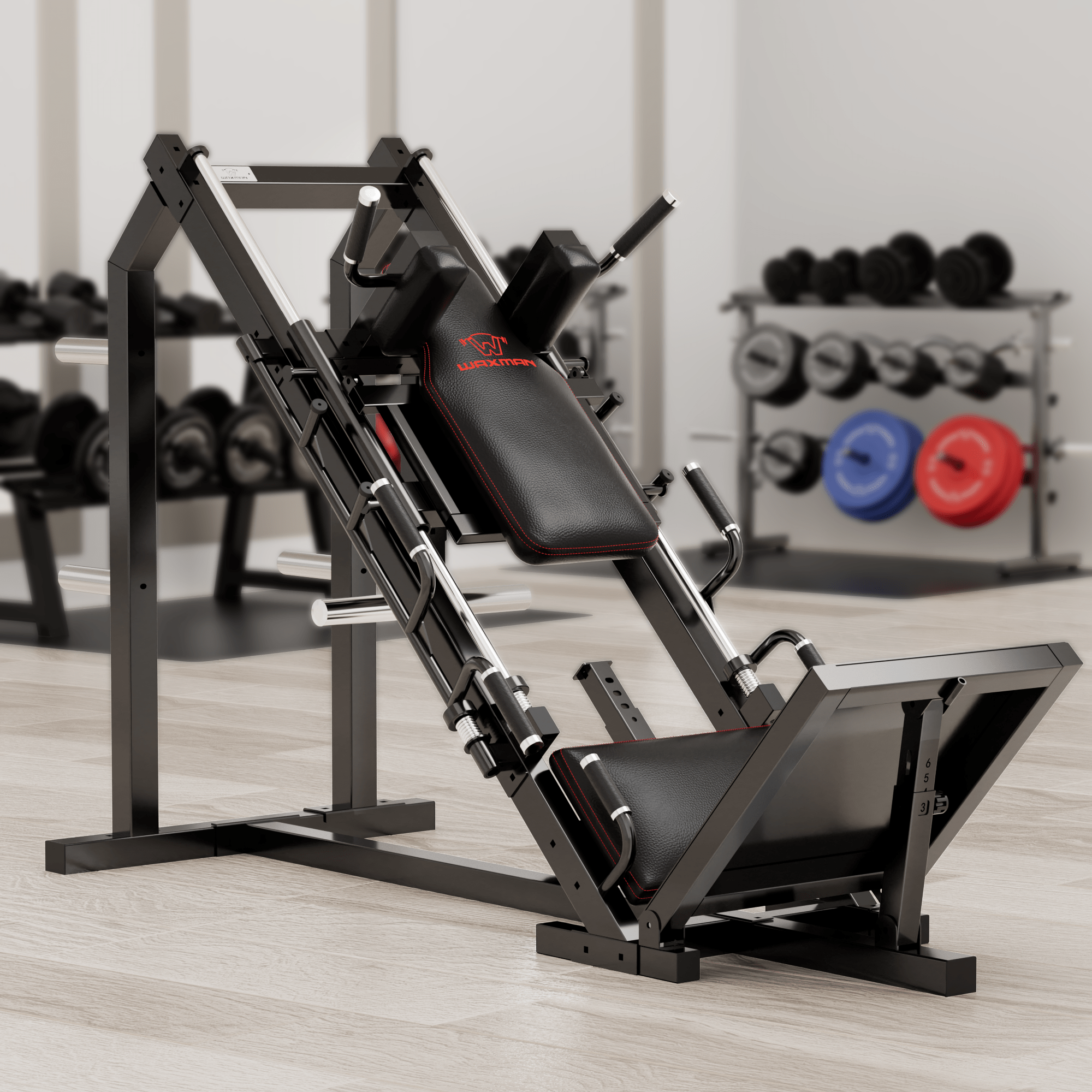
WAXMAN Leg Press Hack Squat Machine
A plate-loaded example for a home resistance-training setup. Compare the movements and space needs with your own goals before choosing equipment.
$799.00 USD
- Two-in-one leg press and hack squat listing.
- Listed assembled dimensions: 77.5 × 38.3 × 57.4 inches.
- Listing states 2-inch Olympic-size plate bars and three-level safety limiters.
The official listing displayed $1,499.00 as a comparison price for this same item; confirm fit and instructions for the exact unit.
Price checked October 7, 2026. Price and availability may change; see product page.
Sources
- American College of Sports Medicine: 2026 resistance-training update.
- Mayo Clinic: Weight training technique and safety.
- Waxman Leg Press Hack Squat Machine listing (product features and dimensions only).
Leave a Reply