
No products in the cart.
How to Clean Home Gym Equipment Without Damaging It
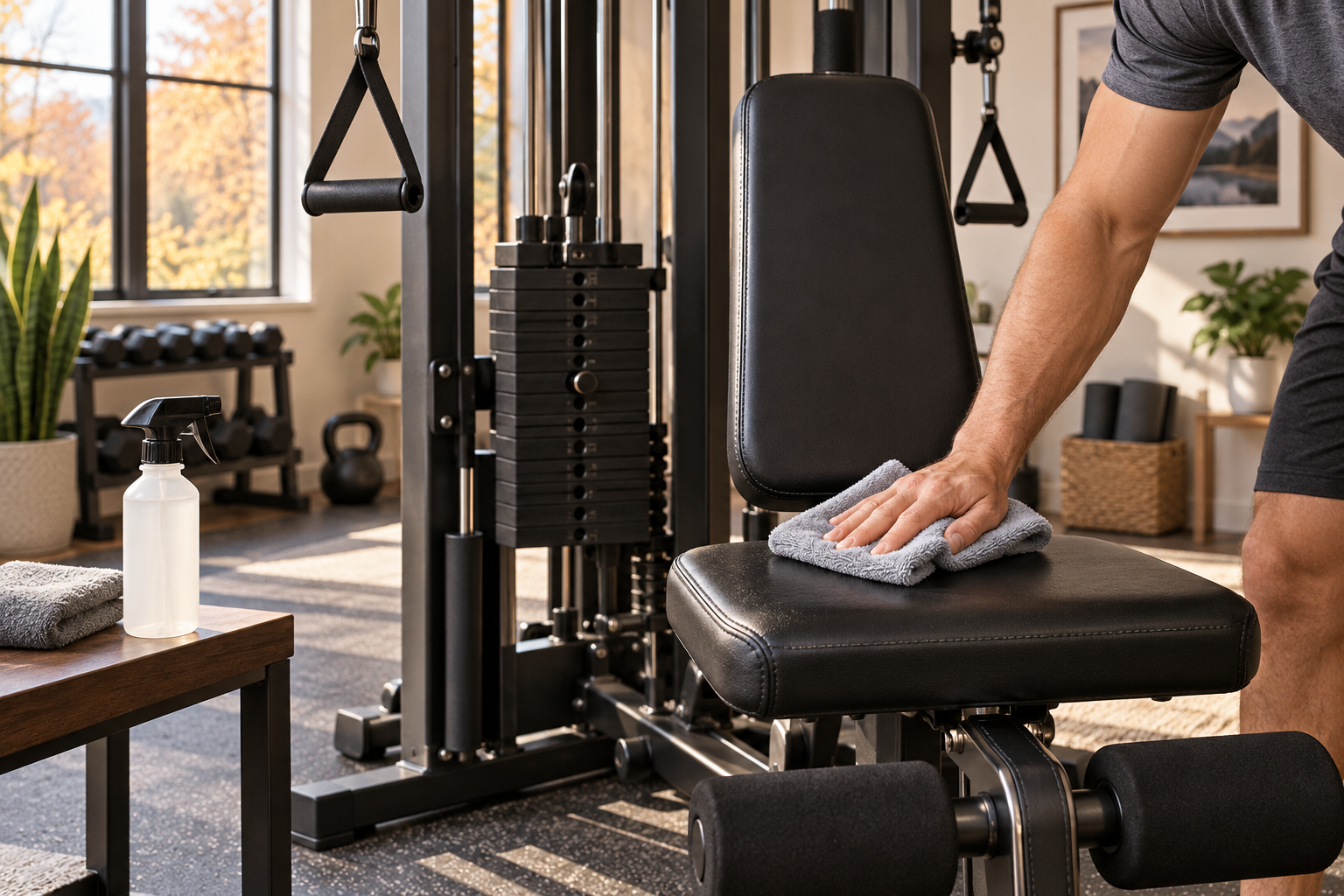
Cover illustration: AI-generated; it is not a product photograph or a cleaning test.
Quick answer: After a workout, wipe visible sweat from hand-contact and skin-contact surfaces with a clean cloth, then let them dry. For a multi-station machine, use only a cleaning method approved by the exact model’s manual. Do not spray cleaner directly onto upholstery, cables, bearings, pulleys, or moving parts. If someone is ill or a surface is visibly contaminated, follow public-health guidance and the product label while protecting the equipment material.
Start with the machine’s care instructions
Cleaning guidance for a gym floor or a public facility does not tell you which cleaner is safe for a particular home machine. The Waxman WAX-SM-S02 listing describes a Smith station, cable crossover, pull-up station, and other components, but the available product listing does not provide a detailed cleaning procedure. Check the manual for the exact model and any care label on its upholstery before choosing a liquid, disinfectant, or lubricant.
This matters because a method that is suitable for one material may stain, dry, loosen, or otherwise damage another. Follow the manufacturer’s instructions for pads, grips, painted or coated metal, cables, and adjustment points separately. If the manual is missing or unclear, contact the manufacturer for written guidance. Until you have it, keep routine care dry and gentle: remove surface sweat with a soft cloth and avoid applying chemicals or excess moisture.
A practical after-workout wipe-down
- Stop and unload safely. Finish the movement, return equipment to the state required by the manual, and make sure no one is using the machine. Do not clean around a moving cable, loaded bar, or moving weight stack.
- Use a clean cloth. Wipe sweat from the surfaces touched during the session, such as handles and the seat or back pad, if the manual permits that method. Use a separate clean section of the cloth for each area when practical.
- Keep liquid controlled. If the manufacturer permits a damp cloth, dampen the cloth away from the equipment. Do not saturate seams or let liquid run into openings, cable guides, pulleys, bearings, adjustment holes, or the weight stack.
- Dry before the next session. Let the surface dry fully before another person uses it. If the material remains wet, follow the manual’s drying directions rather than using heat or an unapproved solvent.
- Inspect while you wipe. Look for torn upholstery, loose stitching, frayed cable strands, unusual residue, corrosion, or a damaged grip. Stop using a component that appears compromised and follow the manufacturer’s service instructions.
These are general housekeeping steps, not a substitute for the model’s inspection or maintenance schedule. Do not adjust cable tension, lubricate a guide rod, or disassemble a guard as part of a quick wipe-down unless the manual specifically directs the owner to do so.
When a disinfectant is appropriate
Cleaning and disinfecting are different. The CDC says that regular cleaning is enough in most community settings, and advises disinfecting areas where someone has obviously been ill. If you decide disinfection is appropriate, first check that the product label permits use on the equipment’s specific surface. Follow the label’s application, ventilation, protective-equipment, and wet contact-time directions. Never mix cleaning products or assume that a household wipe is compatible with synthetic upholstery or a coated finish.
CDC guidance for athletic facilities also says to clean shared equipment after use, allow it to dry, and follow manufacturers’ instructions so the cleaner does not harm the item. That guidance supports a careful process; it does not certify a specific chemical for the WAX-SM-S02. If a person has a wound or a suspected skin infection, follow healthcare advice and the equipment maker’s directions rather than trying to treat the surface with a stronger unapproved chemical.
What not to do
- Do not spray a cleaner onto the machine. A mist can reach components that are not intended to get wet.
- Do not use bleach, alcohol, abrasive pads, or fragranced cleaners unless the manual explicitly allows them for that material.
- Do not apply oil or lubricant to cables or moving parts as a cleaning shortcut. Lubrication schedules and products are model-specific.
- Do not use the machine if you notice fraying, a loose connection, a damaged pad, or unexpected operation. Follow the manual’s stop-use and service directions.
Make the routine easy to repeat
Keep a clean cloth nearby, but store it separately from chemicals and away from the moving equipment. Add a short wipe-down to the end of the workout and follow the manufacturer’s more detailed inspection schedule on its stated interval. In a household, agree who resets the area and who reports a damaged part; a simple handoff reduces the chance that someone else starts a session before a problem is noticed.
The Waxman Smith Machine listing identifies the WAX-SM-S02 multi-station equipment, but does not establish a cleaning chemical or disinfection method. Verify the model manual before using anything beyond a dry cloth.

Waxman Smith Machine — model WAX-SM-S02
Listing describes a power cage, Smith station, cable crossover, and pull-up station. Cleaning products and care steps must be checked against the model manual.
$1,999.90 USD (listing comparison price $2,999.00; checked October 7, 2026).
Price and availability may change; see product page. Availability was not verified.
Leave a Reply