
No products in the cart.
How to Protect a Basement Home Gym from Winter Dampness
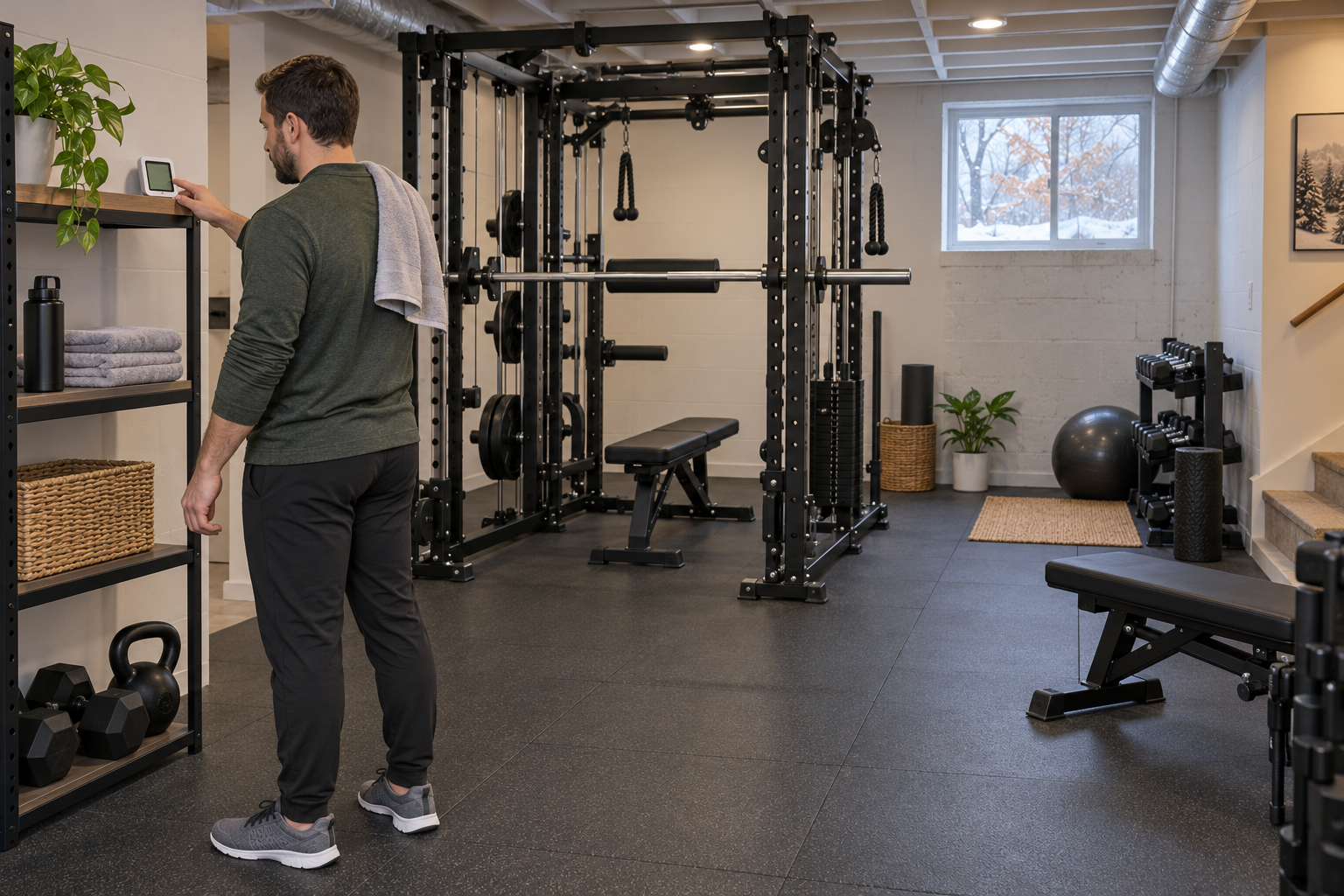
Cover illustration: AI-generated concept art, not a photograph of a Waxman product or a moisture inspection.
Short answer: In a damp basement, first identify whether moisture comes from a leak, condensation, or persistently humid air. Dry wet surfaces, correct the moisture source, and monitor room humidity; do not assume a towel or rust inhibitor fixes a building problem. Keep workout equipment dry and ventilated, but follow its manual for cleaning and lubrication. If water is entering the room, electrical equipment is wet, or mold is extensive, stop using the affected area and get qualified help.
Cold-weather routines can hide moisture problems: windows, foundation walls, and floors may be colder while workouts add warm, humid air. A metal frame beside a cold surface can collect condensation, and a damp floor can affect stored plates or accessories. These checks help you respond early without pretending every basement or machine has one safe clearance or humidity setting.
Find the moisture source before moving the machine
Look for fresh water after rain or snowmelt, plumbing drips, damp cardboard, musty odor, and condensation on windows or pipes. Note when each sign appears. Water near a foundation after storms points to a different problem than a brief film on a cold window after a humid workout. Do not touch wet electrical outlets, cords, or powered equipment; switch off power only if you can do so safely and contact a qualified electrician or water-damage professional as appropriate.
The U.S. Environmental Protection Agency explains that condensation can form when warm, humid air contacts a cold surface. It recommends keeping indoor relative humidity below 60 percent, ideally 30–50 percent when possible, and drying wet materials promptly. Those are general indoor-moisture recommendations, not a Waxman equipment specification or a guarantee against corrosion. Use a humidity gauge in the gym area and watch trends rather than relying on how the air feels.
Reduce moisture without creating a new problem
- Fix water entry first. Address plumbing leaks, drainage, or foundation water with the right trade. A dehumidifier cannot repair a leak.
- Dry wet surfaces and belongings. Remove damp towels, mats, and cardboard. Dry hard surfaces, then inspect nearby items again. EPA guidance says wet materials should be dried within 24–48 hours where possible; flooding or contaminated water calls for professional remediation.
- Manage humid air. Vent moisture from showers, laundry, or exercise where the building’s ventilation allows. A dehumidifier may help with elevated room humidity, but follow its placement, drainage, and electrical instructions.
- Keep air paths open. Avoid pushing equipment tight against a visibly damp wall or blocking supply and return vents. There is no universal gap that solves every basement condition; look for condensation and follow building and product instructions.
Keep strength equipment clean and dry
After a workout, wipe perspiration from accessible metal surfaces with a cloth and let the area dry. Pick up damp towels and check the floor under mats. Do not spray cleaner or lubricant into pulleys, bearings, cables, or electrical components unless the exact equipment manual permits it. Inspect exposed steel, fasteners, cables, and moving parts periodically; if you find corrosion, fraying, unusual movement, or damage, stop using the affected station and ask the manufacturer or a qualified service provider how to proceed. Do not improvise a repair on a loaded machine.
For a large frame, preserve a clear route to inspect behind and beneath it. For example, the Waxman M4 product page lists an assembled footprint of 71 inches long by 48 inches wide and a height of 87.2 inches. That is a product planning reference, not a moisture-control clearance or permission to place the frame against a wet wall. Confirm the current model dimensions and your own room layout before installation.
When to stop and call for help
Recurring water, a damp foundation, musty odor that persists after drying, visible widespread mold, or wet electrical equipment needs more than routine gym cleanup. EPA guidance says to address the moisture source and seek professional help when building repairs or remediation exceed your experience. Avoid covering wet or moldy materials with paint or trim. If water has reached a machine’s electrical components, do not power it on to test it.
Product reference
The Waxman M4 Smith Machine is the product example for the room-planning dimensions above. The official listing describes a 50 × 50 mm steel-tube frame and a one-year manufacturer warranty; specifications and included accessories should be confirmed on the product page before purchase. Its listed 2,200 lb maximum capacity is a product rating, not a statement about basement flooring or how any individual component should be loaded.

Waxman M4 Smith Machine – WAX-SM-S02
Current listed price checked October 15, 2026: $1,999.90 USD. Official listing dimensions: 87.2 in H × 71 in L × 48 in W; 50 × 50 mm steel tubing; one-year manufacturer warranty.
Price and availability may change; see the product page. No stock claim is made.
Sources: U.S. EPA, Mold Course: Humidity and Condensation; U.S. EPA, A Brief Guide to Mold, Moisture, and Your Home; Waxman official M4 product listing (product identity, current listed price and dimensions checked October 15, 2026).
Leave a Reply