
No products in the cart.
How to Keep a Home Strength Routine Going Through Winter
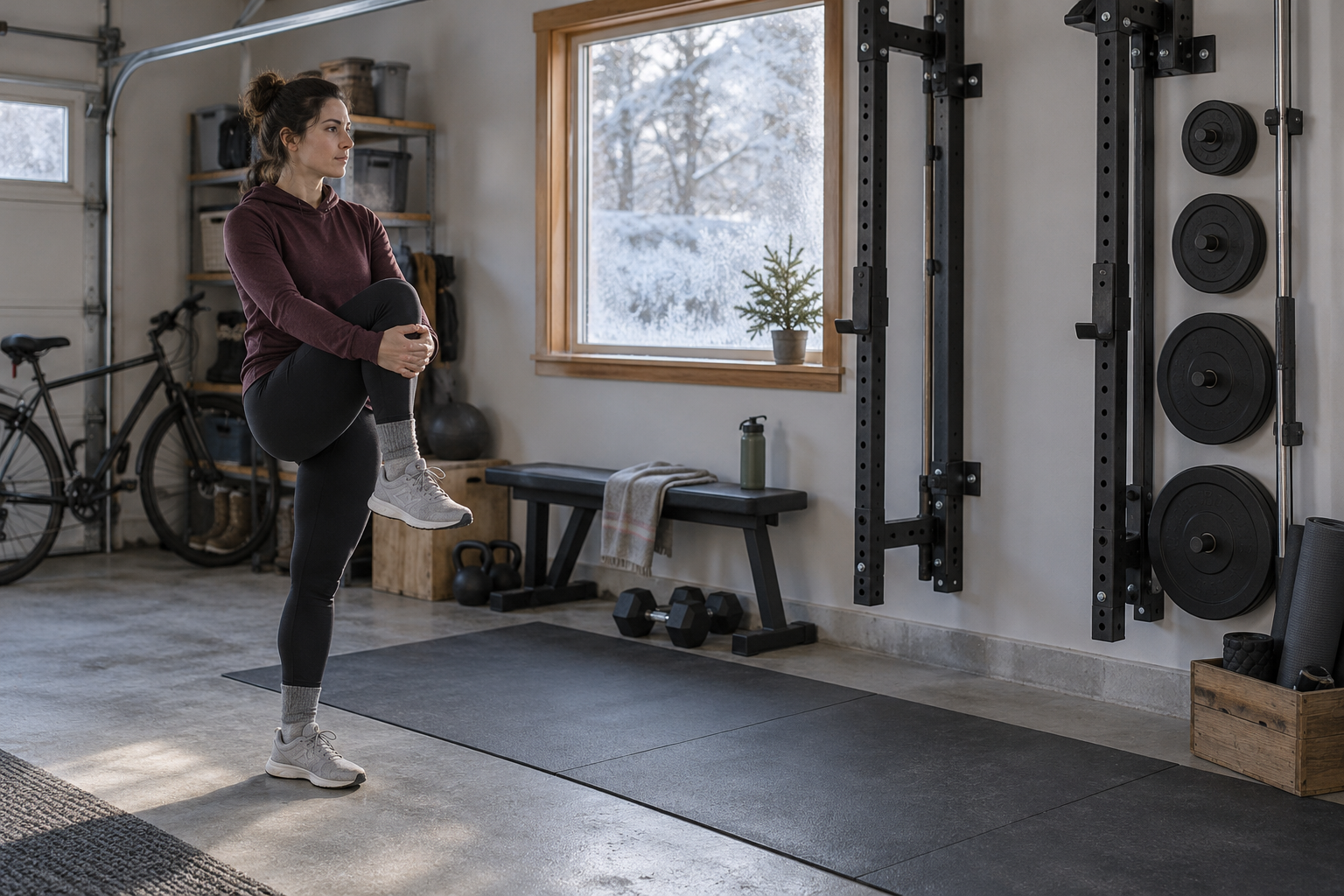
Cover: AI-generated illustration for context only; it is not a photograph of Waxman equipment or a record of a workout.
Short answer: When winter weather makes outdoor plans unreliable, keep a home strength routine small and scheduled: choose two nonconsecutive days, use a few movements you already know how to do safely, and add manageable walking or indoor aerobic activity on other days. A rack can organize strength training, but it does not create a complete fitness plan or make a room safe by itself. Begin with the space, equipment instructions, and your current ability.
Start with a repeatable weekly plan
For generally healthy adults, U.S. guidance recommends 150 to 300 minutes of moderate-intensity aerobic activity each week (or an equivalent amount of vigorous activity) and muscle-strengthening activity on at least two days. These are broad public-health targets, not an instruction to jump immediately to the upper end. If you have been inactive, build up gradually; shorter sessions count toward a weekly total.
A winter template can be simple: take a brisk walk, use an indoor walking route, or do another comfortable aerobic activity on several days; reserve two nonconsecutive days for strength work. The exact schedule should fit work, daylight, recovery, and ability. If weather closes a usual walking route, substitute a safe indoor option rather than trying to make up missed minutes in one exhausting session.
Make strength days uncomplicated
Pick a small set of movements that covers the major areas you intend to train, such as a squat pattern, a hip hinge, a push, a pull, and a trunk exercise. You do not need to use every movement in one workout. Choose loads and variations that let you control the motion and stop with good form. Leave recovery time between demanding sessions for the same muscle groups, especially when restarting after a break.
Write down the movement, setup, and a comfortable starting load. Change one thing at a time—repetitions, resistance, or range of motion—rather than increasing everything at once. Stop if you feel sharp pain, dizziness, or unusual shortness of breath; seek qualified medical guidance for new symptoms or if a health condition affects exercise choices. This is general planning information, not individual medical advice.
Check the room before setting up equipment
- Measure the equipment footprint and the space needed to load plates, move a bench, and enter or exit without stepping over weights.
- Keep the floor dry, level, and clear; place loose plates and collars where they cannot roll into a walking path.
- For a wall-mounted rack, identify the wall structure and follow the manufacturer’s installation instructions exactly. Confirm the fasteners, wall type, clearances, and installation requirements before loading it. Ask a qualified installer if the wall or instructions leave doubt.
- Inspect the rack, safeties, J-cups, bar, and bench before use. Use safety arms or a spotter where appropriate, and do not exceed the limits stated in the product instructions.
A product’s advertised capacity is not a substitute for correct installation, compatible accessories, or safe lifting technique. Do not infer that a particular wall, floor, or attachment is suitable from a product photograph.
When a compact rack may fit
The Waxman 2.36-inch folding wall-mounted squat rack is listed at 47 inches wide and 85.8 inches high, with a listed weight of 94 pounds. Those dimensions can help you compare the product with a measured room, but they do not establish the clear space you need to exercise or confirm that your wall is suitable. Check the current instructions, included parts, installation conditions, and fit before purchase.

Waxman 2.36″ × 2.36″ Folding Wall Mounted Squat Rack
Listed dimensions: 47″ W × 85.8″ H; listed product weight: 94 lb. Listed price: $299.99 USD (checked October 16, 2026). Confirm wall requirements and all current details on the product page. Price and availability may change.
Keep the goal realistic through winter
Set a minimum version of the plan for busy or stormy weeks—perhaps a brief indoor walk and one familiar strength circuit—then return to the usual schedule when conditions allow. Track consistency, comfort, and recovery instead of treating a single missed session as failure. The most useful home setup is one you can use safely, store without blocking household routes, and adapt to your actual space and experience.
Sources
- U.S. Department of Health and Human Services: Physical Activity Guidelines for Americans.
- Waxman product listing (dimensions, listed weight, product image and price checked October 16, 2026).
- WaxmanUSA homepage (current featured price cross-check, October 16, 2026).
Leave a Reply