
No products in the cart.
How to Keep Visiting Children Out of a Holiday Home Gym
Answer: When children visit for a fall holiday, treat the home gym as a controlled room: close access, put loose weights and handles away, and have an adult supervise any permitted activity. A rule to “be careful� is not enough around a loaded rack or moving cable system. Plan a separate place for children to play before guests arrive, and do not present adult equipment as a holiday activity.
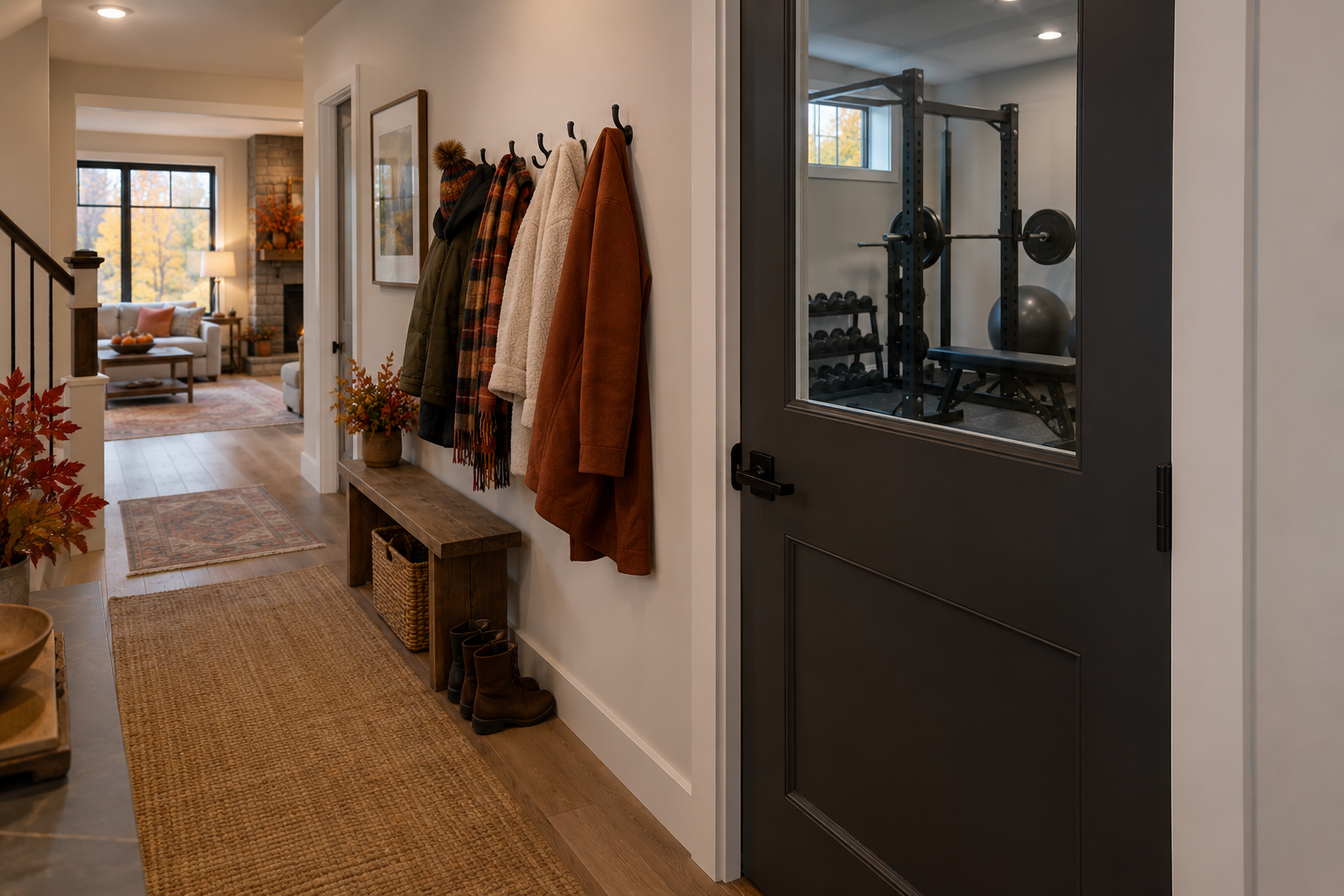
Featured image: AI illustration of a generic separated gym room in a home. It is not a product photograph or an example of a tested child-safety installation.
Set a boundary before the house fills up
Choose who can enter the training area and when. Tell visiting adults where the gym is and that children should stay out unless a responsible adult has specifically arranged suitable activity. Keep the door closed when the space is not in use; where appropriate, use a child-resistant access measure that does not interfere with emergency exit. Check that a hallway, bathroom, or guest route does not require people to pass through the gym. If it does, rethink the traffic plan rather than relying on repeated warnings.
The American Council on Exercise guidance on children in weight rooms notes that crowded spaces with moving weights and adult-sized equipment can be dangerous for young children and that any youth resistance training needs an appropriate environment and knowledgeable supervision. That advice does not make a particular home machine suitable for a child. It supports treating the room as a separate adult training area during a busy gathering.
Identify the parts a visitor could reach
A large package such as the Waxman Smith Machine Garage/Home Gym Package is listed with a rack, cable system, bench, plates, and accessories. The official listing and image identify those categories. They do not prove that leaving a loaded bar, loose plate, or hanging handle is safe when children are present. Before guests arrive, remove or secure loose items according to the equipment instructions, return handles to the designed storage points, and leave the machine in its manufacturer-recommended resting condition. Do not improvise a lock on a moving part.
Look from a child’s height. A bench can invite climbing, a loose plate can roll, and a dangling handle can attract a curious visitor. Store detachable items so they cannot be casually picked up or pulled into a walkway. Keep the area around the rack clear enough that an adult can inspect it without stepping over holiday storage. If anything is damaged or cannot be put into a known safe condition, keep the space closed and seek model-specific help.
Give adults a clear hosting routine
- Before the visit, finish workouts and put the machine in its instructed rest position.
- Return plates and accessories to approved storage; check that nothing projects into a route.
- Close off the gym and tell other caregivers the boundary.
- Offer children a separate age-appropriate activity in a supervised room.
- If an adult will train during the visit, keep children out for the entire setup, workout, and cleanup period.
This routine should be agreed on by all adults in the home. A child may enter when one caregiver assumes another is watching. Assign responsibility clearly, especially during arrivals, meal preparation, and departures when attention is divided.
If an older child asks to exercise
Do not infer readiness from age alone and do not offer a trial on adult machinery to satisfy curiosity. ACE emphasizes the child’s ability to follow coaching, the environment, and the competence of the person directing the activity. Choose developmentally appropriate movement elsewhere or seek qualified youth training advice. The U.S. Physical Activity Guidelines explain that children often build strength through play and that formal resistance programs, when used, require proper prescription and supervision.
If the door cannot be controlled or the gym is part of the only safe route through the home, move the gathering or equipment plan. The point is a reliable boundary that works when the household is busy, not a sign on the door that everyone might miss.
Prepared with Codex assistance using the linked public sources. No child-safety test, equipment inspection, or human expert review is claimed.
Leave a Reply