
No products in the cart.
How to Cool Down After a Winter Home Workout
After a winter workout at home, cool down by easing out of strenuous movement, walking gently until your breathing settles, and using comfortable mobility rather than forcing deep stretches. A cool-down is a transition, not a test and not a treatment. There is no single routine or duration that suits everyone; stop if you feel unwell, dizzy, unusually short of breath, or have pain.
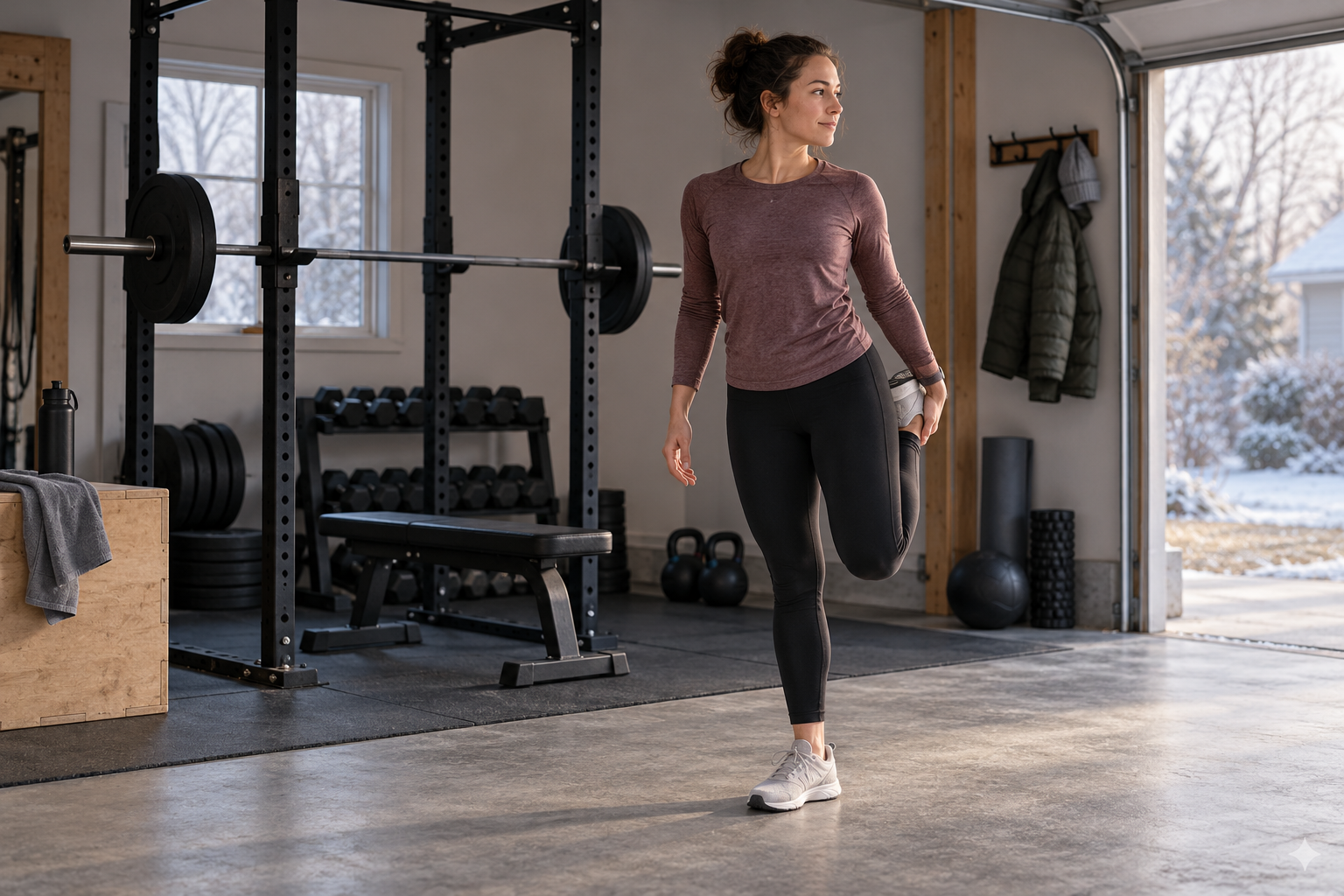
Cover: AI-generated editorial illustration; not a product photograph or observed workout.
Why make the transition gradual?
When a workout ends abruptly, your body is still adjusting from exertion. A few minutes of easy movement gives you a chance to reduce effort progressively and notice how you feel. In a cold garage, this also lets you move away from the exercise area, put equipment down safely, and add a layer before you become chilled. A cool-down does not guarantee that soreness will be prevented or improve fitness by itself.
A simple, adaptable cool-down
- Lower the effort. After a demanding set or interval, walk slowly or pedal easily if you have a suitable stationary cycle. Keep the effort light enough to speak comfortably.
- Check in. Notice whether breathing and balance are settling. If you feel faint or unwell, sit or lie somewhere safe and seek appropriate help if symptoms are severe, unusual, or do not resolve.
- Choose comfortable movement. Gentle shoulder rolls, ankle movements, or an easy range-of-motion exercise can help you transition. Avoid bouncing, forcing a stretch, or stretching through sharp pain.
- Finish with practical care. Put weights and attachments away without rushing, dry sweat from surfaces, and change out of damp clothing. In an unheated space, warm up with a dry layer.
Do you need to stretch after every session?
No. Stretching is optional. If you choose it, use a relaxed position and stop before discomfort becomes pain. A post-workout stretch is not a substitute for a gradual reduction in effort, and it should not be framed as a guaranteed way to prevent injury or next-day soreness. People returning after a break, managing a health condition, or recovering from an injury should follow advice from their clinician or qualified exercise professional.
Make a cold-weather home gym easier to reset
Before you start, keep a clear route from the workout area to a warmer room, set out a towel and dry layer, and decide where used accessories will go. These small preparations matter more in a garage or basement where temperatures, lighting, and floor conditions may differ from the main living space. Do not exercise on a slippery surface or use equipment if you cannot see its setup clearly.
A multi-station setup can make different strength movements available in one area, but the product alone does not determine a safe routine. Check the exact product instructions, delivered configuration, anchor or floor requirements, and available clearance before use. A spotter or qualified professional may be appropriate for unfamiliar or heavy lifts.

Waxman WAX-SM-S02 Smith Machine and Cable Crossover
Listed stations include a Smith machine, power cage, cable crossover, and pull-up station. Listed dimensions: 71 × 48 × 87.2 inches; confirm delivered configuration and clearance before purchase.
$1,999.90 USD (listed comparison price $2,999.00). Price checked October 17, 2026. Price and availability may change; see product page.
When to stop and ask for guidance
End the session if you develop chest discomfort, faintness, severe or unusual breathlessness, or symptoms that concern you. Seek urgent medical help for emergency symptoms. If a recurring symptom, injury, or medical condition affects exercise, ask a qualified health professional how to adapt activity; a general article cannot assess individual risk.
Key takeaway
After a cold-weather home workout, reduce effort gradually, use only comfortable movement, and prepare a dry warm layer and safe path out of the exercise area. Keep the routine flexible and follow professional guidance when health, symptoms, or equipment instructions require it.
Leave a Reply