
No products in the cart.
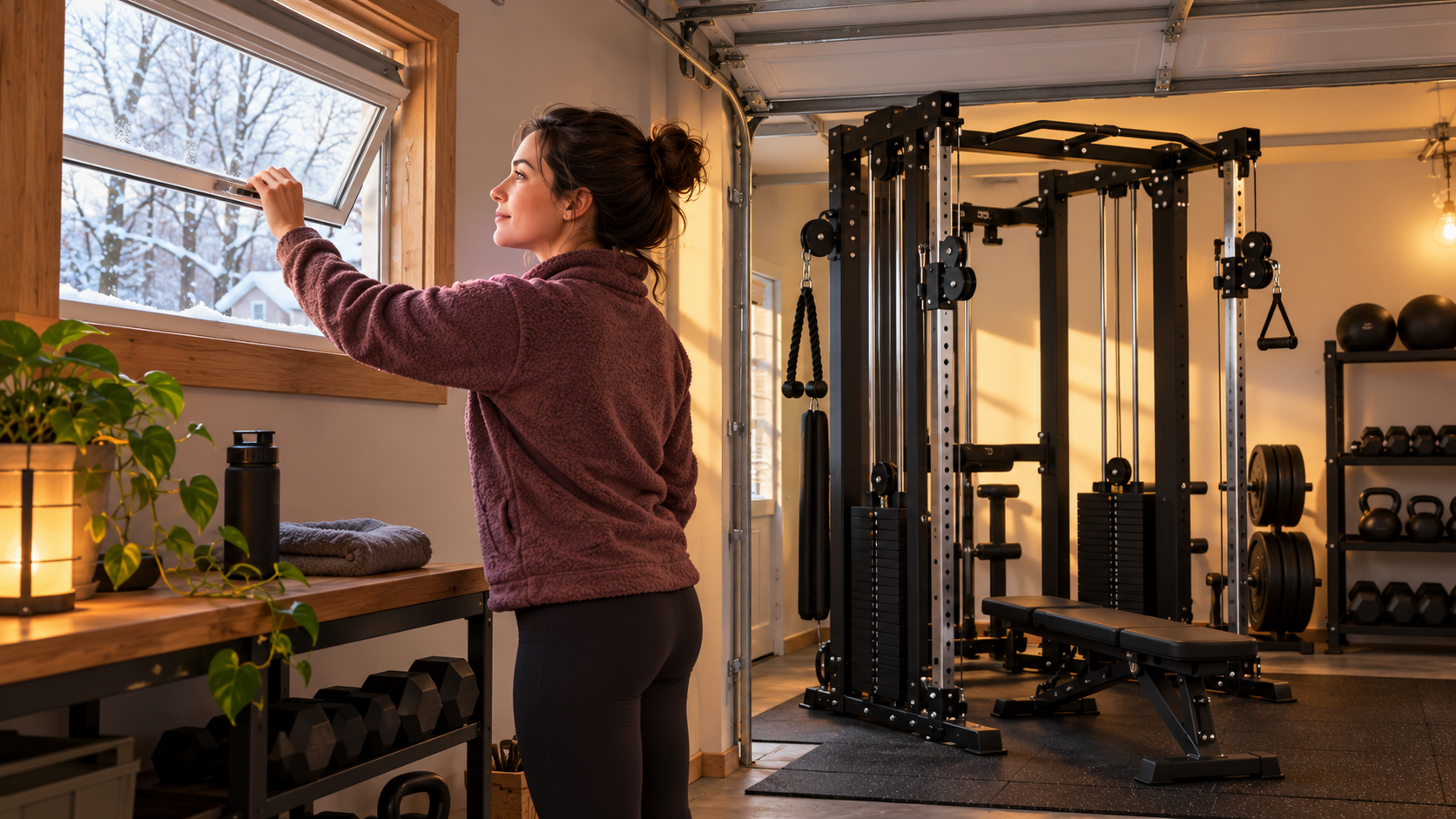
How to Air Out a Home Gym Between Winter Workouts
Short answer: In cold weather, use short, deliberate ventilation periods when outdoor conditions and home heating equipment make it safe, and rely on your normal HVAC filtration and bathroom or kitchen exhaust where appropriate. You do not need to keep a window open throughout a workout. If opening a window would make the room uncomfortably cold, bring in outdoor air through another safe route or schedule the workout when you can ventilate afterward.
A closed garage or spare room can feel stuffy after exercise, especially when several people share the space. Winter adds a trade-off: fresh outdoor air may help dilute indoor pollutants, but opening a window can lose heat or create a cold draft. A practical routine balances both rather than treating one window position as a universal rule.
Choose a ventilation method that fits the room
Start with the home’s normal ventilation. If the room is served by central heating and air conditioning, check the system manual for the correct filter type and replacement schedule. Do not block return grilles with equipment, mats, or storage. A fan setting that moves air through a system is not automatically equivalent to bringing outdoor air inside; systems vary, so use the equipment instructions.
The CDC’s indoor air quality guidance describes options such as bringing in outdoor air, improving filtration, and using portable air cleaners. Its advice concerns reducing respiratory virus spread, not guaranteeing a particular post-workout air quality. A portable cleaner also does not replace outdoor air when ventilation is needed.
Use a short airing break when it is safe
If outdoor weather is reasonable and the room has a window or exterior door, open it briefly after the session while you put equipment away. A second opening on another side of the room may help cross-ventilation if the home layout allows it safely. Close openings once the room no longer feels stale or when the indoor temperature begins to drop. There is no single number of minutes that works for every room, climate, or occupancy.
Do not leave an exterior door unsecured, create a trip hazard with a cord or mat, or place a fan where it can pull dust across the workout area. Keep ventilation openings away from vehicle exhaust, smoke, or other obvious outdoor pollution. If the home uses combustion appliances, follow their instructions and local safety guidance; never use an unvented fuel-burning heater to warm an exercise space.
Make ventilation part of a simple cleanup routine
- Finish the workout and move loose equipment out of the path.
- Use a bathroom or kitchen exhaust fan only if it vents outdoors and its use is appropriate for the home.
- Open a window or door briefly when conditions are safe; avoid leaving a strong cold draft across a damp person.
- Wipe sweat from shared contact points according to the equipment maker’s care instructions.
- Close the opening, restore the thermostat, and check that vents and returns remain clear.
For a multi-station area, airflow is only one part of a comfortable setup. Leave enough clear space to move around the equipment and keep pathways free of plates, handles, and cords. The Waxman WAX-SM-S02 Smith machine and cable crossover listing identifies a 71 × 48 × 87.2 inch footprint; measure the actual assembled unit and surrounding movement area before arranging the room. Listed dimensions do not establish a required ventilation clearance or guarantee fit in a particular home.
When not to open a window
Keep windows closed during dangerous cold, poor outdoor air quality, wildfire smoke, or other conditions when bringing outside air in could create a hazard. People with asthma, allergies, or other health concerns should follow advice from their clinician and local air quality alerts. Stop exercising and seek appropriate medical advice for unusual breathing difficulty, chest pain, dizziness, or other concerning symptoms; ventilation tips are not medical treatment.
In severe winter weather, the CDC advises protecting indoor warmth and using combustion heaters only when properly vented. See its winter storm safety guidance. The right choice may be to ventilate later, use the home’s designed HVAC system, or move the workout to a better-ventilated room.
Product details
The Waxman listing below is one example of a larger station that may be part of a home gym. Product price and availability can change; check the current listing for the exact package and assembly information.

Waxman WAX-SM-S02 Smith Machine and Cable Crossover
Listed configuration includes a Smith machine, power cage, cable crossover, and pull-up station. Listed dimensions: 71 × 48 × 87.2 inches. Observed listing price: $1,999.90 USD on October 17, 2026; price and availability may change. Confirm package contents and room fit on the current product page.
Cover image: AI-generated illustration of airing a residential home gym; it is not a product photograph, inspection, or test result.
Bottom line
For winter workouts, keep normal vents clear, use HVAC and exhaust equipment as designed, and air out the room briefly when outdoor conditions allow. Skip open-window ventilation when cold, pollution, or home safety concerns make it unsuitable. No ventilation routine can be prescribed without knowing the room, HVAC design, and local conditions.
Leave a Reply