
No products in the cart.
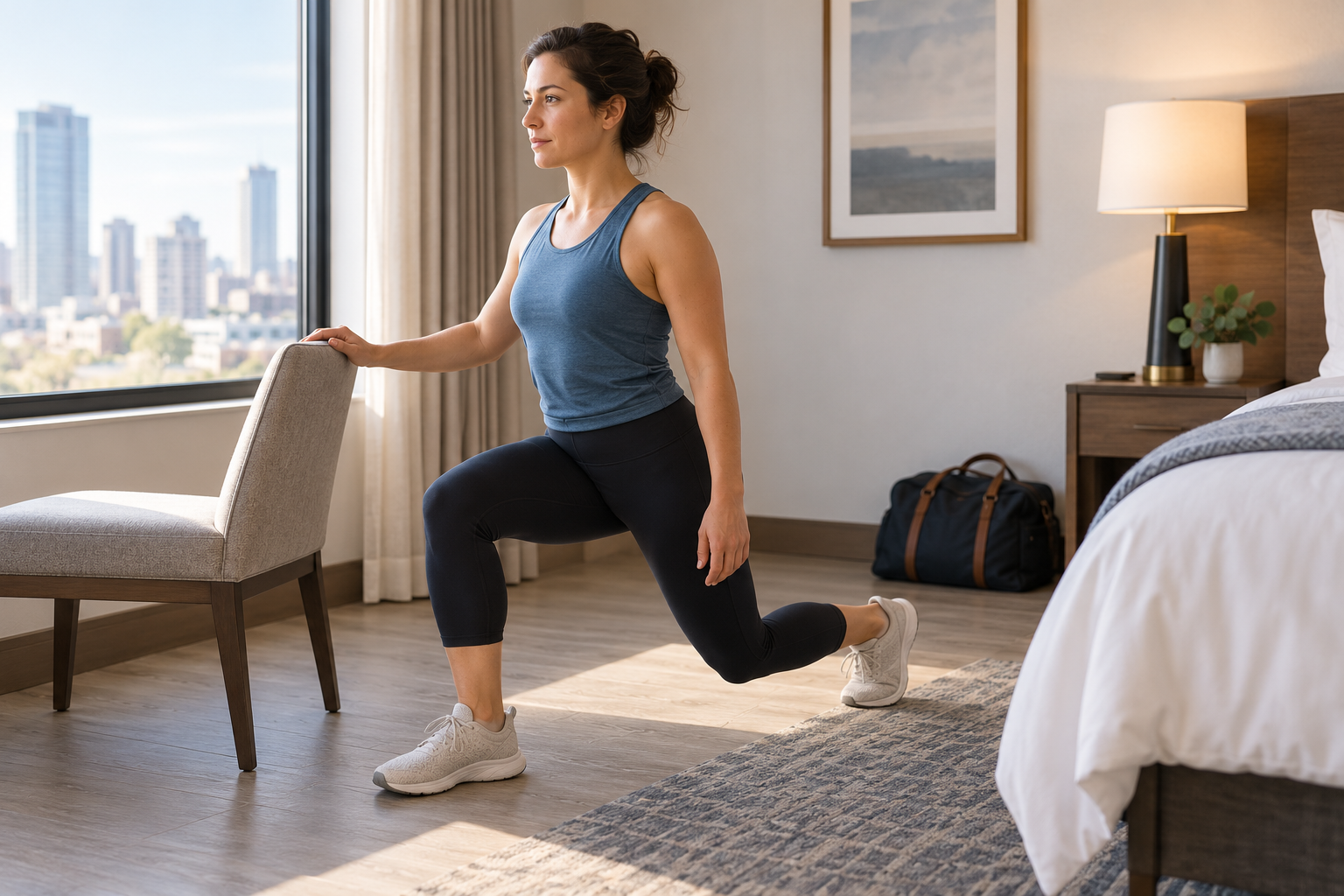
How to Strength Train Safely in a Hotel Room While Traveling
Short answer: A hotel-room strength session can be simple: choose a few controlled movements that use your body weight, keep the space clear, and scale the effort to your current routine. A short trip does not require a punishing “catch-up” workout. If you are new to exercise, returning after a break, or managing a health condition, start conservatively and follow advice appropriate to you.

Check the room before you start
Move bags, shoes, and furniture out of the area where you plan to exercise. Look for a dry, level floor with enough room to step and reach without contacting a bed frame, desk, lamp, or glass. Avoid balancing on rolling luggage, using an unstable chair as exercise equipment, or anchoring a resistance band to a door unless the product is specifically designed for that use and the anchor instructions are followed. Keep the exit path clear.
If the room is cramped, noisy, or otherwise unsuitable, use the hotel gym or another appropriate space if available, take a walk, or skip the strength session. A workout is optional; forcing an unsafe setup defeats the purpose.
Build a balanced, adjustable session
For a familiar routine, select a few movements that cover different patterns rather than repeating one exercise until you are exhausted. For example, a controlled sit-to-stand or squat variation works the legs; a hip hinge practices bending at the hips; a wall push-up or incline push-up is a pushing option; and a standing calf raise adds another lower-body movement. These examples are not a personalized prescription, and a movement should be omitted if it causes pain or is unsuitable for you.
Use the easiest version that lets you move with control. A wall push-up is generally easier to scale than lowering to the floor; a smaller squat range may feel more manageable than a deep squat. If you use a chair for balance during a split stance movement, first make sure it is stable, place it against a wall if appropriate, and do not treat it as a load-bearing exercise prop. You can also leave balance-demanding movements out entirely.
Choose a modest amount of work based on what you have been doing recently. You might perform one comfortable round of a few movements, resting as needed, rather than trying to reproduce a full gym session. Stop a set when control deteriorates, you feel unwell, or pain develops. There is no need to reach failure or use a timer that pushes you to rush.
Match the plan to the trip
On a travel day, a brief mobility break or walk may be a more realistic choice than strength training. For a longer stay, schedule a session at a time that does not compete with sleep, meals, or work commitments. If your normal training is demanding, a hotel-room session can be a lighter maintenance option, not a direct substitute for every lift, machine, or progression in your program.
Keep the plan flexible. If you miss a day, resume your ordinary schedule when you return; do not double the next workout to compensate. Travel can affect sleep, hydration, meals, and energy. Let those factors guide the session’s effort, and take a rest day when that is the sensible choice.
When you are returning after time away
The U.S. Physical Activity Guidelines recommend that adults include muscle-strengthening activity on at least two days each week, but people who are inactive can begin with small amounts and build gradually. The weekly recommendation is a general public-health target, not a requirement to complete a certain hotel workout. If you have not trained recently, use the trip to re-establish a manageable habit rather than testing your limits.
People with chronic conditions or symptoms should ask a healthcare professional what kinds and amounts of activity fit their needs. CDC guidance also advises checking with a doctor before starting vigorous activity if you have been inactive, have a disability, or have overweight. Stop and seek appropriate care for concerning symptoms rather than trying to train through them.
A simple decision checklist
- Is the floor dry, stable, and clear?
- Can you do the selected movement without rushing or losing control?
- Does the session match your recent activity and energy today?
- Would a walk, rest, or hotel gym be a better choice?
For current general recommendations, see the CDC’s adult physical activity guidance and the HHS Physical Activity Guidelines Q&A. They offer population-level guidance, not an individualized training plan.
Leave a Reply