
No products in the cart.
Can You Strength Train Outdoors in Cold Weather?
Short answer: You can do a modest strength session outdoors in cool, dry conditions if the surface is stable, you can move freely in layers, and the weather feels manageable. Move indoors or postpone when conditions are icy, wet, dangerously cold, or make you numb, shiver, or lose coordination. There is no single temperature that makes outdoor training safe for everyone; wind, moisture, clothing, health, and the workout all matter.

Decide whether outside is a sensible place today
Check the forecast and the actual training area before you set out. Look beyond the air temperature: wind can increase heat loss, while rain, snow, or sweat can leave clothing damp. CDC winter guidance recommends monitoring weather, dressing appropriately, and planning activity around conditions. If a cold-weather alert is in effect, the surface is slick, or you cannot keep your hands warm enough to grip safely, choose an indoor alternative.
Use a simple go/no-go check: can you walk across the area without slipping, set equipment on a dry and stable surface, and perform a few unloaded practice movements without your hands becoming numb or your movement restricted? If not, do the session indoors. A covered patio is not automatically safe if wind blows precipitation onto the floor or the surface is frozen.
Dress for movement, not just standing still
Wear flexible layers that let you remove one if you warm up. A moisture-managing inner layer, an insulating layer, and a wind- or water-resistant outer layer can help you adapt. Keep extremities covered as conditions require, but make sure gloves do not interfere with a secure grip on a band, dumbbell, or bar. If a layer restricts shoulder movement, catches on equipment, or makes you overheat quickly, change it before starting.
CDC winter activity advice notes that layers can help guard against overheating, sweating, and becoming colder afterward. Sweat is not a useful target for a strength workout. If clothing becomes wet, you feel chilled, or you cannot regulate warmth by adjusting layers, stop and get dry and warm.
Keep the session simple and controlled
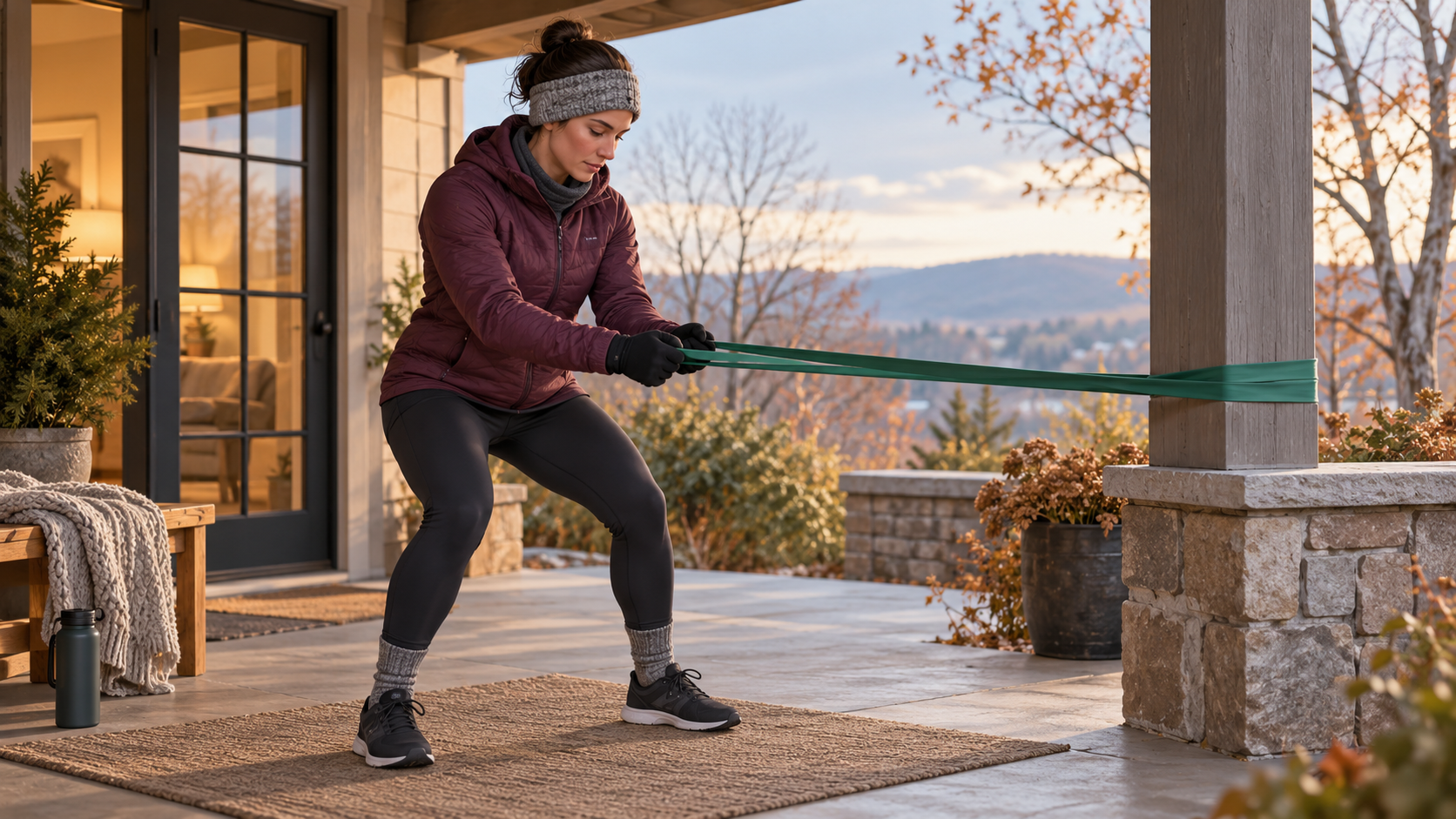
Cold weather is a reason to make setup conservative. Choose movements that do not require jumping, fast direction changes, or a long walk over questionable ground. Body-weight sit-to-stands, controlled wall push-ups, or a resistance-band row may be easier to scale than movements involving heavy free weights on an uneven patio. That is a practical example, not a prescription; use exercises you already know how to perform.
Start with several minutes of easy movement in a safe space, then rehearse the first exercise without load or with very light resistance. Increase effort only if you feel warm enough to move normally and the setup remains stable. Use a range of motion you control, keep repetitions smooth, and leave room to stop before fatigue changes your balance or technique. Do not try to make up for a missed indoor workout by doing a harder session outside.
Choose equipment and footing carefully
Inspect the ground for ice, leaves, grit, puddles, and uneven joints. Move a mat only if it lies flat and cannot slide. Keep bands away from sharp edges and inspect them for visible damage; attach them only to a secure anchor designed for that use. Cold equipment may feel different to handle, so check that you can grip it securely before loading it. Avoid setting weights where they can roll, sink, or be knocked over.
Do not use an outdoor area beside traffic, a driveway with moving vehicles, or a place where a door could swing into your training space. Keep a clear path back indoors. If you have to step over snow or ice to reach the workout, the safer choice is usually to move the session.
Know when to stop and move inside
End the session if you become wet, unusually chilled, numb, unsteady, confused, or unable to use your hands normally. Frostbite can affect exposed skin, and hypothermia is a medical emergency; CDC guidance advises people to recognize cold-related illness and seek appropriate help. If someone is confused, very drowsy, or severely cold, get them into shelter and contact emergency services rather than continuing to exercise.
People with heart disease, high blood pressure, asthma, circulation problems, or other conditions affected by cold should follow their clinician’s advice about outdoor exertion. Anyone returning from illness or injury should also use their care plan. General guidance cannot determine whether a particular temperature, exercise, or medical condition is safe for an individual.
Have an indoor fallback
Decide before you change clothes what you will do if the weather turns or the surface fails the safety check: a familiar body-weight routine indoors, a session at a gym, or a rest day followed by your next planned workout. Adults are generally advised to include muscle-strengthening activity on at least two days per week, but the federal guidelines also support starting with light or moderate effort and building gradually. The weekly target is not a reason to train in unsafe conditions.
Outdoor strength training can be a convenient option on a suitable day, but it is not required for consistency. If cold, wind, wet ground, or limited equipment compromises footing, grip, or control, move indoors and keep the routine sustainable.
Leave a Reply