
No products in the cart.
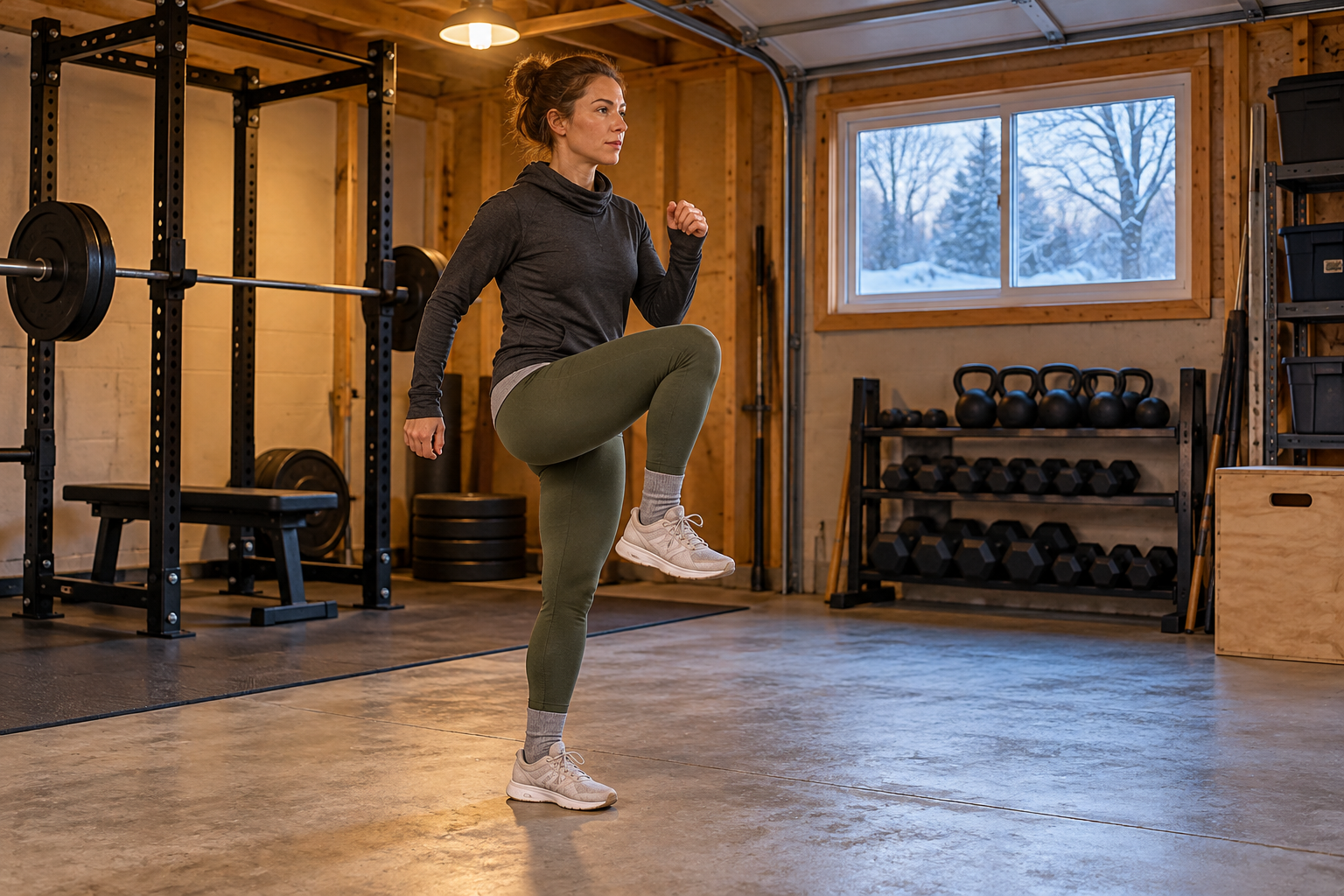
How to Warm Up for Strength Training in a Cold Garage Gym
Short answer: In a cold garage gym, give yourself a gradual, low-effort warm-up before loading a bar: move easily until you feel warmer, rehearse the day’s movements with bodyweight or an empty implement, then make a few controlled lighter sets before your working weight. Keep the floor, hands and equipment dry, add a layer if you are still chilled, and move the session indoors or stop if you begin shivering, lose hand coordination, or feel unwell. There is no single warm-up duration that makes every cold room safe.

Start by checking the room, not the workout timer
Before exercising, look for water tracked in from outside, condensation, ice near the entrance, loose mats and clutter around the lifting area. Wipe wet surfaces and clear a route to the equipment. If the garage is so cold that your hands are numb, you are shivering at rest, or you cannot handle small objects normally, do not try to solve that by starting a heavy set. Warm the space safely or move the session to a warmer location.
Wear comfortable layers that let you move freely. A removable outer layer can help while you are waiting or setting up; avoid clothing that catches on the bar or blocks your grip. Keep a dry towel nearby if you sweat. Cold weather can make it easy to overlook thirst, so keep water available as you normally would.
Use a gradual warm-up
Begin with several minutes of easy movement that suits your space and ability: walking indoors, marching in place, or gentle cycling if you have a stationary bike. The aim is to transition from rest to movement comfortably, not to tire yourself out. The American College of Sports Medicine notes that exercising in cold conditions can bring cold-stress signs such as cold hands and feet, shivering, or reduced ability to perform small tasks. Treat those as reasons to pause and get warmer, not as signs that you should push harder.
Next, practice movements related to the workout with no load or a very light load. For a squat-focused session, that might mean comfortable sit-to-stands or bodyweight squats; for a pressing session, use easy shoulder and arm movements. Keep the range of motion comfortable and controlled. These are examples, not a prescription: choose movements you already know and can perform without pain.
Build up to the working load in steps
Do not make the first loaded set the heaviest one. Start with an empty bar or a light resistance that feels easy, rehearse the planned technique, and add weight in manageable steps. As the load rises, check that your movement remains controlled and that the equipment is set up as intended. A warm-up set is not a test of maximum strength. If a movement feels unusually stiff or uncomfortable, reduce the load, choose a familiar easier variation, or end that exercise.
When using a rack or other home gym equipment, follow its own assembly, anchoring, adjustment and safety instructions. Check that the equipment is stable before loading it; never infer a safe load from a product headline or an image. A spotter or correctly positioned safety supports may be important for some lifts, but they do not replace understanding the equipment and the lift.
Know when to stop or move indoors
Stop the workout and move to a warm place if you are shivering, your hands or feet become very cold, you lose normal coordination, or exposed skin becomes painful. Remove wet clothing and warm up gradually. Seek urgent help for severe or persistent cold-related symptoms, confusion, unusual drowsiness, or difficulty speaking. People with heart disease, high blood pressure, circulation problems, diabetes, or other health concerns should ask a clinician how cold exposure and exercise affect their individual situation.
A home garage is not automatically unsafe in winter, but a longer warm-up cannot make an extreme or unsuitable environment appropriate. The CDC advises limiting cold exposure during dangerous winter conditions and taking precautions against cold-related illness. On especially cold or icy days, choose an indoor room, a community gym, or a rest day rather than forcing a garage session.
A simple pre-lift checklist
- Is the floor dry, clear and stable?
- Can you grip and move normally without shivering or numbness?
- Have you started with easy movement and rehearsed today’s lifts lightly?
- Are the equipment and safety settings checked according to their instructions?
- Can you stop and get warm promptly if symptoms develop?
If any answer is no, change the setup before adding weight. For general activity targets, the U.S. Physical Activity Guidelines recommend muscle-strengthening activity on at least two days each week for adults; they do not require training in a cold garage or lifting through discomfort. Consistency includes adapting to the conditions.
Equipment option for a home barbell setup
If you already train with a barbell at home, the Waxman 7ft Olympic Barbell is one item to compare. Check the product page and your rack, plates, space and training needs before buying; a barbell is not required for a warm-up, and a cold room does not make this product suitable for every user.

Waxman 7ft Olympic Barbell
Listed as a 7 ft Olympic barbell for weightlifting and powerlifting. Confirm fit with your equipment and review the current specifications before purchase.
Current listed price: $69.00 USD (checked October 19, 2026). Price and availability may change; see product page.
Sources: American College of Sports Medicine, Exercising in Hot and Cold Environments; CDC, Safety During and After a Winter Storm; U.S. Physical Activity Guidelines.
Leave a Reply