
No products in the cart.
How to Load a Barbell Evenly Before a Home Workout
Quick answer: Put the bar on a stable rack or loading stand, match the plate stack on the left and right sleeves, secure both stacks with collars that fit the bar, then check the full setup before lifting. The key is a balanced, secure pair of sides; the precise plate order is secondary unless your training or competition rules specify one.
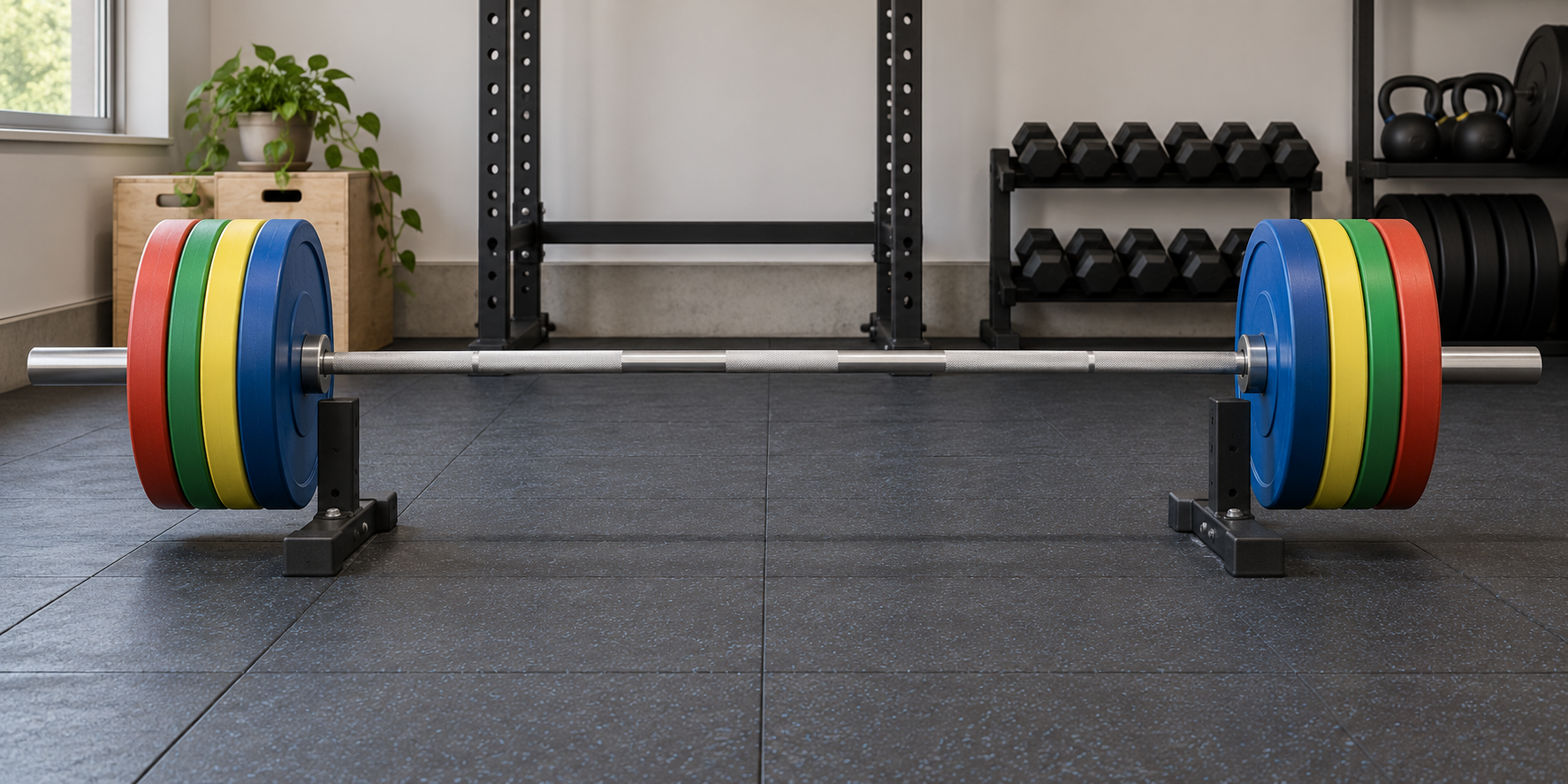
Cover illustration: AI-generated generic home-gym illustration for this loading guide. It is not a photo of the Waxman product, a tested setup, or a safety demonstration.
Start with a stable, unloaded bar
Before adding plates, check that the bar is supported by the correct rack, stand, or floor position for the task. The support must be stable and appropriate for that bar. Follow the equipment makers’ instructions and the gym’s rules. Do not balance a bar on loose blocks, chairs, or improvised supports. Keep the area around the sleeves clear so plates can slide on without hitting a person, wall, or nearby equipment.
Look over the bar, plates, and collars for visible damage, loose parts, or a fit problem. A plate should slide onto the sleeve without being forced. If the bore and sleeve do not match, stop and choose compatible equipment; do not wedge, tape, or modify a plate to make it fit.
Match the left and right sides
Decide the load you intend to use, then lay out the plates before loading. Build the same total plate weight on each sleeve. The easiest way is to make two matching piles and check the labels on both piles before you begin. If you use several plate sizes, arrange each side in the same order so a quick visual check is possible.
For example, if one side uses a 45-pound plate and a 10-pound plate, the other side should use the same pair. This is a setup example, not a recommendation for a particular training weight. The bar’s empty weight is separate from the plate stacks; use the exact bar label or manufacturer information when calculating the total. Do not assume every bar weighs 45 pounds.
Move one side at a time only while the bar remains stable on its support. If it begins to shift, stop and reset the support before continuing. Use plates you can handle with control; get help with awkward or heavy plates rather than twisting or dropping them into place.
Choose a consistent plate order
For ordinary home use, keep the order the same on both sleeves and make sure every plate sits flat against the neighboring plate. A common practical arrangement puts the largest plates closest to the bar’s center and smaller plates outside them. This can make the stack easier to see and change, but it is not a substitute for matching both sides or following the bar and plate instructions.
Competition rules may define an exact order. For instance, the current USA Powerlifting rulebook specifies how competition plates are oriented and ordered. That rule is for its sanctioned competition setting; it does not mean every home plate has the same face or loading requirement. Use the instructions for your own plates and the rules of any organization under which you compete.
Secure the plates with compatible collars
After the plates are loaded, install a collar on each sleeve if the bar design and the applicable instructions call for one. A collar must match the sleeve diameter and close or lock as its maker directs. Slide it against the outer plate and confirm that it is engaged; a loose or incompatible collar can create false confidence.
The International Weightlifting Federation describes collars as equipment used to secure discs to the bar in its competition setup. Home equipment may use different collar styles, so follow the specific instructions for your collars and bar. A collar does not turn a damaged bar, mismatched plate, unstable rack, or unsuitable exercise setup into a safe one.
Do a final check before the set
- Confirm both sleeves have matching plate weights and the intended order.
- Check that each plate is fully on the sleeve and not caught at an angle.
- Check each collar’s fit and locking action on that sleeve.
- Confirm the bar is supported as intended and that rack safeties or other equipment are set according to their manuals and your exercise plan.
- Make sure the lifting area is clear and that the equipment ratings cover the setup.
If a plate shifts, a collar slips, the bar does not fit the rack, or a component looks damaged, unload the bar in a controlled way and resolve the mismatch before continuing. If you train alone, use suitable safety equipment and exercises you can end safely; a correctly loaded bar does not replace a spotter or appropriate safeties when your lift requires them.
Unload in a controlled sequence
Return the bar to its supports and confirm it is stable before removing collars. Take plates off in alternating pairs, rather than stripping one sleeve completely while leaving the other side loaded. Keep fingers out of pinch points, carry plates close to your body, and return them to a rack or other stable storage location. Do not leave a loaded bar where someone could trip over it or move it unexpectedly.
Barbell option for a home setup
Waxman’s current homepage listing identifies its 7-foot Olympic barbell as a 45-pound model for 2-inch weights. That helps identify the listed product, but it does not establish that every 2-inch plate, collar, rack, or accessory is compatible. Check the specific component dimensions and instructions before combining equipment.
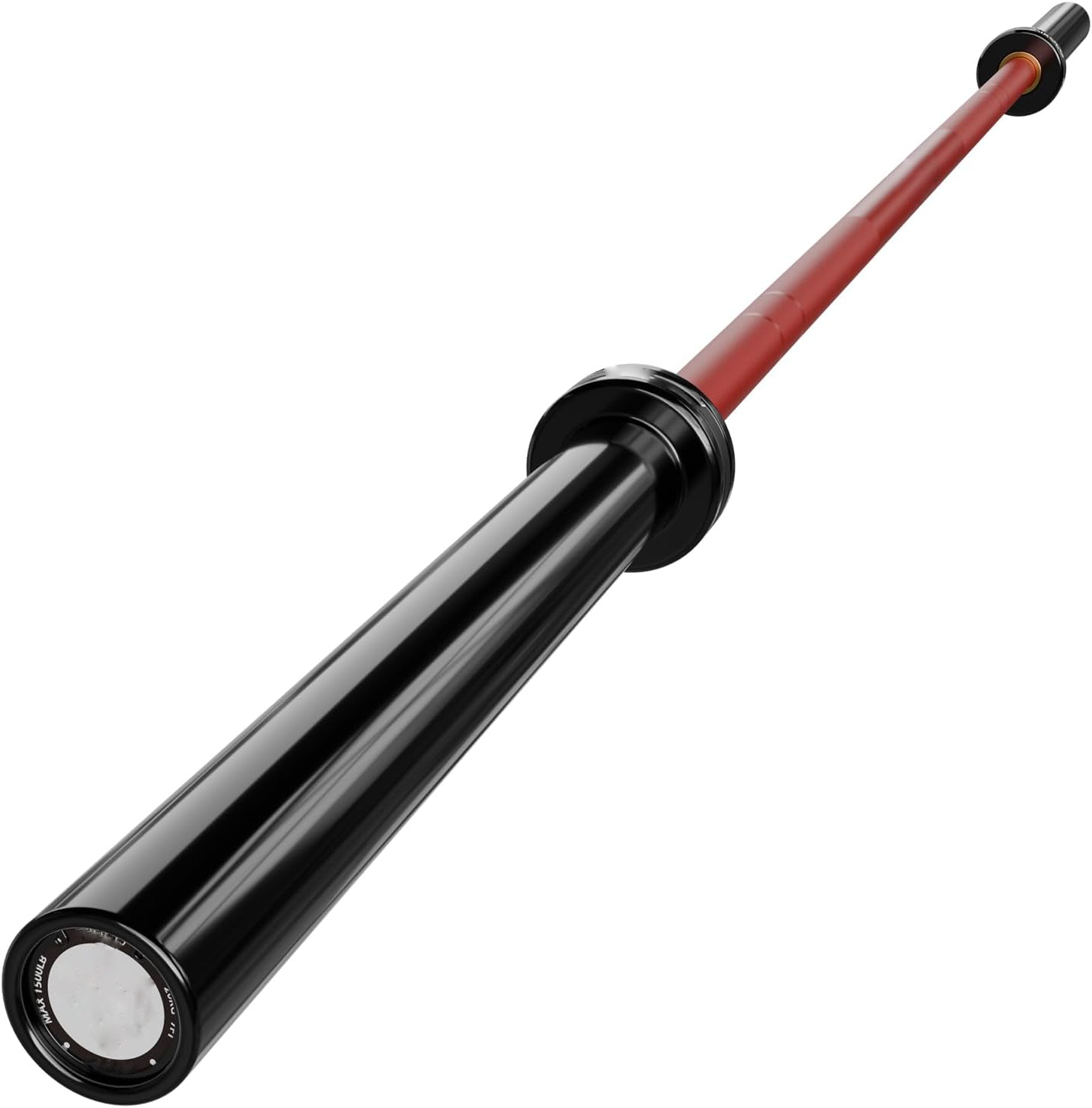
The official listing identifies a 45-pound bar designed for 2-inch weights. Confirm compatibility with your own plates, collars, rack, and instructions.
$69.00 USD (checked October 19, 2026). Availability can change.
Price checked October 19, 2026. Price and availability may change; see the product page for current details.
Bottom line
Set the bar on stable support, prepare matching plate stacks, keep the order consistent, secure each sleeve with correctly fitting collars when required, and check the whole setup before lifting. When any component or instruction is unclear, pause and confirm compatibility instead of improvising.
Sources
- Waxman 7-foot Olympic barbell listing (product identity, stated bar weight and plate fit; checked October 19, 2026).
- USA Powerlifting Rulebook, 2026.1 (competition plate loading and collar rules; not a general home-gym equipment manual).
- International Weightlifting Federation equipment information (competition collar function; competition-specific context).
Written by Codex from the linked product and rules information. No hands-on test or independent human review is claimed.
Leave a Reply