
No products in the cart.
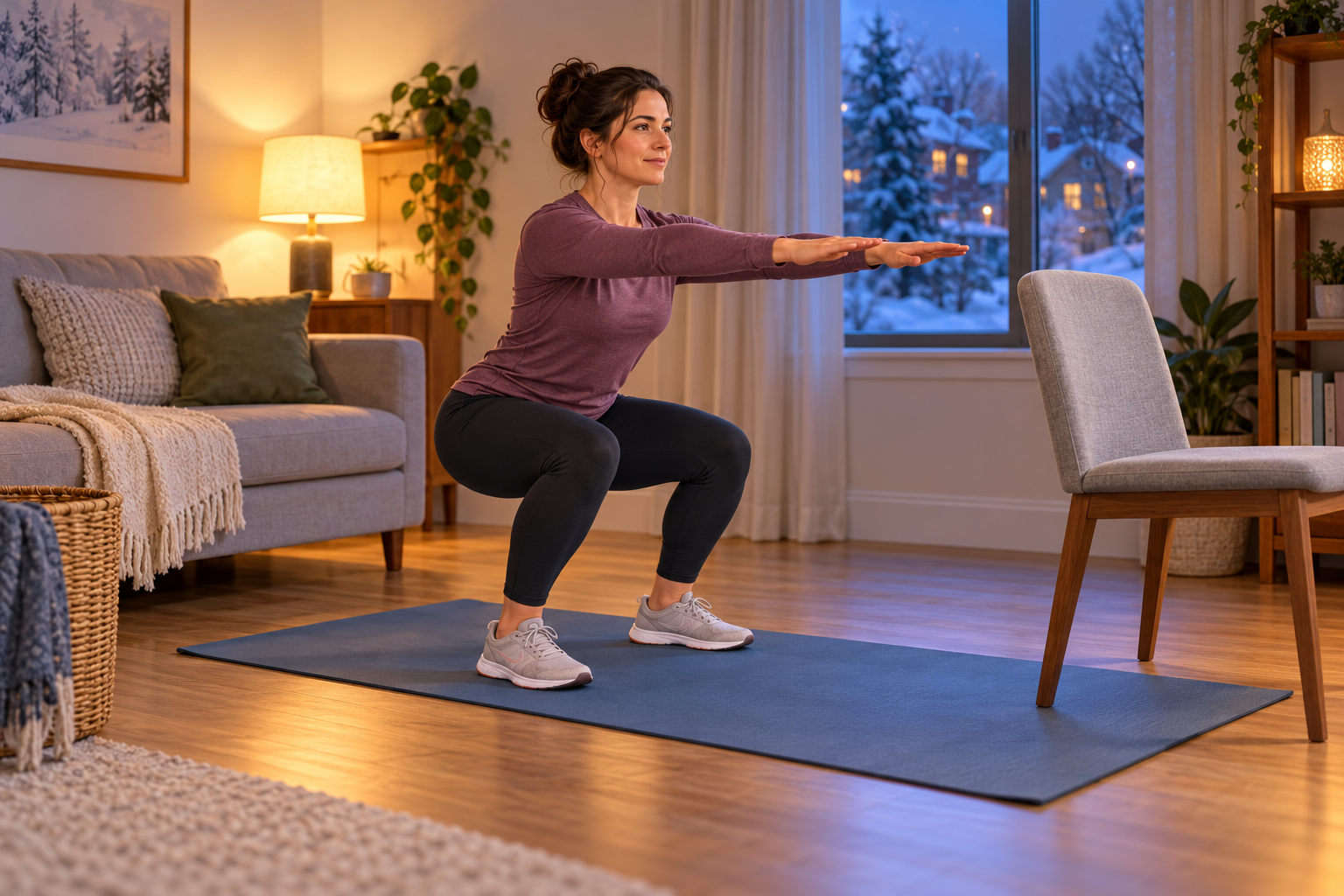
A 20-Minute Winter Bodyweight Workout for a Small Space
Illustration: AI-generated example image; it is not a photograph of a tested workout.
When winter weather, an early sunset, or a crowded schedule makes the gym harder to reach, a small clear area at home is enough for a short bodyweight session. This 20-minute plan uses controlled versions of familiar movements, with a chair or wall available for balance and easier variations. It is a practical way to keep moving, not a substitute for individualized medical or coaching advice, and one short session does not meet a full week’s activity needs by itself.
Set up a safe, warm space first
Choose a level, dry floor with room to step in every direction. Move rugs that slide, cords, pets’ toys, and low furniture out of the exercise area. Wear shoes or train barefoot only if the surface and your usual practice make that stable; avoid socks on a slick floor. Keep a sturdy chair against a wall for supported sit-to-stands and balance. If the room is cold, spend a few minutes walking in place and moving your arms before doing harder repetitions. You should feel warmer, not rushed or breathless before the workout starts.
Use a conversational effort. The goal is smooth, repeatable movement with several good repetitions left, not exhaustion. If you are new to exercise, returning after illness or injury, pregnant, or managing a health condition, ask a qualified clinician what is appropriate for you. Stop if you develop chest pain, faintness, unusual shortness of breath, or sharp pain, and seek appropriate medical guidance.
The 20-minute format
Set a timer for four rounds. Each movement gets 40 seconds, followed by 20 seconds to rest and change position. Complete the five movements below in order, then repeat the circuit three more times. Take longer breaks whenever needed; the clock is a guide, not a test. If 40 seconds leads to hurried form, do fewer repetitions and rest for the remainder.
- Chair sit-to-stand: Sit near the front of a stable chair with feet about hip-width apart. Lean forward slightly, press through your feet, stand tall, then reach your hips back to sit with control. Use your hands on the chair or thighs for assistance, or make the range smaller.
- Wall push-up: Face a clear wall and place hands around chest height, a little wider than your shoulders. Step back until your body feels stable. Bend your elbows to bring your chest toward the wall, keeping your trunk aligned, then press away. Move your feet closer to make it easier.
- Hip hinge: Stand with knees soft and hands on your hips. Push your hips backward as your torso tips forward comfortably, keeping your back in a natural position. Stand by bringing your hips forward. Hold the chair back lightly if balance is uncertain.
- Alternating step-back: Hold the chair if useful. Step one foot back a short distance, bend both knees only as far as comfortable, return, and switch sides. Keep the front foot planted and use a shallow range; substitute a backward toe tap if a lunge does not feel steady.
- March in place: Walk gently in place, lifting each foot only as high as comfortable. Swing your arms naturally or hold the chair with one hand. Keep the pace easy enough to maintain control and speak a sentence.
Adjust the plan to your starting point
For a first session, try two rounds and longer rests rather than forcing all four. If the movements feel easy and remain comfortable, progress gradually: add a few controlled repetitions, use a slightly larger comfortable range, or complete another round on a later workout. Change one variable at a time so you can tell how your body responds. Do not add unstable surfaces, jump movements, or improvised loads just to make a small-room routine feel harder.
Keep the workout balanced by retaining both upper- and lower-body movements. This short circuit includes basic pushing, leg, hip, and light aerobic patterns, but it is not a complete strength program for every person or goal. For more challenge, a qualified trainer can help select suitable pulling exercises and progressions that do not depend on a door, unstable furniture, or equipment with unknown load limits.
How this fits into winter activity
Federal guidance for adults recommends at least 150 minutes of moderate-intensity aerobic activity each week and muscle-strengthening activity on two or more days that works the major muscle groups. Activity can be accumulated in shorter sessions, and doing some activity is better than none. Treat this circuit as one possible strength-focused session; add walking, indoor cycling, or another activity that suits your circumstances to build weekly aerobic minutes. The recommended amount is a population guideline, not a pass/fail threshold or an individualized prescription.
Write down which variations felt controlled and how long you rested. Repeat the same setup before making it harder. A consistent, safe routine that fits your available space is more useful than a complicated plan you cannot perform comfortably during the darker months.
Leave a Reply