
No products in the cart.
How to Protect a Hardwood Floor Before Moving a Leg Press Into a Winter Home Gym
Quick answer: Before placing a plate-loaded leg press on a hardwood floor, confirm the floor and equipment manufacturers allow the location and any proposed protector. Do not assume a thick rubber mat is automatically safe: some floor coverings can trap moisture, mark a finish, or create an unstable base. Plan the route and assembled footprint, move the machine without sliding it, and stop if the floor flexes, the equipment rocks, or the surface protection is uncertain.
As colder weather moves workouts indoors, a home gym may shift from a garage or basement to a finished room. That change can protect a routine from weather, but hardwood needs a different check than concrete. A mat is not a substitute for the flooring maker’s instructions or a structural assessment.
Start with the floor, not the mat
Identify the floor type and finish if possible: solid or engineered wood, floating installation, recently refinished boards, and manufacturer warranty terms can have different limits. Ask the flooring installer or manufacturer what stationary heavy equipment and protective layers are allowed. This matters because the National Wood Flooring Association advises against non-breathable floor coverings or protectors on wood floors and cautions that rug pads can imprint some finishes. Its guidance also recommends avoiding sliding heavy furniture across wood. See the NWFA installation and care guidance and its problem-prevention advice.
Do not guess that a rubber, vinyl, foam, or plastic mat is compatible. Material, backing, dye, ventilation, moisture, and finish all matter; a product sold as a gym mat may not be approved for a particular wood floor. If the floor maker cannot confirm a safe protector, get a flooring professional’s advice before installation. Do not cover a newly finished floor until the finish maker’s waiting period has passed.
Measure the complete setup
Measure the room route, doorway, turns, ceiling clearance, and the final training area. The WAXMAN product listing gives assembled dimensions of 77.5 × 38.3 × 57.4 inches for its leg press and hack squat machine. Those are equipment dimensions, not a promise that the machine will fit through a doorway or that the listed footprint is all the clearance a user needs. Follow the exact manual for exercise space, assembly, flooring, and placement.
Also account for the loaded configuration. The same listing describes plate-loaded equipment and storage posts. Do not infer a floor’s load capacity from a product’s capacity rating or gross shipping weight; those figures answer different questions. If you cannot verify that the floor structure supports the equipment and intended use, consult a qualified building or flooring professional before loading it.
Move it without dragging
- Clear the route and protect doorways with a temporary covering approved for the floor.
- Use the manufacturer’s moving and assembly instructions. Large equipment may require several people or a qualified mover; do not improvise lifting points.
- Keep the machine and any temporary protection from sliding across the boards. The NWFA recommends lifting heavy furniture rather than sliding it.
- Place the machine only on a firm, level, approved surface. Remove temporary packing material and check that the frame sits as intended.
Do not put loose cardboard, towels, small felt pads, or folded rugs under a large machine to compensate for an uneven floor. They can shift, compress unevenly, or create an unstable setup. If the machine rocks or the floor visibly flexes, do not work out on it; contact the equipment maker and a flooring or structural professional.
Recheck after setup
Before adding plates, inspect the floor for trapped grit, dampness, scuffs, or finish changes. Confirm the equipment remains level and stable, and that required safety stops and movement clearances are unobstructed. Check again after the first unloaded movement and periodically thereafter. If a protector was approved, follow its inspection and cleaning instructions; remove it for inspection only when the floor and equipment makers say that is appropriate.
Winter humidity changes can affect wood flooring. The NWFA notes that wood responds to changes in temperature and relative humidity, so follow the flooring maker’s indoor climate guidance rather than sealing a damp floor beneath an impermeable cover. Wipe tracked-in snow or water promptly using the floor maker’s approved method.
When to delay the move
- The floor is newly finished, soft, damp, visibly damaged, or already flexing.
- You cannot verify the equipment’s placement requirements or the floor’s suitability.
- The proposed pad or mat has no clear compatibility guidance for the floor finish.
- The assembled machine cannot be moved into place without dragging or unsafe lifting.
In any of these cases, leave the machine where it is or choose a suitable room with a confirmed floor surface. A floor covering can reduce some surface contact, but it cannot make an unsuitable floor structurally adequate.
Product details
The WAXMAN Leg Press Hack Squat Machine listing describes a 2-in-1 plate-loaded machine, three-level safety limiters, 2-inch plate compatibility, and assembled dimensions of 77.5 × 38.3 × 57.4 inches. Those listing details do not replace the model’s manual or a flooring assessment.
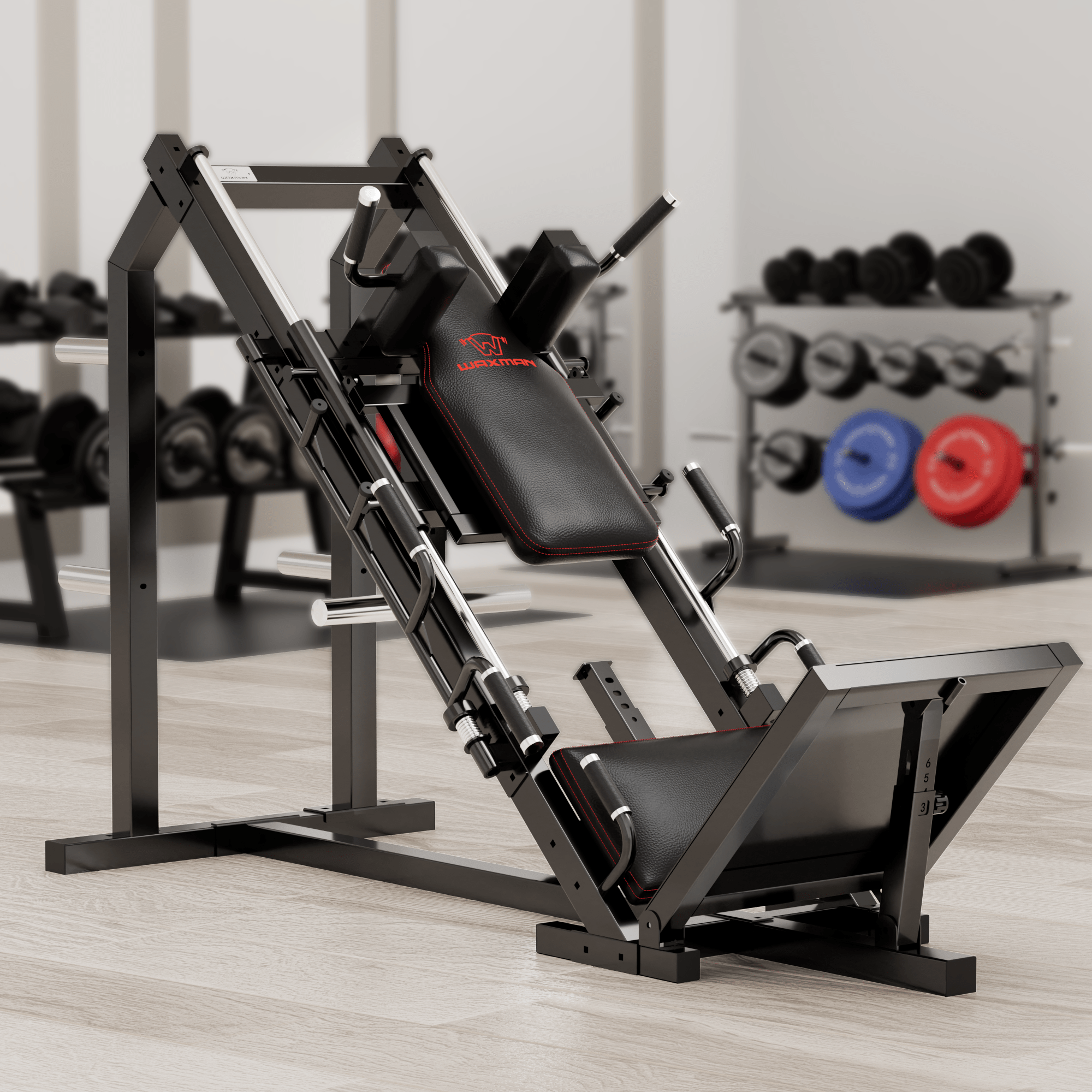
WAXMAN Leg Press Hack Squat Machine
2-in-1 plate-loaded equipment with three-level safety limiters; listed assembled size 77.5 × 38.3 × 57.4 in.
$799.00 USD (checked October 23, 2026). Price and availability may change; see product page.
Use limitation: verify floor compatibility, structural suitability, and the exact equipment manual before placement.
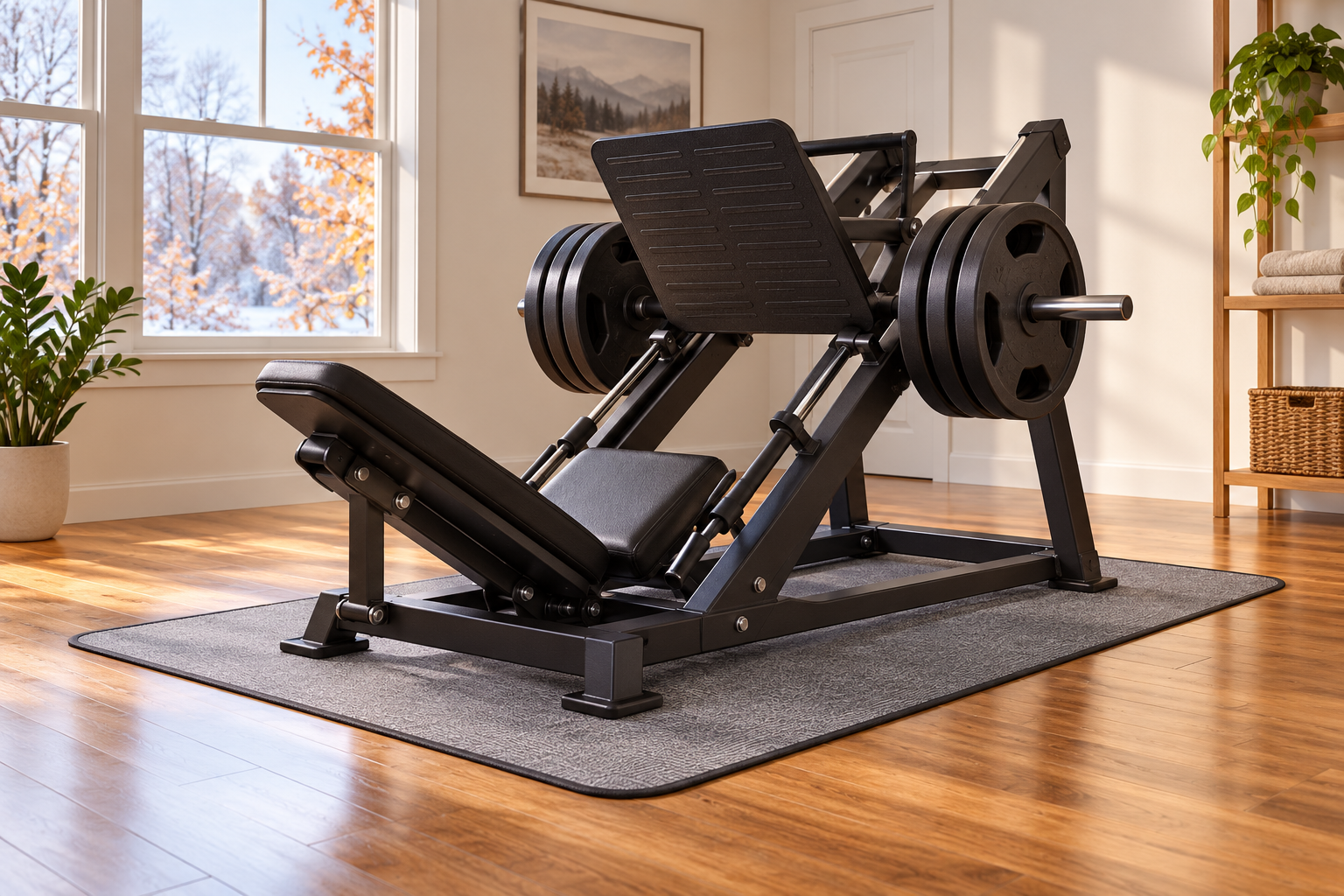
Cover illustration: AI-generated; illustrative only, not a product photograph or a floor-protection test.
Leave a Reply