
No products in the cart.
How to Check Whether Weight Plates Fit Your Barbell
Match the plate’s center opening to the bar’s loadable sleeve, then confirm the exact dimensions with both manufacturers. “Standard” and “Olympic” are useful size families, but labels alone do not guarantee that a particular plate will slide smoothly onto a particular bar. If a plate binds, rocks excessively, or will not seat fully, stop and verify compatibility rather than forcing it.
This guide is for checking equipment fit before a workout. It does not certify a bar, plate, rack, or lifting setup as safe. Follow the product instructions, inspect equipment for damage, and ask the manufacturer when the fit is uncertain.
Know which two surfaces must match
The plate’s center hole, often called its bore, slides over the bar’s loadable sleeve. The sleeve is the end section that holds the plates; it is different from the narrower shaft you grip. Compare the plate bore with the outside diameter of the sleeve, using the exact specifications for your products. A bar may fit plates from one size family and still be incompatible with plates from another.
Product names often use nominal labels such as 1-inch or 2-inch. Those labels are a quick clue, not a measurement of every point on every item. Manufacturers may specify a sleeve diameter, plate collar opening, or tolerance. For example, Rogue describes its Olympic bar sleeves as 50 mm and its compatible Olympic plates with a 50.4 mm collar opening. Ivanko gives different dimensions for its own bars and plates. These are manufacturer-specific examples; they should not be treated as universal dimensions for all brands.
Check the listing and measure carefully
- Find the exact model names. Record the bar model and plate model, not just the brand or a marketplace category label. Check whether the listing describes the sleeve and bore dimensions or only says “Olympic” or “standard.”
- Compare published specifications. Use the manufacturer’s product page or manual. Make sure the dimensions refer to the loadable sleeve and plate opening, rather than the bar shaft, decorative hub, or another part.
- Measure only if the manufacturer allows it. Use a suitable caliper on clean, accessible surfaces without scratching the coating. Take care around sharp edges and moving parts. Do not use a tape measure for a small diameter when a more suitable tool is needed.
- Try the plate without load. With the bar supported securely and unloaded, slide the plate on gently. It should move as the instructions describe and sit in the intended position. Do not drop, hammer, pry, or twist a plate to make it fit.
- Check retention separately. A compatible collar or lock helps keep plates from sliding during use, but a collar does not correct a mismatched bore and sleeve.
How much movement is acceptable?
Some clearance is needed so a plate can be loaded and removed. The amount varies by product design and manufacturer specifications. A small amount of movement by itself does not prove a defect, and a plate that seems snug is not automatically a safe match. Do not invent a universal clearance number from another brand’s product data. Ask the bar and plate makers what fit they specify for the exact models.
If the plate will not slide on with gentle handling, catches at one point, or has visibly excessive play, stop using that combination until the dimensions and condition are checked. Look for dirt, burrs, coating buildup, deformation, or damage, but do not grind, file, or alter the sleeve or plate. Contact the manufacturer with the model, photos, and measurements if the listed specifications do not resolve the question.
Before buying a bar or plates
- Check every plate you intend to use; mixed sets can contain different bore sizes.
- Confirm whether the bar listing’s size describes the sleeve rather than the grip shaft.
- Ask about compatibility if the listing provides only a general “standard” or “Olympic” label.
- Check the product’s stated load limits and use the required collars and rack setup.
- Keep purchase records and avoid using equipment with cracks, bends, loose components, or damaged sleeves.
Waxman 7-foot Olympic barbell listing
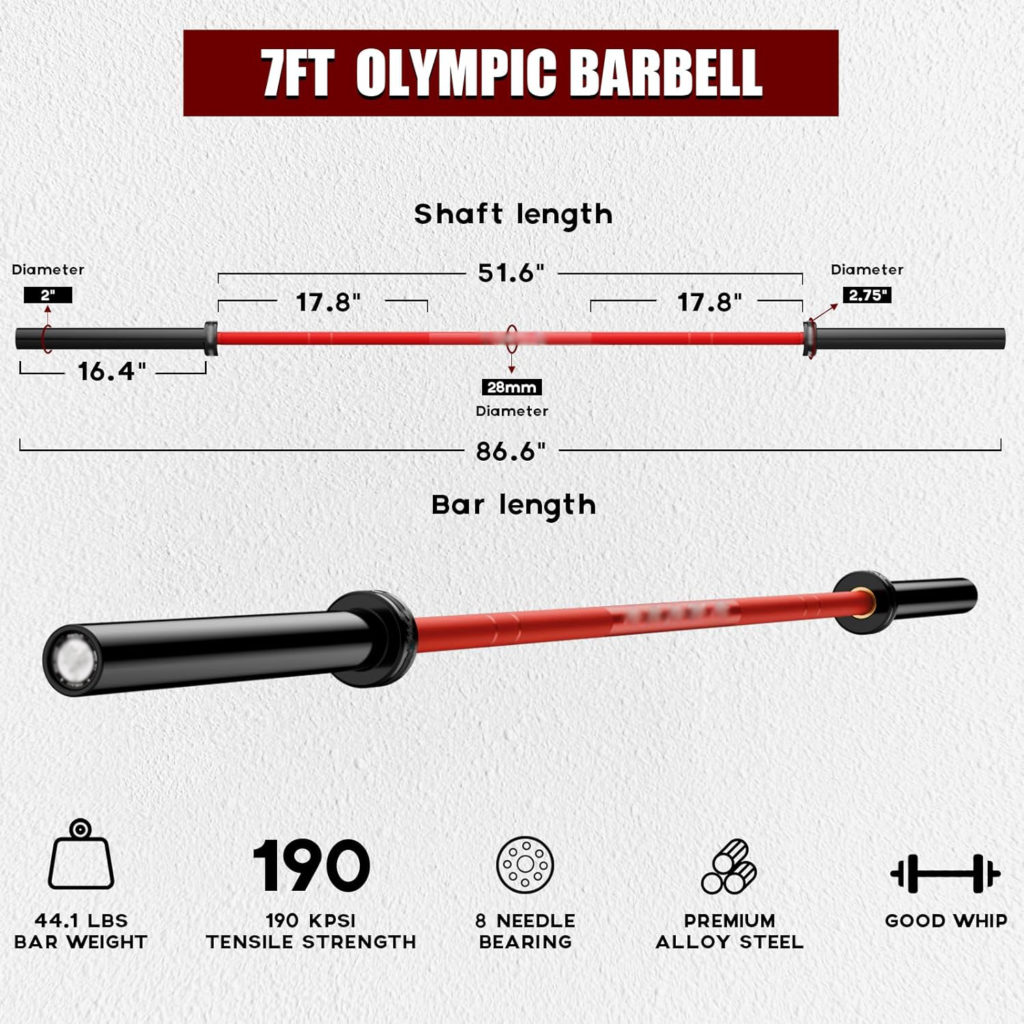
The Waxman listing identifies this product as a 7-foot Olympic barbell and says it fits 2-inch standard weights. The listing’s included dimension graphic shows a 2-inch sleeve description. Because product labels and measurement conventions can vary, verify the precise plate bore with Waxman before combining it with plates from another brand.
Waxman 7ft Olympic Barbell
Listing describes a 7-foot bar and compatibility with 2-inch standard weights. Confirm plate fit and exact specifications for your plates before use.
Current listed price: $69.00 USD · Waxman listing showed in stock when checked October 24, 2026. Price and availability can change.
Sources
- Ivanko: “My Plates Don’t Fit Your Bar!” — brand-specific bar and plate dimensions; accessed October 24, 2026.
- Rogue barbell components — Rogue-specific sleeve and collar opening specifications; accessed October 24, 2026.
- Waxman product listing — product identity, listed price, availability, image, and fit description; accessed October 24, 2026.
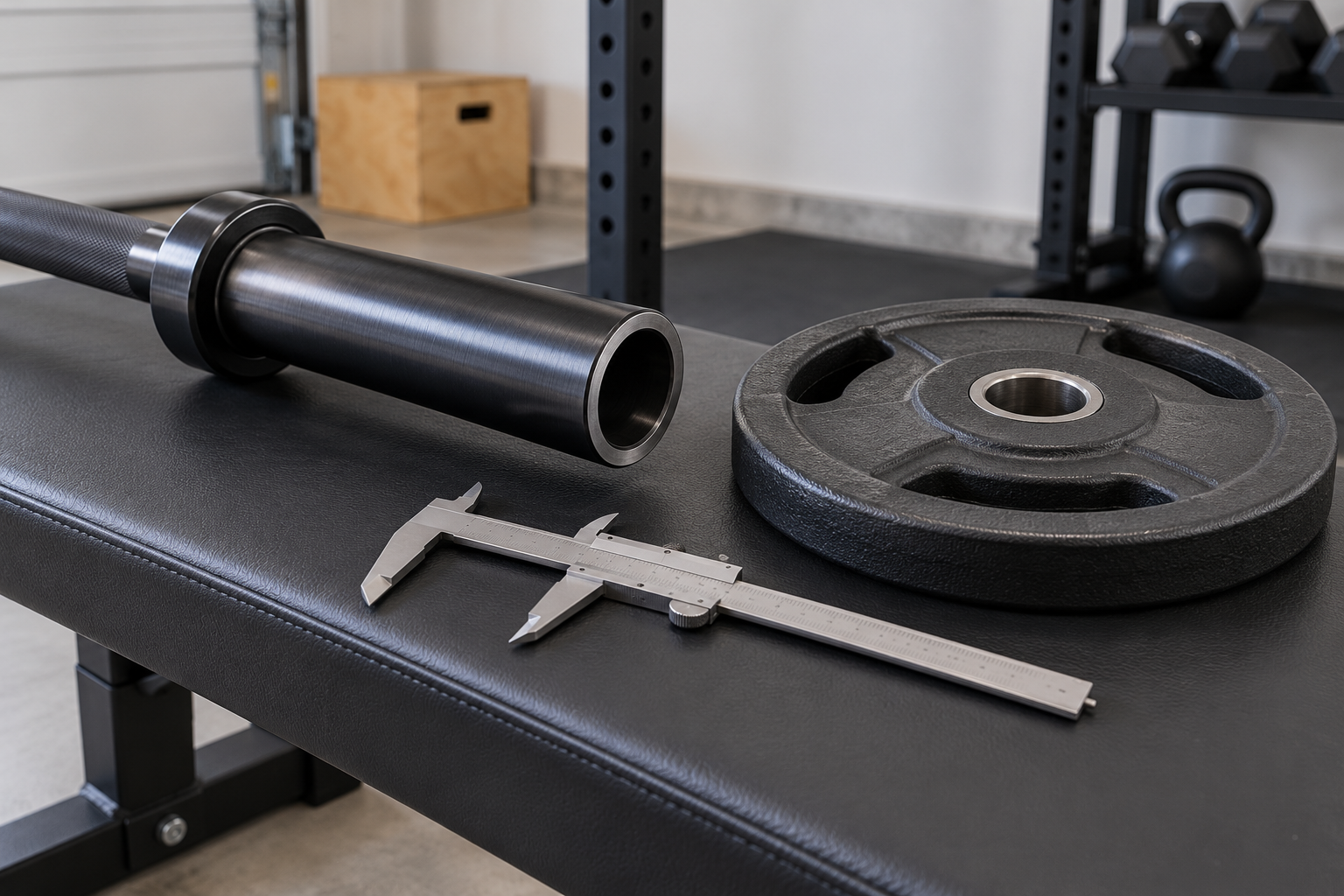
Cover image: AI-generated conceptual illustration, not Waxman product photography or a fit test. Product specifications and listed price checked October 24, 2026; price and availability may change. No hands-on equipment test is claimed.
Leave a Reply