
No products in the cart.
Why Does My Weight Bench Rock? Safe Checks Before You Use It
Quick answer: Stop using a weight bench that rocks under light hand pressure. First check that it sits on a firm, level floor; then inspect its feet, frame, fasteners, and any adjustment lock using the manufacturer’s instructions. If it still moves, has a bent or cracked part, or will not lock securely, do not train on it until the manufacturer or a qualified service person resolves the problem. Do not compensate with loose shims, improvised blocks, or extra weight.
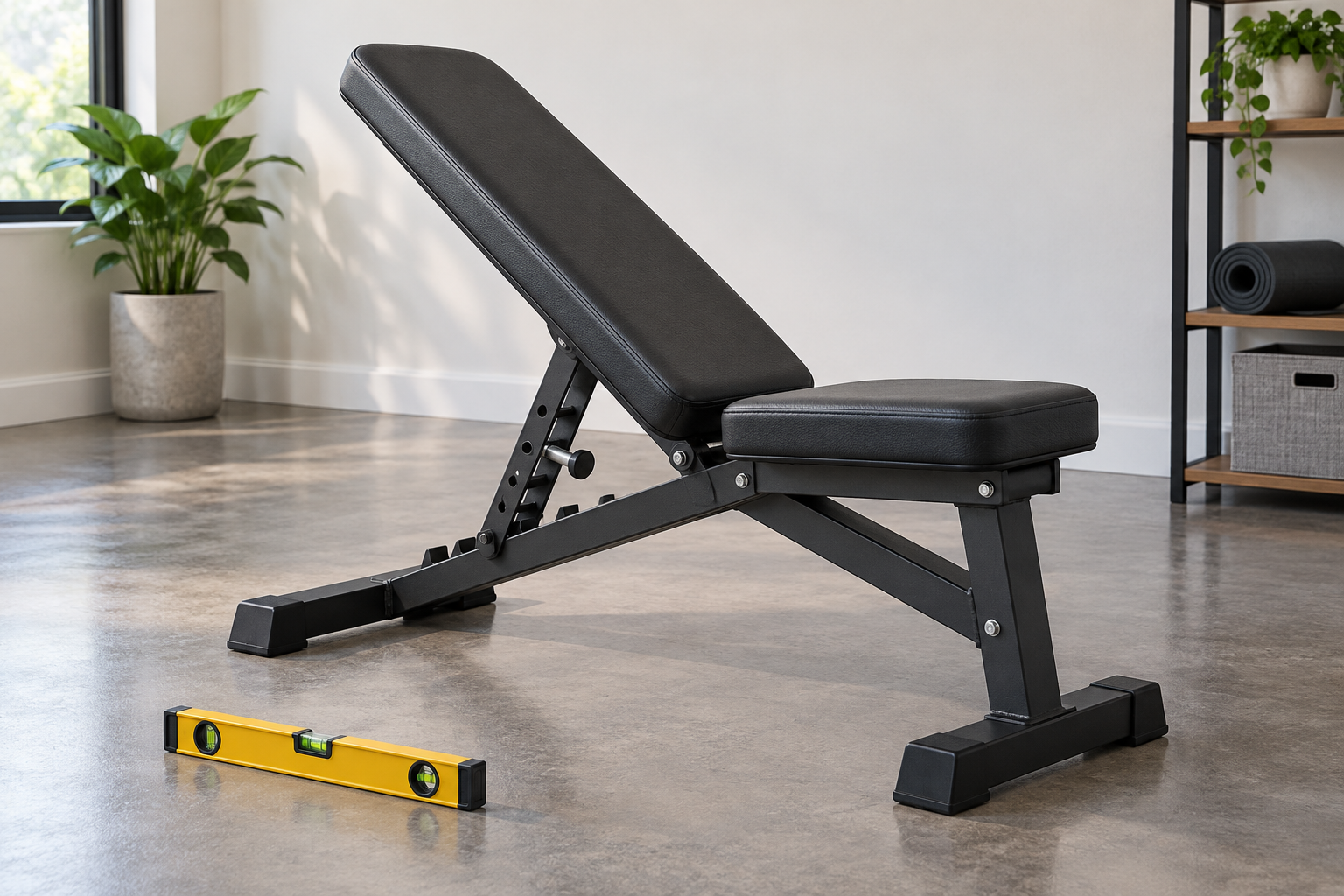
Cover: AI-generated illustrative image of a generic adjustable bench and a level; it is not a product photo, setup test, or proof that a particular bench is level.
Start with the floor and the bench’s position
Unload the bench and move it away from rugs with thick pile, raised seams, loose mats, cords, and uneven floor transitions. Set it on a clean, hard surface with all feet resting on the same plane. A mat can protect flooring, but a soft or bunched mat can make a bench less stable. If the floor itself slopes, flexes, or has a damaged spot, choose another location rather than trying to level the bench with scraps of wood or folded towels.
Check whether the bench rocks when you press gently on the frame from different sides. Keep your hands clear of pinch points and do not climb onto the bench to test it. If a foot is visibly lifted, compare the position of the feet and the floor. A surface that looks flat may still have a tile edge, threshold, or soft patch beneath one support.
Inspect the supports and fasteners
Look at each foot pad or end cap. A missing, torn, compressed, or loose pad can change how the frame contacts the floor. Check the frame for a bent leg, cracked weld, loose joint, or other visible damage. Follow the product manual for any permitted fastener checks and tightening sequence. Do not guess at a torque value, add hardware that was not supplied, or keep tightening a fastener that spins, strips, or appears damaged.
Use the bench only for its intended purpose and within its documented load limits. A product photograph or a seller’s general claim is not a substitute for the exact manual and rating for your model. The American Council on Exercise advises fitness professionals to use equipment as intended, arrange adequate space around stations, and inspect equipment before use. That is general facility guidance, not a model-specific repair procedure.
For an adjustable bench, check the setting before each session
Set the backrest and seat to the intended position while the bench is unloaded. Confirm that the support bar, pin, ladder, or other mechanism is fully engaged exactly as the manufacturer describes. A partly engaged support can move under load even when the bench feels steady while empty. Keep fingers away from the hinges and adjustment points when changing positions.
After the setting is engaged, apply gentle pressure by hand while standing beside the bench. If the backrest shifts, the pin does not seat, or a latch looks damaged, do not use that position. Do not rely on friction, body weight, or a makeshift strap to hold an adjustable section in place. If the lock appears intact but will not engage, contact the manufacturer for the correct inspection or service steps.
Know when to stop and ask for service
Take the bench out of use if it rocks on a suitable floor after basic checks, if any structural part is bent or cracked, if a fastener is missing, or if an adjustable section will not lock. Do not test it with a loaded barbell or dumbbells. Photograph the model label and the problem area, then contact the seller or manufacturer with the model and purchase details. Ask whether the unit needs a replacement foot, hardware, or professional repair; do not assume parts from another bench will fit.
Once the issue is corrected, repeat the unloaded stability check and confirm that all intended settings engage. Leave enough clear space around the bench for the movement you plan to perform, and use a spotter or other appropriate safeguards when your exercise and equipment instructions call for them. This checklist cannot determine whether a damaged frame is safe, or replace the manufacturer’s manual, qualified repair, or individualized exercise instruction.
What to check when comparing a replacement
Compare the exact model’s assembly instructions, floor-contact points, adjustment method, stated weight limits, dimensions, and warranty or service options. A bench can be stable on one floor and unsuitable for another room or rack setup. Confirm that measurements and ratings apply to the model and configuration you intend to buy.
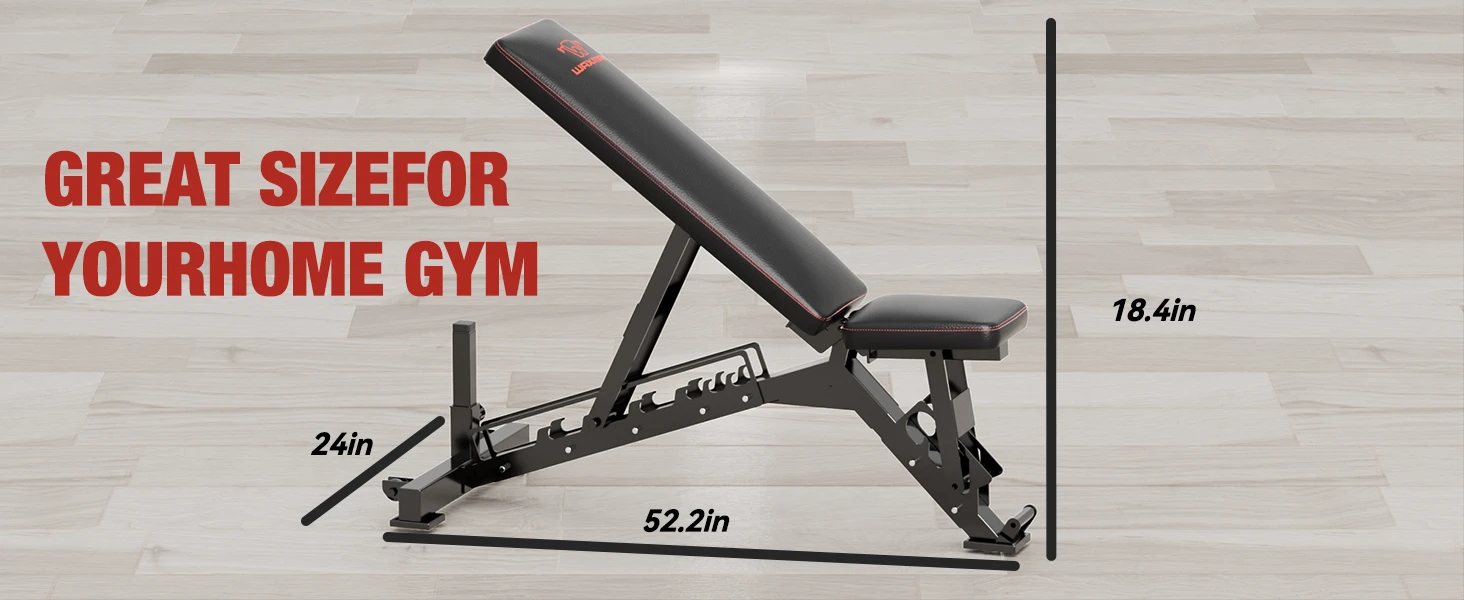
Waxman Adjustable Weight Bench
The official listing describes an adjustable backrest and lists $269.00 USD when checked October 27, 2026. The page title and description differ on the number of back positions, so confirm the exact configuration and assembly details before purchase. Price and availability may change; see the product page.
Bottom line
A rocking bench is a reason to pause, not something to push through. Check the floor, feet, permitted fasteners, and adjustment lock with the bench unloaded. If movement or damage remains, stop using it and get model-specific guidance before returning to training.
Source: American Council on Exercise, ACE Personal Trainer Manual, equipment and facility guidance; Waxman adjustable bench product listing.
Leave a Reply