
No products in the cart.
How to Clean a Weight Bench Without Damaging the Upholstery
Quick answer: Follow the cleaning instructions for your exact bench first. If the manual permits routine surface cleaning, remove loose dust with a soft dry cloth, use only the cleaner and dampness it allows, and let the pad dry fully before using the bench. Do not assume that bleach, alcohol, disinfectant wipes, abrasive pads, or a soaked cloth are safe for every upholstery material.
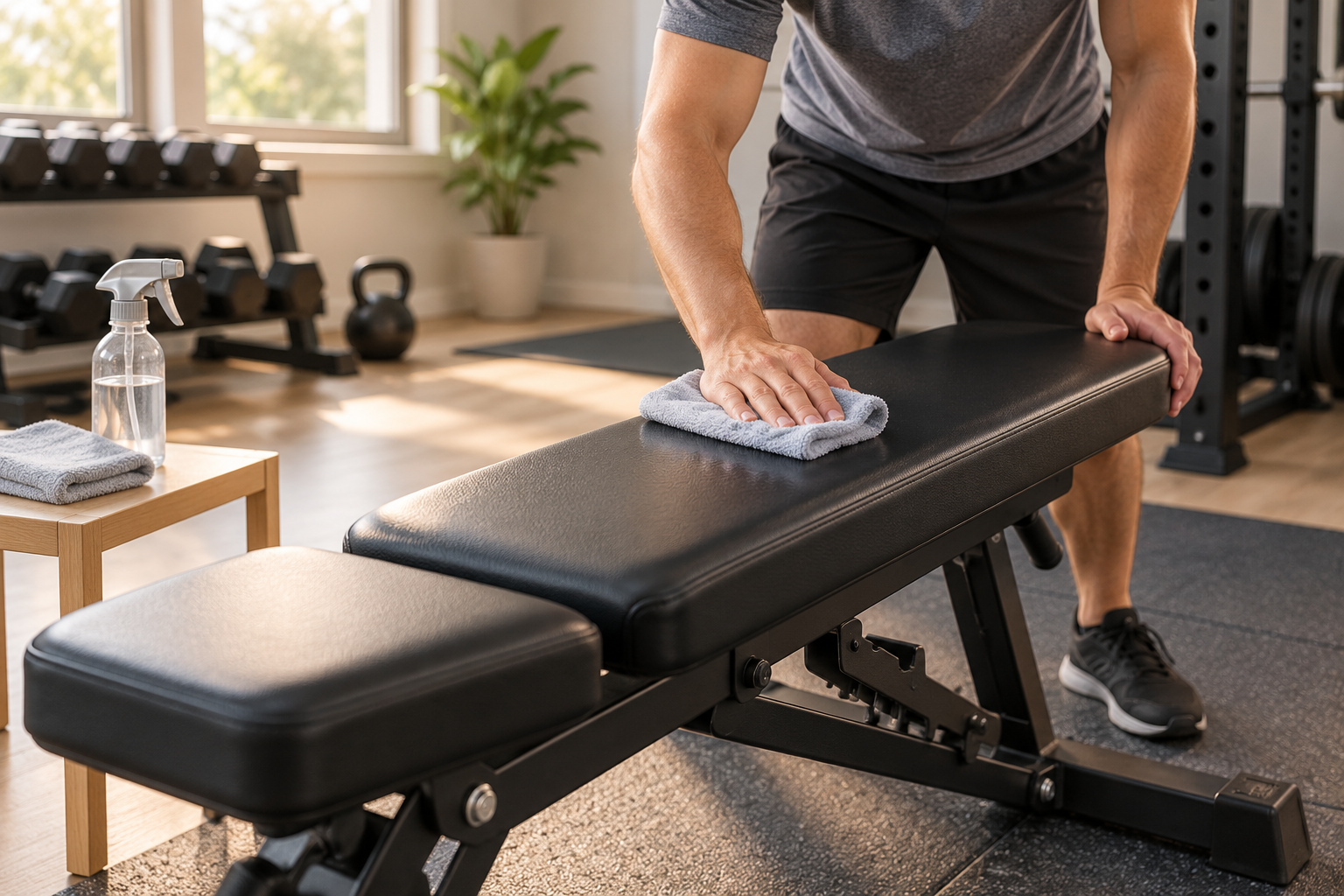
Cover illustration: AI-generated image of generic bench care; it is not a photograph of Waxman equipment or proof that a particular cleaning method is approved.
Why the material and instructions matter
Weight benches can use different coverings, seams, foams, adhesives, and finishes. A cleaning product that is suitable for one surface may discolor, dry, soften, or otherwise damage another. Product photos and the word “upholstery” do not identify the exact material or establish which chemicals are compatible with it. The manufacturer’s manual or care label for your model is the first source to check.
Look for specific directions about permitted cleaners, water, disinfectants, drying, and how to handle sweat or spills. If the manual is missing or unclear, ask the manufacturer about the exact model before trying a stronger product. Keep any care instructions you receive with the equipment documentation.
A cautious routine after a workout
- Make the bench safe to clean. Remove weights and attachments from the area. If the bench is adjustable, place it in the position recommended for cleaning and keep fingers clear of hinges and locks.
- Remove loose dust first. Use a clean, soft, dry cloth. Do not scrape dried material with a blade or rough scrubber.
- Use only an approved method. If the instructions allow a damp cloth or a named cleaner, follow the stated dilution and application method. Apply liquid to the cloth only if the instructions permit it; do not spray into seams, adjustment hardware, or openings.
- Wipe gently. Work over the surface without saturating it or forcing liquid into stitching and edges. Stop if color transfers to the cloth or the finish changes.
- Dry before use. Follow the manual’s drying directions. Do not sit, lie, or exercise on a damp or slippery pad.
This routine is conditional on the product’s own care instructions. It is not a substitute for them, and it does not mean every bench can be cleaned with water.
What should you avoid?
Unless the manufacturer specifically approves them, avoid household bleach, ammonia, solvents, alcohol-based cleaners, abrasive powders, stiff brushes, steam, and high-pressure water. Do not mix cleaning chemicals. A product labeled “natural” or “leather-safe” is not automatically suitable for a particular bench. Never combine cleaners to make a stronger solution.
Do not cover a damp surface with a towel and put the bench away before it dries. Trapped moisture can linger in seams or beneath a cover. Avoid leaving the bench in direct sun or near a heater to speed drying unless the manufacturer says that is acceptable; heat and UV exposure may affect materials, and model-specific guidance matters.
How to handle sweat, spills, and stains
For fresh sweat or a small spill, first check the manual for an approved response. Blot rather than scrub if that is consistent with its directions. For a stain that remains, do not escalate to a stronger chemical by trial and error. Contact the manufacturer with the model name, a description of the spill, and a photo of the affected area. Ask which cleaner and method are safe.
If cleaning leaves a slick residue, unusual odor, tacky surface, cracked covering, or exposed foam, stop using the bench until you receive guidance. A damaged or slippery pad can affect contact and comfort. Cleaning cannot repair torn upholstery, loose seams, or structural damage.
Keep adjustment parts separate from the pad
Bench pads and metal adjustment mechanisms may have different care requirements. Do not flood hinges, pins, bolts, or locking parts while cleaning the upholstery. If dust or residue is visible around an adjustment point, consult the manual for its maintenance instructions. Do not oil, lubricate, or tighten hardware unless the instructions call for it and explain how.
Once the bench is dry, check that its surface is not slippery and that any backrest or seat lock engages as intended before returning it to service. If the bench rocks, has a loose or damaged part, or an adjustment mechanism fails to lock, stop using it and seek model-specific service advice rather than treating cleaning as a repair.
Product example: verify care directions before buying
The Waxman Adjustable Weight Bench listing describes three cushions and an adjustable backrest. Its page displays $269.00 USD when checked October 27, 2026. The listing does not provide cleaning directions, so do not infer a safe cleaner from its photos or marketing description. Ask Waxman for care instructions for the exact model before using any chemical cleaner. Price and availability may change; see the product page.
Simple care checklist
- Find the manual or care label for the exact bench.
- Use only its approved cleaner, cloth, and method.
- Keep liquid away from seams and moving hardware unless directed.
- Let the surface dry completely and check for slickness before use.
- Ask the manufacturer about stains, damage, or unclear instructions.
Bottom line: Gentle cleaning is only safe when it matches the bench maker’s instructions. When those directions are unavailable, pause before applying chemicals and ask the manufacturer. A generic cleaning tip cannot verify the materials or care requirements of a particular model.
Sources
- Waxman Adjustable Weight Bench product listing — product identity, cushion count, adjustable design, displayed price and official image checked October 27, 2026; the page provides no cleaning instructions.
Written with Codex assistance. No product cleaning test was conducted; no independent human review is claimed.
Leave a Reply