
No products in the cart.
How to Move a Weight Bench Through a Doorway Safely
Quick answer: Before moving a weight bench through a doorway, remove loose weights, check whether the manual allows any parts to be detached, measure the narrowest point of the route, and get help if the bench is heavy or awkward to control. Keep the path clear and move slowly. Do not drag the bench by its upholstery, hinges, or adjustment pins, and do not improvise a one-person lift when you cannot keep a secure grip.
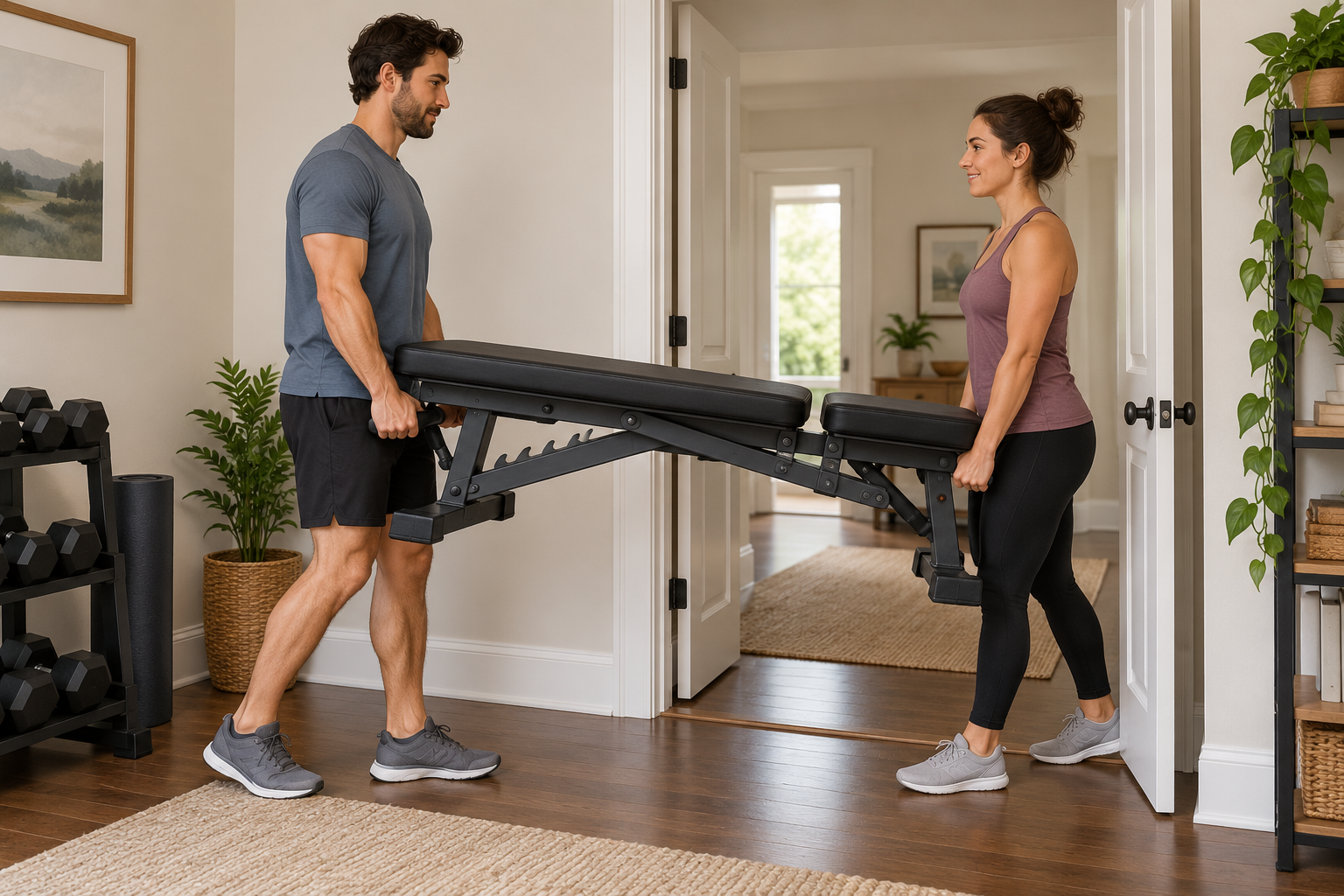
Cover image: AI-generated illustration of people moving a generic weight bench. It is illustrative only; it does not depict a Waxman product or demonstrate a tested lifting procedure.
Start with the bench and the route
Take plates, dumbbells, bands, and other loose items off the bench and set them aside. A loose load can shift while the bench is being tilted, and accessories can snag on a door frame. If the bench has an adjustable backrest, set it to the position the manufacturer recommends for moving or storage. If the manual says to secure a pin or lock before transport, follow that instruction. Do not assume a lock is engaged just because a pad looks level.
Measure the tightest part of the route, not just the doorway opening. Include the door stop, handle, nearby furniture, hall turns, stairs, and the space needed to pivot. Compare those clearances with the bench in the orientation you expect to carry it. A measurement is a planning check, not a guarantee: hands, moving parts, and the bench’s uneven shape need room too. Protect walls and flooring with suitable temporary covers, but do not put a slippery sheet under the people carrying the load.
Decide whether to move it assembled
Read the exact model’s manual before removing a backrest, seat, foot, or frame component. Some assemblies may be taken apart for transport; others may require specific tools or reassembly steps. Do not remove a part just because it appears easy to unscrew. Keep fasteners together and label the parts if the manufacturer’s instructions call for disassembly. If the manual is unavailable or unclear, contact the manufacturer before taking the bench apart.
A bench that fits through a doorway while assembled may still be difficult to control around a corner. Consider its overall shape, where you can grip it, and whether the moving path includes stairs. Do not lift by the cushion, upholstery, adjustment lever, or a narrow movable support unless the manufacturer identifies that area as a carrying point. If you cannot identify secure handholds, stop and ask the manufacturer for guidance.
Use enough help and keep the route controlled
OSHA’s general safe-lifting guidance says to get help when a load is too heavy or bulky and to clear obstacles from the carrying path. A home gym bench can be awkward even when its listed weight seems manageable because its frame is long and its balance changes as it tilts. Arrange a helper before lifting, agree which end each person will control, and decide where you will set it down if you need to pause.
- Open doors fully and remove trip hazards from the route.
- Use a clear verbal cue before lifting, turning, or setting the bench down.
- Keep the bench close enough to control; move your feet to turn instead of twisting under load.
- Walk slowly and stop if either person loses grip, balance, or visibility.
- Set the bench down on a stable surface before changing hand positions.
Do not use a rolling office chair, improvised strap, or furniture dolly unless it is suitable for the bench’s shape and weight and you can keep it stable. Never place hands beneath a suspended bench or try to catch a falling frame. If stairs, a narrow landing, or a heavy awkward assembly make the move uncertain, hire qualified movers or ask the manufacturer about an approved transport method.
After moving: inspect before exercising
Once the bench is in its new location, check the manual’s setup steps. Confirm that removed parts are reinstalled with the specified hardware and that adjustment positions lock as intended. Place the bench on a firm, level floor and check for rocking or visible damage. Do not test it by loading it with weights if a frame, weld, fastener, pad, or locking part looks bent, cracked, loose, or damaged. Stop using it and seek model-specific service guidance.
Moving advice cannot establish that a particular bench is safe to disassemble or carry by a specific component. The model manual and manufacturer are the authority for those details. OSHA’s material-handling guidance is general workplace guidance, not a product-specific household moving instruction.
Product example: check the exact bench details
The Waxman Adjustable Weight Bench listing displays a price of $269.00 USD and describes three cushions and an adjustable design; it does not provide transport or disassembly instructions. Confirm the current listing and ask Waxman for model-specific moving guidance before removing parts. Price and availability may change; see the product page.
Sources
- OSHA, Materials Handling: Heavy Lifting — general guidance on getting help with heavy or bulky loads and planning a clear route.
- Waxman Adjustable Weight Bench product listing — product identity, displayed price and listed design details; no transport procedure stated.
Written with Codex assistance. No product moving test was conducted; no independent human review is claimed.
Leave a Reply