
No products in the cart.
What Bench Angle Should You Use for an Incline Dumbbell Press?
Quick answer: Start with a modest incline, commonly around 30 degrees, and adjust only if you can keep your feet planted, back supported, and dumbbells under control. A steeper setting changes the pressing path and may make the movement feel more like a shoulder press. The best setting is the one that fits your comfort and control; no single angle is right for every lifter. Check the bench manual and use only a locked position.
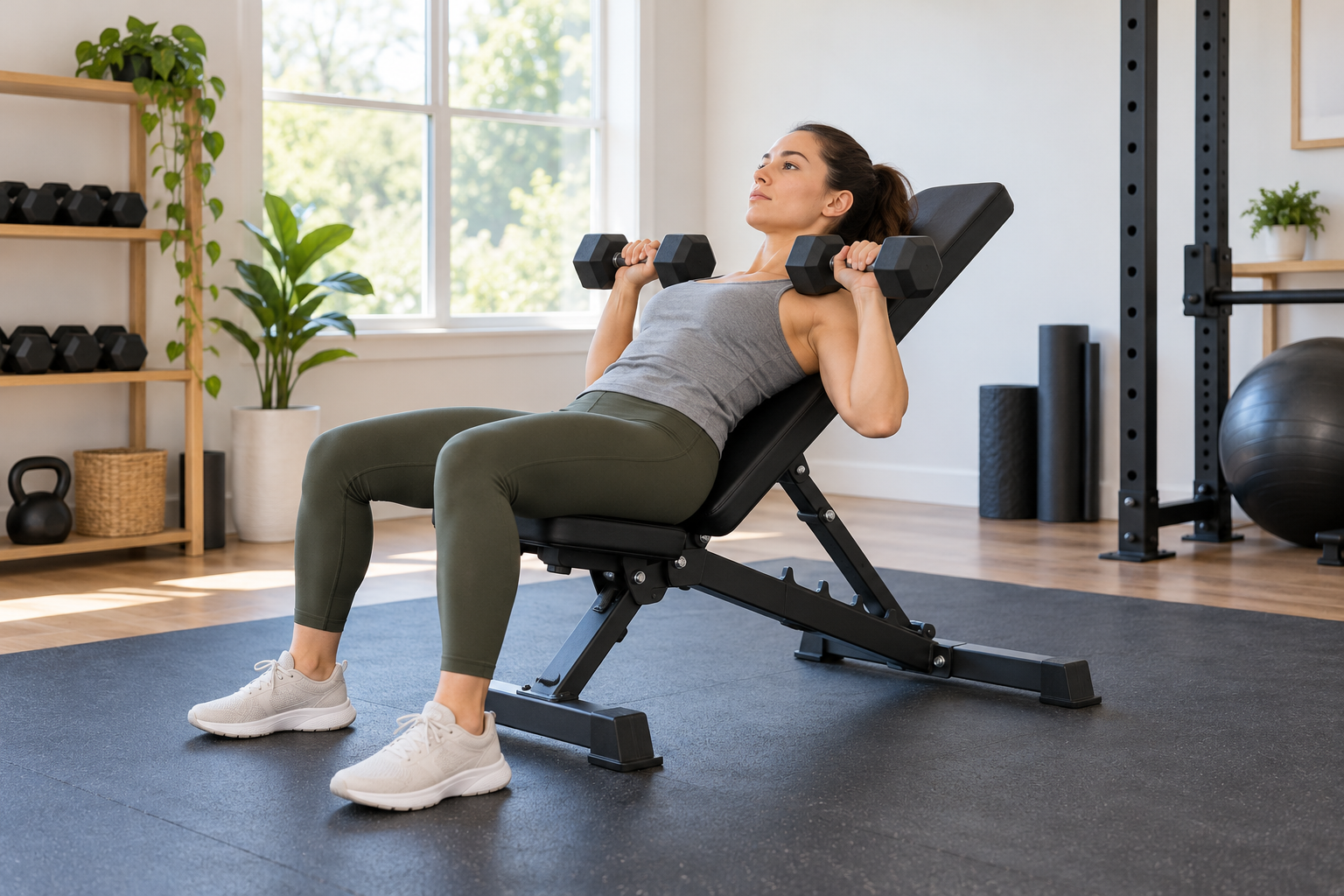
Cover image: AI-generated illustration for this topic. It is not a product photo, a form test, or evidence that a particular setup is safe for every person.
Why the incline changes the exercise
Raising the backrest changes the direction in which you press. The National Academy of Sports Medicine describes the incline dumbbell chest press as emphasizing the upper chest while involving the shoulders and triceps. Its exercise guidance demonstrates a 45-degree setup. That is one reference point, not a requirement or a promise of a particular result. A lower incline can feel more like a flat press; as the backrest gets steeper, the shoulders may contribute more.
Instead of chasing a precise angle, use the bench settings as choices to compare. Many home benches have notches rather than a continuously adjustable dial. If the exact angle is not marked, do not estimate it as an exact measurement. Record the notch that felt controlled so you can repeat your own setup.
Set up safely before picking up the dumbbells
- Put the bench on a level, nonslip surface with enough clearance around both sides. Remove other loose equipment from the lifting area.
- Adjust the backrest while the bench is unloaded. Engage the manufacturer’s lock or pin fully, then confirm the pad does not shift with a gentle hand check.
- Set a low incline first. A modest position gives you a useful starting point without assuming that a steeper setting is better.
- Sit down and check that your head and upper back are supported. Place both feet flat on the floor if your proportions and bench height allow it; do not force an awkward position just to imitate a diagram.
Do not change the adjustment while lying on the bench or while holding dumbbells. If the bench rocks, a pin will not seat, a frame part is damaged, or the back pad moves under light pressure, stop and resolve that equipment issue before loading it. Follow the exact model manual for adjustment and inspection instructions.
Compare settings with a light, controlled set
Use a load light enough that getting into position and lowering the weights are deliberate. Begin with the dumbbells beside your upper chest, wrists controlled, and elbows in a comfortable path slightly away from your torso. Press upward without bouncing or forcing the weights together. Lower only as far as you can maintain control and a comfortable shoulder position.
After a few easy repetitions, ask three questions: Can you keep your upper back supported? Can you lower and press without the bench shifting? Does the movement feel like a chest press rather than an awkward overhead press? If the setup feels unstable or uncomfortable, stop the set. When appropriate, lower the load or return to a less steep setting. Do not keep increasing weight to test whether a poor setup will improve.
Once a setting feels controlled, keep it consistent while you learn the movement. Change one variable at a time: angle, load, or range of motion. This makes it easier to notice which adjustment affects comfort and control. It does not establish a medically ideal angle or guarantee injury prevention.
When to choose another exercise or get help
Use a flat press or another movement if the incline position does not feel comfortable, and follow guidance from a qualified coach if you are unsure how to handle the dumbbells getting into and out of position. Stop if you feel sharp pain, numbness, dizziness, or unusual symptoms; do not try to solve those symptoms by changing the bench angle alone. A spotter can help with heavy or unfamiliar loads, but a spotter cannot make a damaged or unlocked bench safe.
People returning after an injury or managing a health condition should ask an appropriate health professional about exercise modifications. This general setup guide cannot assess your mobility, equipment condition, or individual training needs.
Choosing an adjustable bench
An adjustable backrest is useful when your program calls for both flat and incline positions, but adjustability alone does not tell you whether a bench fits your space or body. Check the footprint, seat and back-pad layout, adjustment mechanism, stability on your floor, and the manufacturer’s load limits and manual before buying. Do not infer a load rating from the frame’s appearance or from this exercise description.
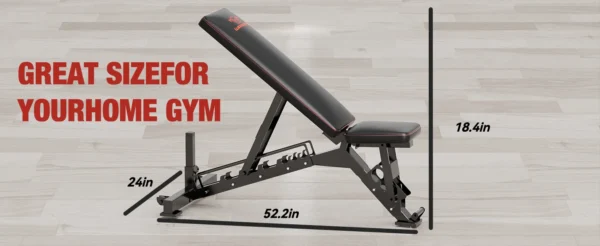
Waxman Adjustable Weight Bench
Adjustable backrest with three listed cushions. The product page’s title and description differ on the number of positions, so verify the current configuration and manual before purchase or use.
Price: View current price
Product page checked October 27, 2026. Price and availability may change; see the product page.
Bottom line
Try a modest incline first, secure the bench before loading it, and judge the setting by stable support and controlled repetitions. Adjust the angle only between unloaded sets. If the position does not feel right, reduce the incline or choose a different exercise rather than forcing the movement.
Further reading: NASM two-arm incline dumbbell chest press exercise guide · Waxman product details.
Leave a Reply