
No products in the cart.
How to Set Up a Dumbbell Pullover on a Weight Bench
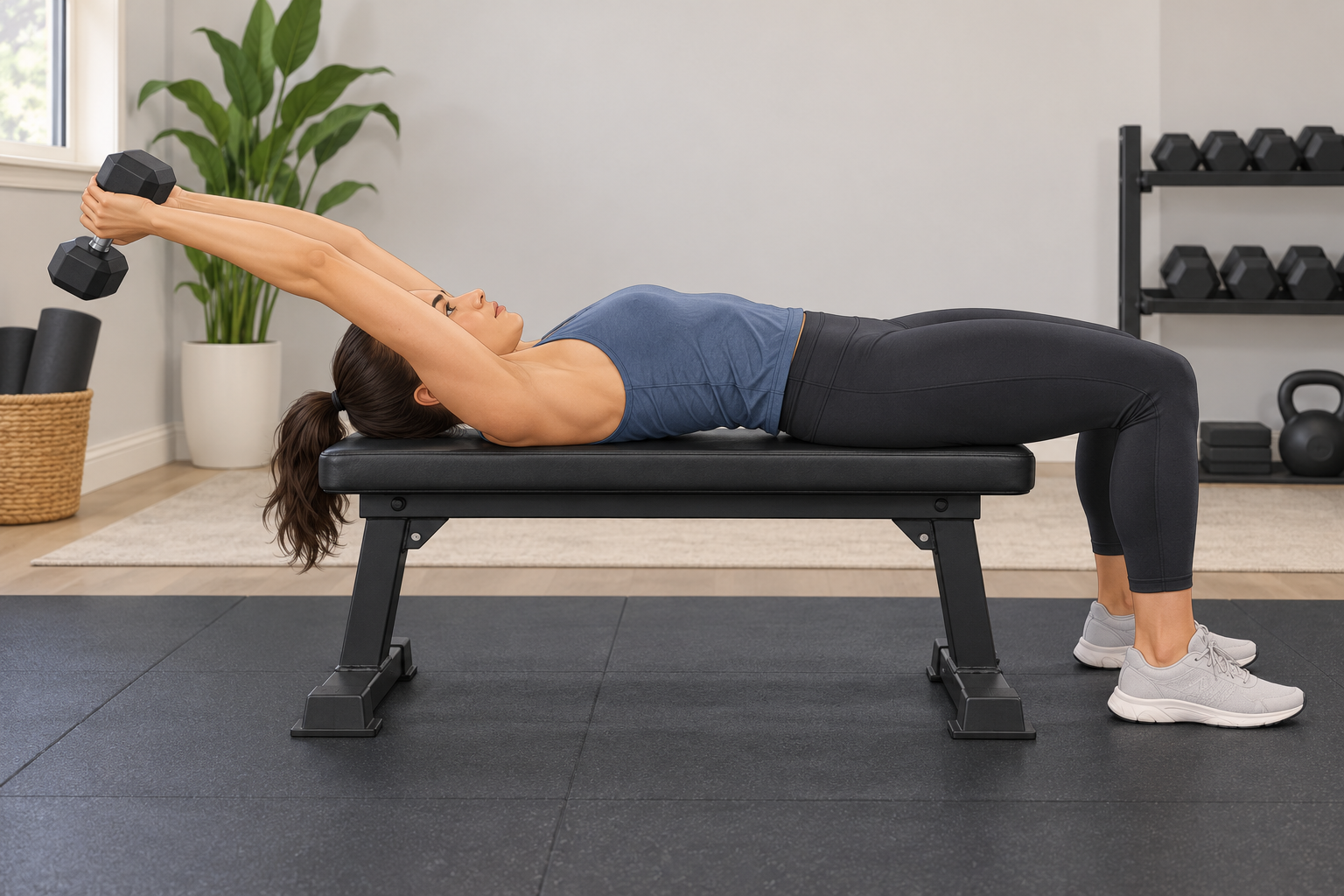
Cover illustration: AI-generated exercise illustration, provided as a general visual aid. It is not a product photo, coaching session, or proof of tested form.
Quick answer: For a lying dumbbell pullover, start on a stable flat bench with your feet planted and a light, securely held dumbbell above your chest. Keep a small bend in your elbows and lower the weight only through a shoulder range you can control without discomfort or your back arching. Return it over your chest smoothly. If you cannot reach overhead comfortably, shorten the range or choose another exercise.
The movement can feel unfamiliar because the weight travels behind the head. Begin with a very light load, and have a qualified trainer demonstrate the hand position if you are unsure how to grip the dumbbell safely. The steps below are general exercise information based on the American Council on Exercise’s lying-pullover demonstration; they are not individualized medical or coaching advice.
Set up the bench and your body first
- Use a flat, stable bench. Check that the bench is locked in its flat setting, on a level floor, and does not rock. Do not perform the movement on an unsecured or partially folded bench.
- Choose a light weight. The first set is for learning the path, not testing strength. If you use one dumbbell held with both hands, make sure you know how to wrap both hands securely around its handle and that the plates are locked or otherwise secure. If you are not confident in the grip, do not take the weight overhead.
- Lie face up with your feet on the floor. Let your head and upper back rest on the pad. Keep your ribs relaxed and your lower back in a comfortable, natural position rather than forcing an exaggerated arch.
- Begin above the chest. Hold the weight over your chest with elbows slightly bent. Keep that elbow angle mostly steady instead of turning the movement into an elbow bend or a pressing motion.
Move through a comfortable range
Brace gently so your torso stays steady, then reach the weight back in a slow arc. Stop when your shoulders reach a comfortable limit—there is no requirement to touch the floor or create a deep stretch. Keep your wrists steady, elbows softly bent, and head on the bench. If the ribs lift, the back arches more, or the shoulders pinch, shorten the range or stop.
Bring the weight back along the same controlled path until it is again over the chest. Do not swing it, bounce at the bottom, or use momentum to finish a repetition. Breathe continuously; many people find it natural to inhale while lowering and exhale while returning, but do not force a breath pattern that makes you strain.
Common setup mistakes and safer adjustments
- Using too much weight: The leverage increases as the weight moves away from the chest. Reduce the load if you cannot control the return or keep the path smooth.
- Chasing a bigger stretch: More shoulder extension is not automatically better. A shorter pain-free range is appropriate if mobility or comfort is limited.
- Letting the ribs flare: Keep the trunk quiet; do not arch your lower back to make the weight travel farther.
- Unclear grip or loose plates: Do not start until the weight is secured and you can keep both hands closed around it.
- Bench movement: If the bench shifts, creaks unusually, or rocks, stop and check the floor and locking mechanism before using it again.
How to end the set
After the final repetition, bring the dumbbell above your chest and lower it to a safe resting position before sitting up. Avoid twisting while the weight is behind your head or trying to sit up with it still overhead. If placing the weight down feels awkward, ask a training partner for help or use a lighter load next time.
Stop if you feel sharp pain, numbness, dizziness, or unusual shortness of breath. If you have a shoulder injury, a recent surgery, or a condition that affects exercise, ask your clinician or a qualified exercise professional whether this movement is appropriate for you. No general article can determine your safe range.
Bench option
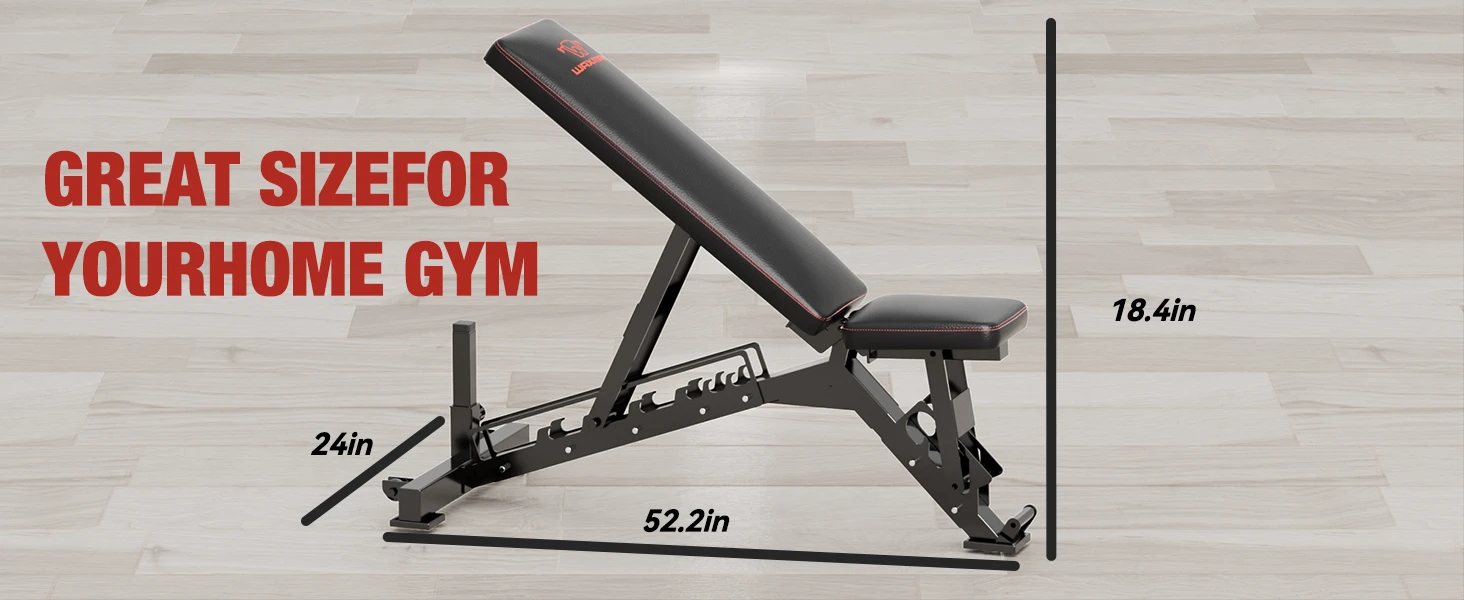
Waxman Adjustable Weight Bench
The current Waxman listing shows an adjustable strength-training bench at $269.00 USD. Its page text is inconsistent about the number of back positions, so that specification is omitted here. Confirm the current listing details, included parts, and bench locking instructions before use. Price and product information may change.
Source
American Council on Exercise: Lying Pullovers (exercise-library demonstration and setup); Waxman Adjustable Weight Bench listing (checked October 28, 2026).
Leave a Reply