
No products in the cart.
Leg Press vs. Hack Squat: How to Choose the Right Setup
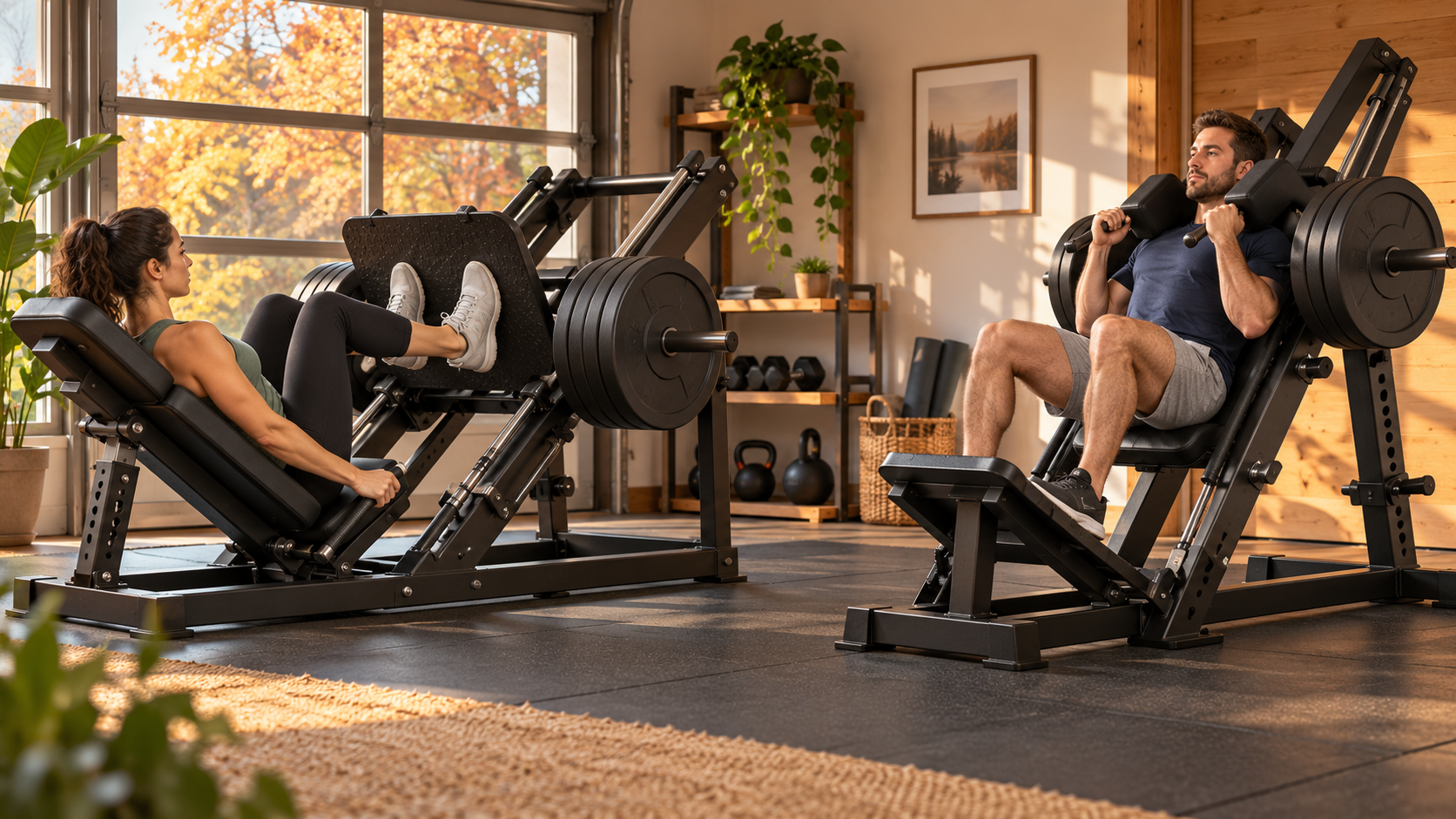
Cover: AI-generated illustration for editorial use. It is not a Waxman product image or a record of tested exercise technique.
Short answer: Choose the movement that matches your training goal and that you can perform comfortably with controlled motion. A leg press generally lets you push a carriage away while supported; a hack squat typically uses a shoulder-supported sled and a more upright squat-like path. A combined machine can offer both patterns, but its exact setup, lockouts and safety stops depend on the model. Start light, follow the manufacturer’s instructions, and stop if the movement causes pain.
Neither exercise is automatically safer or better for every person. Your mobility, experience, machine geometry and the range you can control all matter. This guide explains the decision, not an individualized exercise prescription. If you have an injury, medical condition, or uncertainty about whether strength training is appropriate, get advice from a qualified health professional.
What changes between a leg press and a hack squat?
In a leg press, you sit or recline against a back pad and press a foot platform away. In a hack squat, the shoulders and back are supported against a moving sled or carriage as you bend and extend the legs in a squat-like pattern. Both involve the lower body, but posture, support points and the path of resistance differ. Machine designs also vary, so the category name alone does not tell you the exact joint angles or motion available.
Do not assume that one variation isolates a muscle or protects a joint. Foot position can change how a repetition feels, but it cannot guarantee a particular muscle emphasis or make an uncomfortable range appropriate. The practical question is whether the machine fits your body and lets you move without losing control.
Use your goal and comfort to choose
- If you want a supported push: Try the leg-press setup at a very light load and a short, comfortable range. Check that your back and pelvis remain supported as the carriage moves.
- If you want a squat-like guided path: Try the hack-squat setup only after you understand the shoulder pads, carriage release and stop positions for that exact model.
- If you are learning the machine: Ask a qualified trainer to show the setup, or use the manufacturer’s instructions. A fixed track does not automatically teach good form.
- If either pattern causes pain or you cannot control it: Stop. Do not force a deeper position, add weight, or copy another person’s settings.
Mayo Clinic’s general weight-training guidance recommends controlled movement, suitable technique and stopping an exercise that causes pain. It also notes that a warm-up and appropriate footwear matter. These broad principles do not replace the equipment manual or medical guidance.
Check the machine before loading it
Read the manual for the exact model and configuration before switching modes. Identify the carriage release, lockout positions, adjustable limiters and any required hand positions. Never guess how a pin, lever or safety stop works based on a different machine. Confirm that all locking parts engage before you load plates, and keep hands, feet and other people clear of moving tracks and pinch points.
Begin with no plates or the lightest permitted setup. Rehearse how to enter and exit, where the carriage stops, and how to return it to its locked position. Add resistance only in small steps after the motion feels controlled. The machine’s maximum capacity is not a recommended starting load or a guarantee that every configuration is suitable for you.
Keep the repetition within a controlled range
Use a range you can manage without bouncing, twisting or losing contact with the intended pads. Move smoothly in both directions and keep the carriage under control near the stops. If your hips or back lift away from the support, your knees feel uncomfortable, or you cannot reach the lock safely, reduce the range or stop and ask for help. Do not treat a deeper repetition as a required goal.
Wear secure footwear with traction and keep the floor around the machine clear. Avoid training when wet shoes, loose plates or clutter could create a slip or trip hazard. If you feel sharp pain, dizziness, unusual shortness of breath or another concerning symptom, stop the session and seek appropriate care.
What to verify on a combined machine
The Waxman 2-in-1 Leg Press Hack Squat listing describes a 5-degree leg-press design, adjustable safety limiters and plate-loaded bars for 2-inch Olympic plates. It lists three limiter levels and overall assembled dimensions of 77.5 × 38.3 × 57.4 inches. Those are listing specifications, not a substitute for the complete manual or a guarantee of fit for every user. Confirm the delivered model, setup instructions and included components before use. Do not use a feature unless its operation is clear.
Product card — checked October 30, 2026: 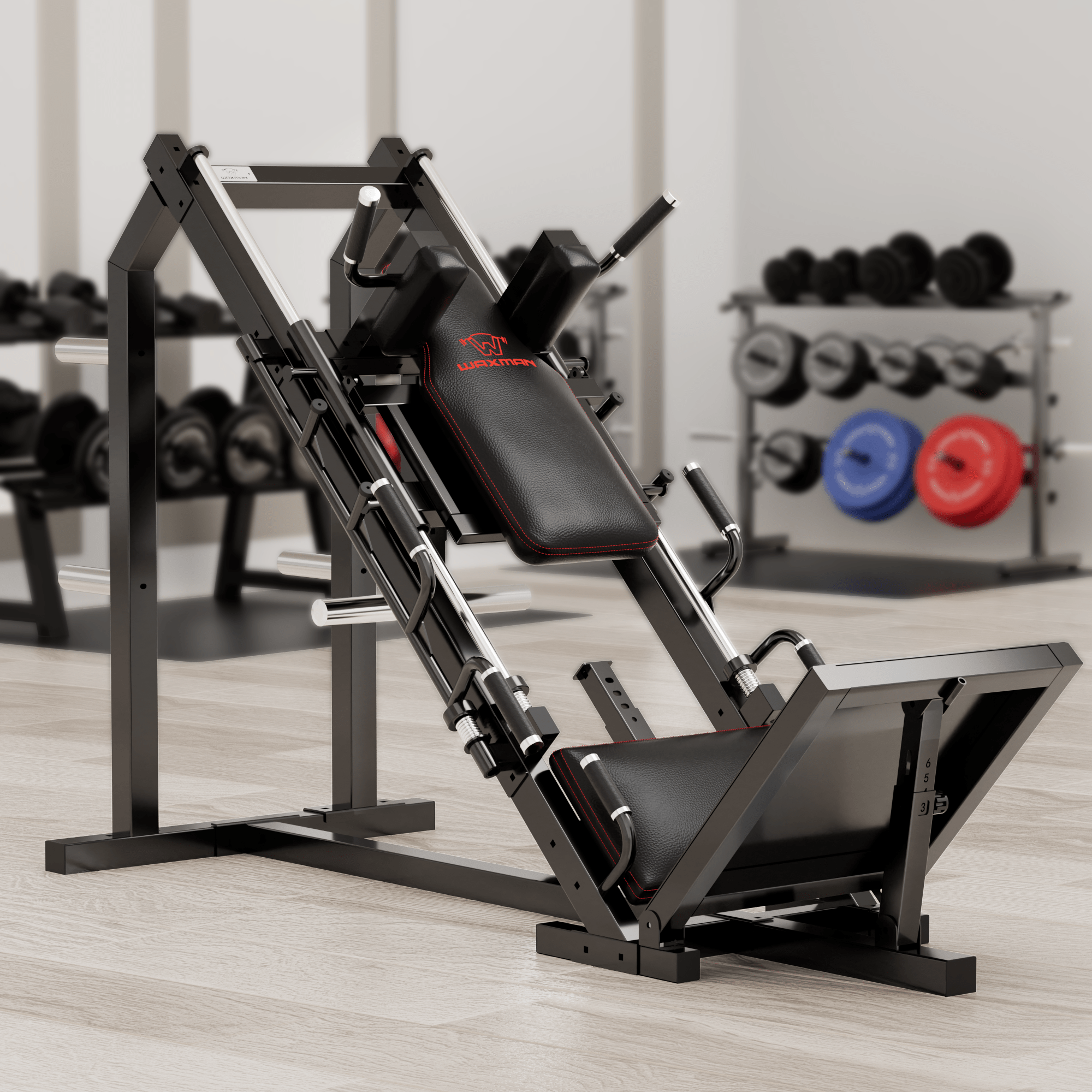
WAXMAN Leg Press Hack Squat Machine
2-in-1 plate-loaded machine; three-level adjustable safety limiters; bars listed for 2-inch Olympic plates. Current listed price: $799.00 USD. Price and availability may change; see the product page. View product and current details.
Bottom line
Choose the variation that fits your goal and allows comfortable, controlled movement. Verify the exact mode and safety stops in the model manual, start with minimal resistance, and stop when technique or comfort breaks down. Product features can help you understand a machine, but they cannot determine which exercise is right for your body.
Prepared with Codex assistance using the linked manufacturer listing and Mayo Clinic general guidance. No machine or exercise testing was performed.
Leave a Reply