
No products in the cart.
How to Inspect a Used Olympic Barbell Before You Buy
Quick answer: Before buying a used Olympic barbell, inspect the shaft and sleeves in good light, check for pitting or cracks, and ask to rotate each unloaded sleeve gently. Compare the bar’s markings and dimensions with the exact model information, then walk away from a bar with a visible bend, binding sleeve, loose or missing parts, or damage you cannot evaluate. A visual check cannot certify a bar’s safe load capacity.
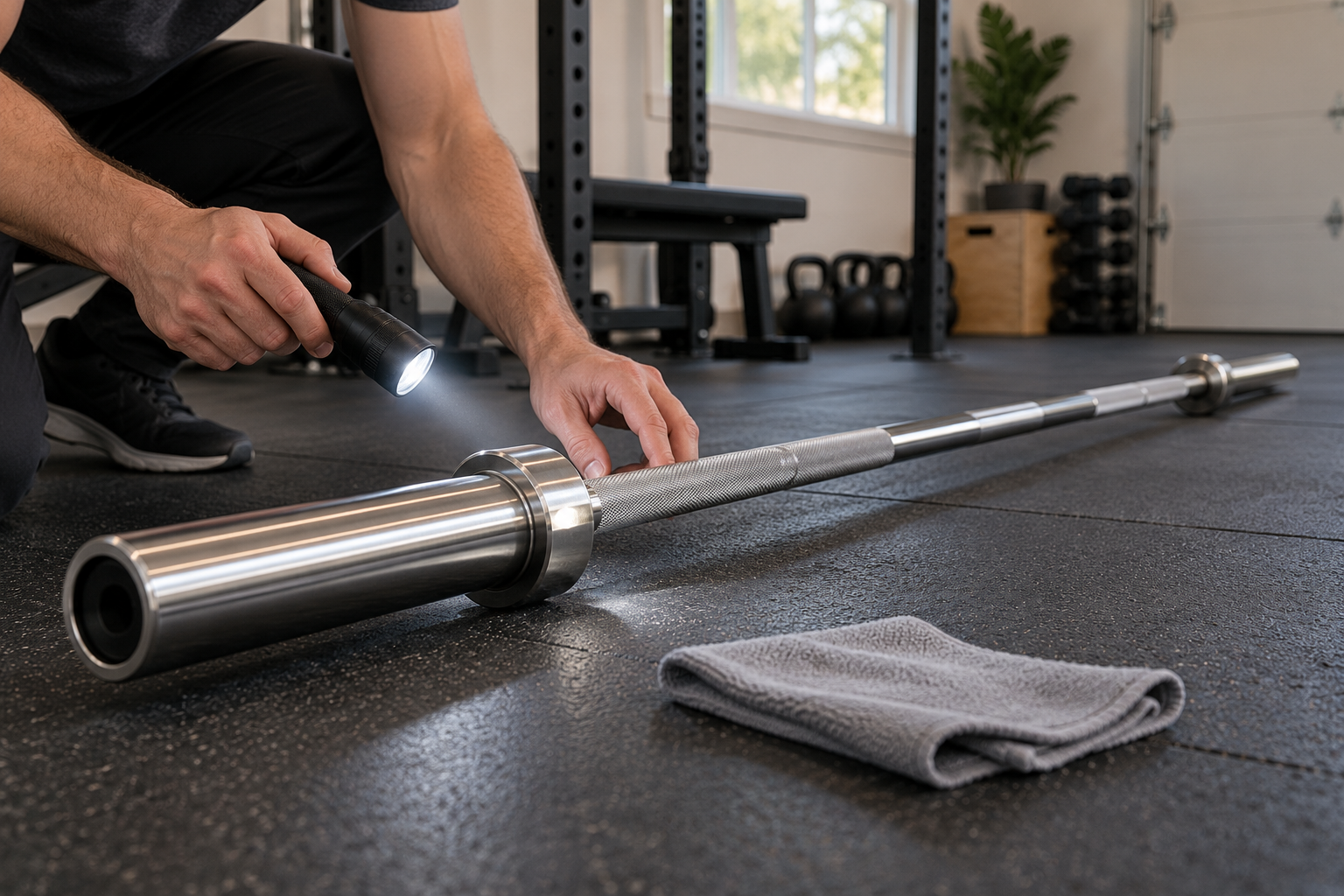
The featured image is an AI-generated illustration, not a photograph of an inspected bar or a test result.
Start by identifying the exact bar
Ask the seller for the brand, model, age, original documentation, and any repair history. Look for markings on the shaft or end cap, but do not assume a familiar logo proves the bar is genuine. Compare the markings, sleeve diameter, overall length, and stated weight with the manufacturer’s information for that model. Olympic bars are not interchangeable just because their sleeves look similar; confirm that your plates, collars, rack, and intended use match the bar.
If the seller cannot identify the model, treat the bar’s capacity, warranty, materials, and intended lifting style as unknown. Do not infer a load rating from its appearance, weight, or price. Ask the manufacturer whether it can identify the bar from its markings or photos before relying on it for heavy lifting.
Inspect the shaft, knurling, and sleeves
With the bar unloaded and placed securely on a suitable, level surface, use bright light to examine the full shaft. Look for a visible curve, dents, deep gouges, cracks, flaking finish, and corrosion that has created pits. Surface discoloration alone does not tell you whether a bar is structurally sound; deep pitting or damage near the sleeve connection deserves particular caution. Do not try to straighten, hammer, or disassemble a bar during an informal inspection.
Check the knurling for missing or flattened areas and inspect both ends where the shaft meets the sleeves. Wear can be cosmetic, but a crack, shifting part, or loose end cap is a reason to stop. Do not use a damaged bar to see whether it still holds weight.
Ask permission to rotate each sleeve slowly by hand while the bar remains unloaded and supported. Notice whether it turns smoothly or catches, grinds, or shifts unusually. Bars use different sleeve systems, so rotation can vary by model; this quick check is not a mechanical diagnosis. The manufacturer’s manual for the exact bar should guide what “normal” means. Eleiko’s user guide, for example, says to inspect bars for wear or damage and ensure sleeves rotate as designed, while also warning users not to improvise repairs.
Check fit and the seller’s claims
Bring the plate or collar you plan to use, if practical, and confirm fit without forcing it. Measure the usable sleeve length and compare it with the plates you own. Check the bar’s overall length against your rack and available floor space. A bar that fits the plates may still be too long for a narrow room or incompatible with a rack’s spacing.
Ask for the exact product page or manual rather than relying on a marketplace title. Verify whether the stated weight is for the bar alone, what plate standard it accepts, and whether the seller’s accessories are included. Request a receipt or proof of purchase if warranty or authenticity matters. Manufacturer warranties may not transfer to a second owner; confirm the current policy directly.
Use a clear stop rule
- Do not buy for lifting if you see a bend, crack, loose component, deep pitting, or a sleeve that binds or shifts.
- Pause and ask the manufacturer or a qualified equipment technician if the model is unknown, the condition is ambiguous, or the seller will not allow a basic unloaded inspection.
- Do not test it with a heavy lift. A successful lift does not establish the bar’s condition or safe capacity.
After purchase, follow the identified manufacturer’s care and storage instructions. Keep the bar unloaded when stored unless its manual says otherwise, and do not apply oil, cleaners, or brushes until you know the finish and maintenance guidance. A used bar that looks clean can still have hidden wear.
Compare with a new bar using verified details
A new bar gives you a clear product identity and current seller terms, while a used bar may offer a lower upfront price but requires careful inspection. Waxman’s current equipment listing shows its 7 ft Olympic Barbell at $69 USD and identifies it as 45 lb with sleeves for 2-inch standard weights. The listing also includes a 1,500 lb capacity claim; verify that claim and the exact product details on the product page before relying on them. Price and availability can change.

Listed specifications: 45 lb; fits 2-inch standard weights. Listing price checked October 31, 2026: $69.00 USD. See the product page for current details; price and availability may change.
Waxman’s listed dimensions and price are a product-page snapshot, not a recommendation that this bar is right for every lifter or suitable for every rack. Confirm the current specifications, included items, load rating, and warranty terms with the seller before ordering.
Bottom line
Identify the exact bar, inspect it unloaded, and treat any structural damage or sleeve problem as a stop sign. If you cannot verify the model or resolve a concern with the manufacturer, do not use the bar for loaded training. No quick secondhand inspection replaces model-specific documentation or professional evaluation.
Leave a Reply