
No products in the cart.
How to Prepare an Unheated Garage Gym for Cold Weather
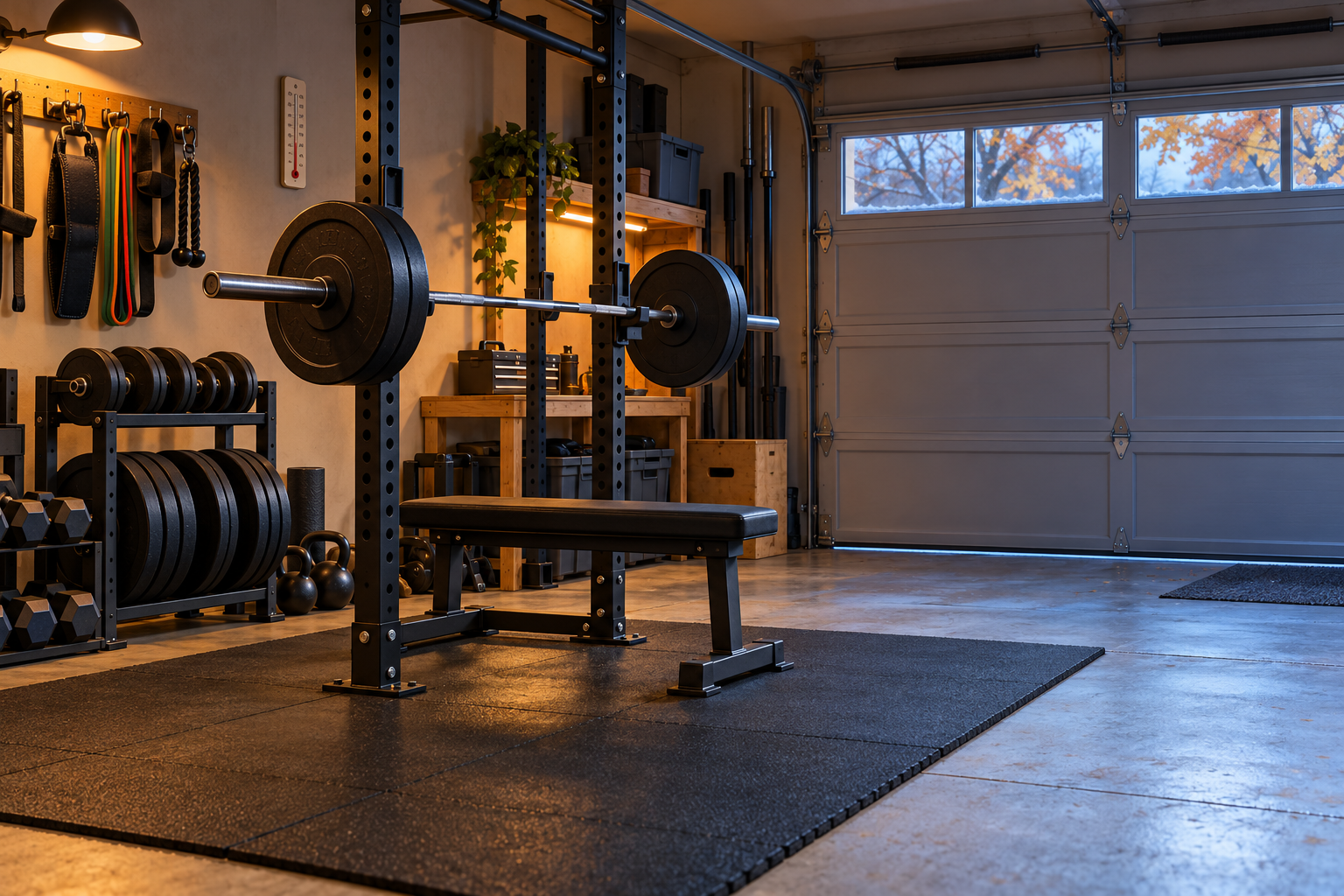
Illustrative AI-generated image; it is not a product photograph or a tested setup.
Quick answer: Before cold weather arrives, make an unheated garage gym easier to use by checking the floor and equipment for moisture, keeping walkways clear, planning a gradual warm-up, and following each machine or barbell manual for storage and maintenance. Cold air alone does not tell you whether equipment is safe or whether a workout is appropriate; visible condensation, a slippery floor, damaged parts, or unusual equipment movement are reasons to stop and address the condition first.
Start with the room, not the workout
On a dry day, inspect the space from the garage door to the training area. Look for water intrusion, damp patches, condensation on metal, and a floor surface that becomes slick when wet. A rubber mat can define a training area, but it does not fix a leak or guarantee traction. If the floor is damp, dry it and identify the source before placing equipment or lifting there.
Check that the route to the equipment stays open when the car, storage bins, or seasonal items are in their usual positions. Keep plates, dumbbells, and accessories in a stable storage location rather than leaving them in a path where a person could trip. If you use a portable heater, follow its manufacturer instructions and keep it away from equipment, fabrics, and anything that could block its required clearance. Do not treat a heater as a substitute for checking the equipment or the room.
Look for moisture and follow equipment instructions
Cold-to-warm changes can leave moisture on surfaces in some garages. Before a session, inspect metal parts, adjustment points, cable routes, and the floor. Wipe away ordinary surface moisture with a suitable dry cloth, then consult the product manual for cleaning, lubrication, and storage instructions. Avoid applying oil, solvent, or household cleaner unless the manufacturer says it is appropriate for that exact finish and component.
For a barbell or weight machine, look for visible damage, loose hardware, unusual movement, or a part that no longer adjusts or locks as described in its manual. Do not use damaged or unstable equipment. A quick visual check is not a structural inspection and cannot establish a safe load limit. If a rack, bench, cable, or attachment has a problem you cannot identify, stop using that station and contact the manufacturer or a qualified repair professional.
Make the first part of the session gradual
Plan extra time to begin at an easy pace instead of moving directly into heavy work. Start with comfortable movement that raises activity gradually, then use lighter, controlled versions of the exercises you intend to do. Increase effort only if the space and equipment remain comfortable and stable. This is a practical routine, not a medical prescription; follow advice from your clinician if you have a condition affected by cold or exercise.
Choose clothing that lets you move freely and does not snag on equipment. Keep hands dry before gripping a bar or machine handle. If your fingers are too cold to maintain a secure grip, pause and warm up indoors. Do not add weight to compensate for a shorter session or attempt unfamiliar movements because a garage feels different in winter.
Use a simple pre-session checklist
- Is the floor dry, clear, and suitable for the planned movement?
- Are the bar, bench, rack, cables, and adjustment points visibly intact and operating as their manuals describe?
- Are plates and accessories stored securely and outside the walking route?
- Can you start with a comfortable warm-up and stop easily if the space feels too cold?
- Do you know where the equipment manual and support information are?
If any answer is no, fix the setup or choose another activity and location. Do not rely on a warm-up to make a slippery floor, faulty lock, damaged cable, or unstable bench safe.
Keep a barbell setup appropriate to your space
Waxman currently lists its 7-foot Olympic barbell at $69 and describes it as 45 pounds, for weightlifting and powerlifting, and compatible with 2-inch standard weights. Verify fit, included components, and instructions on the current listing before purchase or use. Price and availability may change; see the product page. The product page timed out during this check, so the listing image below is the official image shown for this exact product on Waxman’s homepage; other specifications have not been checked.
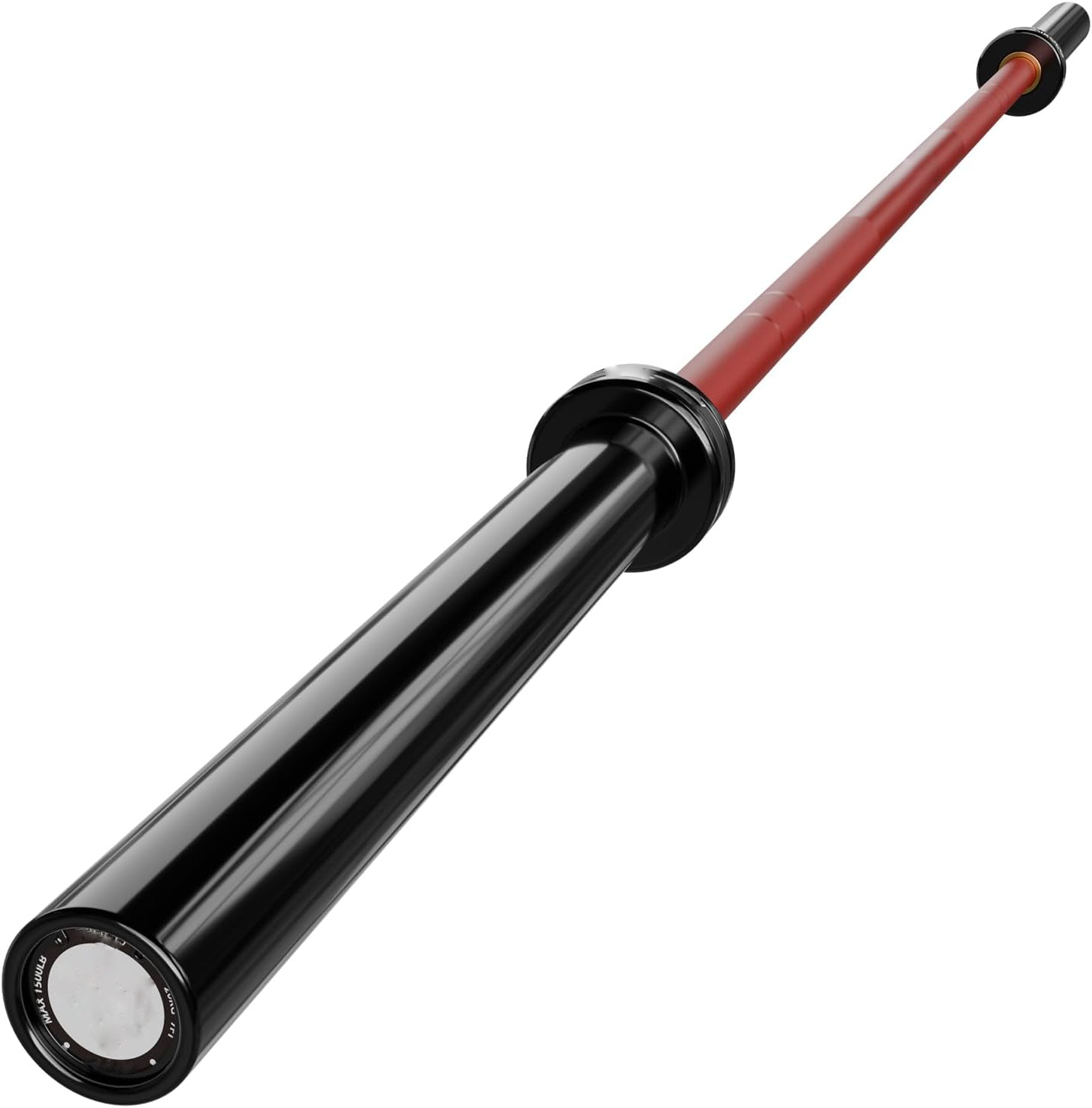
45 lb · for 2-inch standard weights · $69 USD (checked October 31, 2026)
Price and availability may change. Confirm fit and current details on the product page.
When to skip the garage session
Choose a warmer location if the floor stays wet, equipment is visibly damaged, you cannot maintain a secure grip, or the cold makes normal movement uncomfortable. People with medical conditions that may be affected by cold or exertion should follow individualized clinical guidance. For other readers, the useful rule is simple: the garage should be dry enough, clear enough, and comfortable enough to train without rushing or ignoring a defect.
Seasonal preparation does not require a major renovation. A dry floor, clear route, equipment-specific maintenance, and gradual start can make it easier to decide whether the space is ready each time winter conditions change.
Leave a Reply