
No products in the cart.
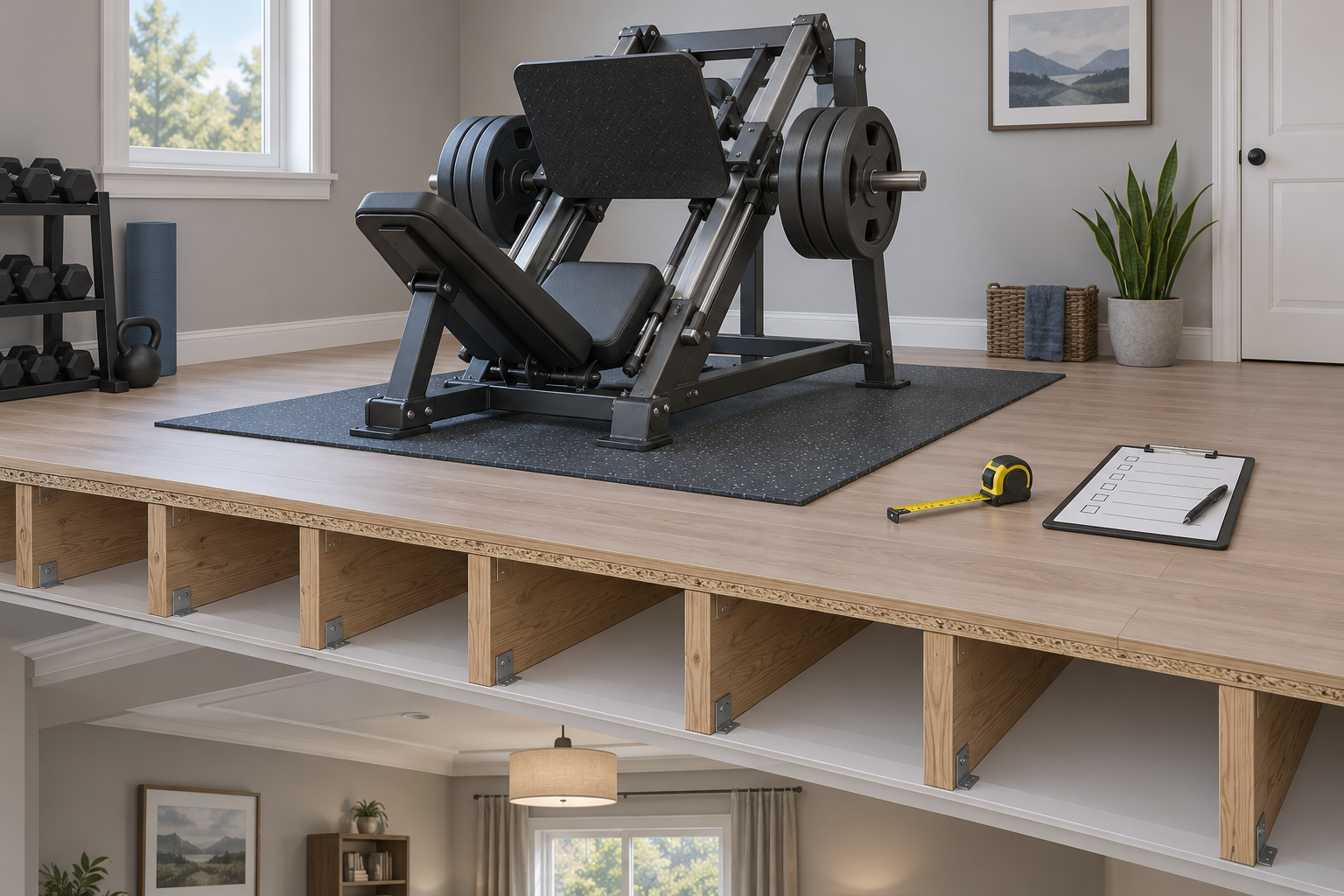
Putting a Heavy Home Gym on an Upstairs Floor? Check the Structure First
Short answer: Before placing a heavy, plate-loaded machine on an upper floor, verify the building and the equipment load with the right people. A room’s square footage, a floor mat, or a generic pounds-per-square-foot figure cannot establish that a particular floor is suitable. Ask the building owner or manager for available structural records, then have a qualified local structural professional assess the actual floor, equipment, placement, and use if the records do not answer the question. Do not assemble or load the machine until that question is resolved.

Why the machine’s weight is only one part of the question
A machine’s listed shipping weight, assembled weight, user weight, and the plates placed on it are different figures. Even if all are known, adding them together and dividing by the machine’s footprint does not reliably answer whether a particular floor can carry the equipment. The structure below the finish floor, joist or beam layout, supports, spans, condition, load location, and how forces change during use can all matter. A floor can also have limits that are not visible from the room.
For example, the WAXMAN Leg Press Hack Squat Machine listing gives assembled outside dimensions of 77.5 × 38.3 × 57.4 inches and says the shipment has a combined gross weight of 230 pounds across three packages. That 230-pound shipping figure is not a published assembled-machine weight or a floor-capacity recommendation. The listing does not state an allowable floor load, required reinforcement, or an approved upstairs placement. Do not convert its shipping figure into a safety claim.
Building codes use multiple load cases and requirements, and the adopted code depends on the jurisdiction and building. The California Residential Code, for example, separates uniformly distributed and concentrated floor-load criteria in its residential provisions; it is not a universal permission slip for a specific piece of exercise equipment. A local professional needs the actual building information and intended setup.
A practical check before delivery
- Identify the exact location. Record the room, floor level, and a sketch showing where the machine would sit. Note nearby walls and supports only as observations; do not assume that a wall is load-bearing.
- Gather the real equipment figures. Ask the seller or manufacturer for the assembled machine weight, maximum intended user and plate load, footprint and support contact points, and any placement or floor requirements. Distinguish published specifications from estimates. If a figure is unavailable, mark it unknown.
- Ask for building records. Contact the property manager, landlord, condominium association, or building department as appropriate. Ask whether plans or prior structural evaluations are available and whether alterations or heavy equipment require approval. For a rental or condo, follow the lease and building rules.
- Get an equipment-specific assessment when needed. If the floor construction, condition, load, or placement remains uncertain, consult a licensed structural engineer or other qualified professional authorized in your area. Provide the equipment documents and proposed location; ask for a written answer that addresses the intended use, not merely whether the room looks sound.
- Wait for a clear answer. If anyone identifies damage, unusual movement, sagging, cracking, water damage, or a need for reinforcement, keep the area unloaded and follow the professional’s direction. Do not test the floor by stacking plates or bouncing on the machine.
What a floor mat can and cannot do
A suitable protective mat may help guard a finished surface from scuffs and make routine cleaning easier. It does not strengthen joists, spread load in a way that can be assumed safe, repair a weak subfloor, or certify the floor for exercise equipment. Thick or soft pads can also affect the machine’s level and stability. Ask the equipment maker and flooring maker about material compatibility, dimensions, placement, and maintenance; do not improvise stacked plywood or rubber layers as a structural fix.
After the structural question is cleared, follow the machine’s assembly instructions on a stable surface and recheck that the frame is level and all feet or supports contact as intended. Keep the required operating and access area clear. If the equipment shifts, rocks, or the floor changes, stop using it and get advice rather than adding weight or shims to mask the problem.
When a ground-level location is the simpler option
A basement slab or ground-floor room may avoid some upper-floor questions, but “ground level” alone does not prove suitability. Check for moisture, floor condition, ceiling and route clearance, and the manufacturer’s installation requirements. In a shared or rented building, verify permission and delivery access before ordering. If a professional’s review is unavailable or the answers conflict, choose a different location or defer installation.
The goal is a documented yes for the exact building, equipment, and placement—not a guess based on another homeowner’s setup. Keep the written guidance with the manual and product records so the decision remains clear if the machine is moved or the room changes.
WAXMAN Leg Press Hack Squat Machine with Weight Storage
Official listing dimensions: 77.5 × 38.3 × 57.4 in assembled; listing says three shipping packages and 230 lb combined gross shipment weight. Those figures do not establish floor suitability.
$799.00 USD (official page checked October 16, 2026). Price and availability may change; see the product page.
Sources
- WAXMAN Leg Press Hack Squat Machine official product page (listed assembled dimensions, shipment count and gross shipment weight; no floor-load approval).
- 2022 California Residential Code, Section R301.5 (jurisdiction-specific example distinguishing uniform and concentrated load criteria; confirm the locally adopted code and applicability).
Codex-assisted article. No product test or structural inspection was performed. AI illustration is conceptual only.
Leave a Reply