
No products in the cart.
When Should You Increase Weight on a Leg Press?
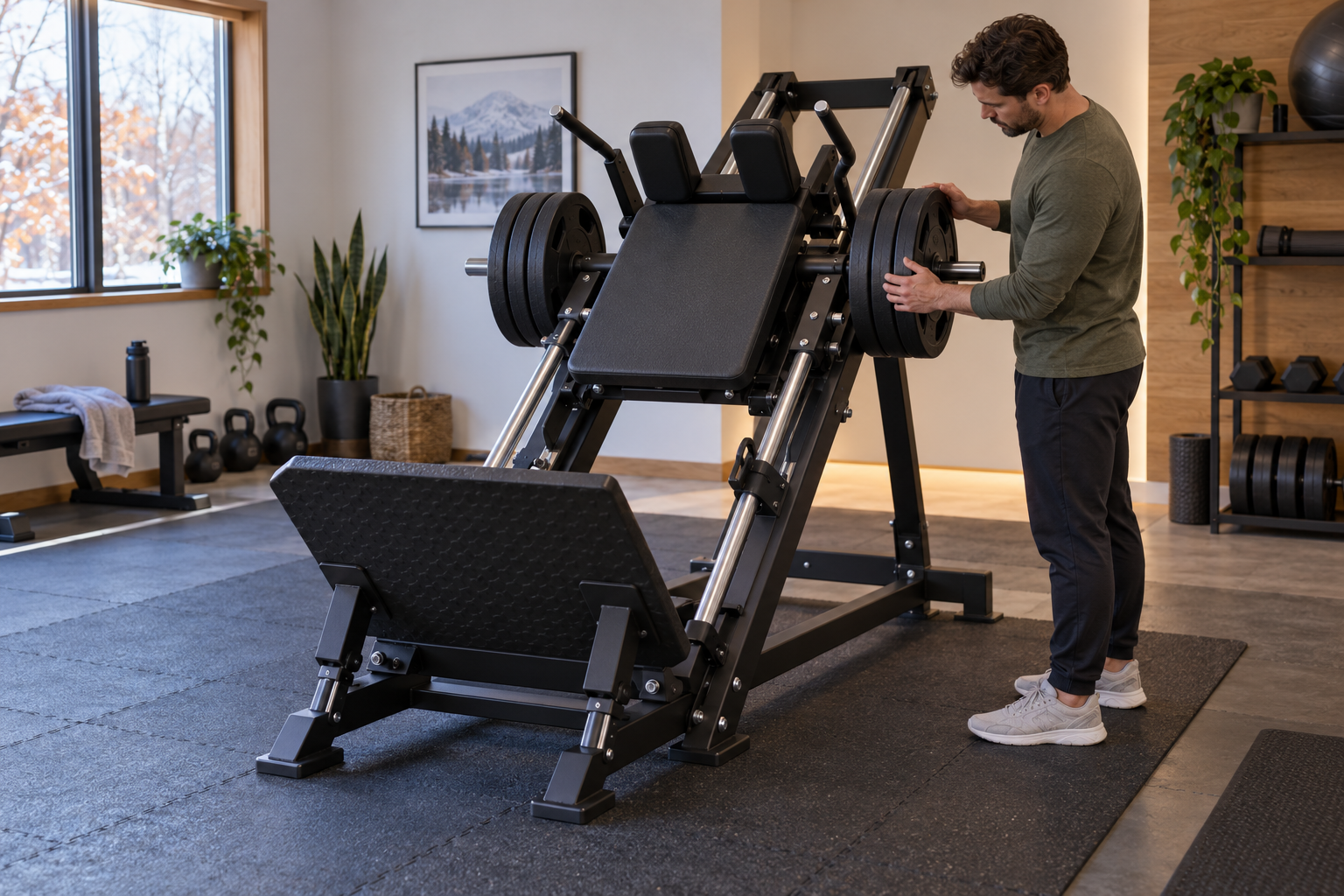
Illustration disclosure: The cover image is AI-generated and illustrative. It does not show a verified workout or a tested load.
Increase the load on a leg press only when your current setup and repetitions remain controlled and comfortable, and you can repeat that performance across sessions. There is no calendar rule that says to add weight every week. The right progression depends on your goal, experience, recovery, health, and the machine’s instructions. If form becomes inconsistent, the range of motion changes unexpectedly, or you feel pain, stay at the current load or stop and seek qualified guidance.
Fall often brings a return to indoor training, but the season is not a reason to rush heavier plates. The American College of Sports Medicine’s 2026 resistance-training update emphasizes individualizing load and volume to goals, enjoyment, and safety rather than following one rigid prescription. Use that principle to make a measured decision, not a test of how much you can move.
First make the current load repeatable
Before adding plates, use the exact exercise mode and setup you intend to keep using. A leg press and a hack squat can feel different, even on a combination machine, so do not treat a load used in one mode as an automatic starting point for the other. Follow the specific machine manual for seat or back-pad position, foot placement, carriage lockout, safety limiters, and how to enter and exit the exercise. If the manual is missing or a control is unclear, ask the manufacturer for instructions before training; do not guess at a safety setting.
Choose a load that lets you move through the range prescribed for you without bouncing, rushing, or losing control. Record the machine, mode, settings, plates, repetitions, and how the set felt. This makes comparisons more meaningful: changing the machine setup, depth, tempo, and weight at the same time makes it hard to know what actually changed.
Use a simple progression check
On your next planned session, ask:
- Did I complete the planned repetitions with the same controlled movement and setup?
- Could I finish without straining to the point that I could not maintain the technique taught in the manual or by a qualified coach?
- Did I recover well enough to repeat my usual activities, without new or worsening pain?
- Have I repeated that performance, rather than relying on one unusually good day?
If the answer is no or uncertain, keep the load steady, reduce it if needed, or get qualified coaching. If the answers are consistently yes and your plan calls for progression, make one small change at a time. For a plate-loaded machine, that may mean the smallest suitable matching plate increment available. The product listing’s statement that its plate bars fit 2-inch Olympic-sized plates is about fit; it does not prescribe a safe starting weight or a progression increment.
After a change, reassess the movement instead of assuming the added load is fine because it is numerically small. Keep the same setup and planned repetition range for comparison. If control deteriorates, return to the prior load. Do not add weight simply to match another person, a social-media routine, or a generic percentage rule.
Make the equipment check part of the decision
Before loading, check the machine for visible damage or loose parts and ensure the exercise area is clear. Confirm the collars or retaining devices required by the manual are present and properly used. Load and unload only as the manual directs, and use matching plate amounts on opposing loading points when the design calls for balanced loading. Do not move or unlock a loaded carriage to “see how it feels.” Set the manufacturer’s safety limiters and lockout positions for your body and exercise mode as instructed.
Stop if a plate does not fit snugly, a retainer is missing, the carriage moves unexpectedly, the frame makes a new noise, or a part appears damaged. Do not continue by adding a makeshift spacer or exceeding a stated equipment limit. Manufacturer instructions for the exact model take priority over general guidance here.
When to get personal advice
This article cannot determine a safe weight for an individual. If you are new to resistance exercise, returning after a long break, managing a health condition, or recovering from an injury, ask a qualified exercise professional or clinician to help choose a starting point and progression. Stop for sharp pain, dizziness, chest discomfort, or unusual shortness of breath and seek appropriate medical advice. A machine does not make an exercise risk-free.
Product details to verify before buying
The Waxman Leg Press Hack Squat Machine listing describes a plate-loaded leg press and hack-squat combination, three-level adjustable safety limiters, and plate bars for 2-inch Olympic-sized plates. Its listing does not replace the model-specific manual or tell an individual how much weight to lift.
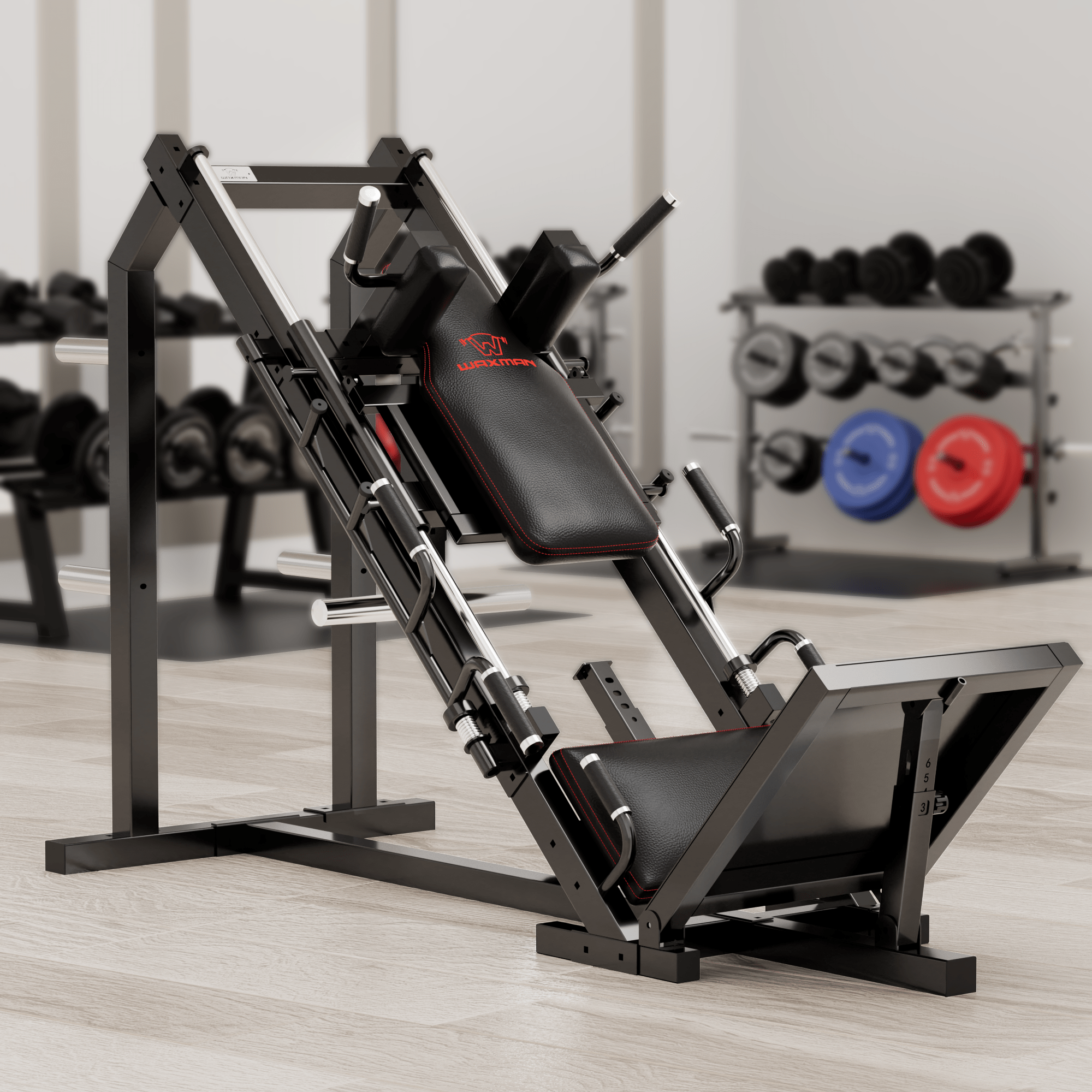
Waxman Leg Press Hack Squat Machine
Listed features: 2-in-1 leg press/hack squat, three-level adjustable safety limiters, and plate bars for 2-inch Olympic-sized plates. No separate model number is shown on the listing.
$799.00 USD (page also displayed $1,499.00 as the comparison price), checked October 7, 2026. Price and availability may change; see product page.
General information only; it is not an individualized training prescription. Follow your exact machine manual and get qualified help when uncertain.
Sources
- American College of Sports Medicine, 2026 resistance-training guideline update, covering individualized load and volume.
- Waxman official product listing, checked October 7, 2026, for product features and current displayed price.
Pingback: Leg Press Training for Strength vs. Muscle Growth: What Should Change? - waxman