
No products in the cart.
How to Protect Home Gym Equipment from Winter Condensation
Short answer: Keep home gym equipment dry by controlling moisture at its source, watching for condensation as temperatures drop, and drying metal surfaces after use. A garage does not have one universal humidity target: insulation, heating, outdoor air, and water sources all affect conditions. If moisture keeps returning, address the building or ventilation problem instead of just wiping the equipment.
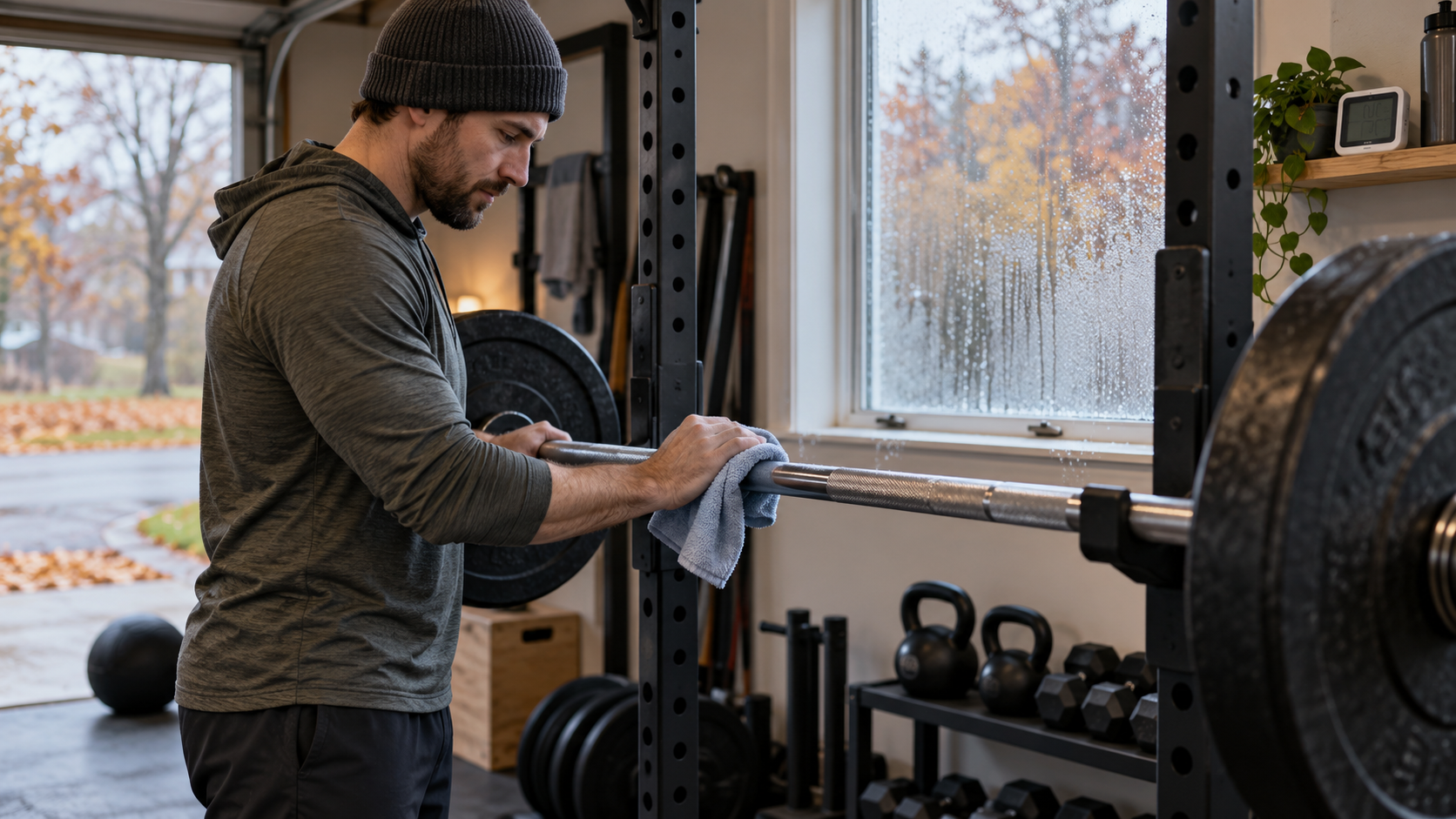
Cover illustration is AI-generated. It is a general illustration, not a product photograph, inspection, or test result.
Why does condensation become more noticeable in winter?
Warm air can hold more water vapor than cold air. When moist air touches a colder surface, water can condense there. That is why you may first notice beads on a garage window, a cool pipe, or a metal bar after a temperature change. The U.S. Environmental Protection Agency explains that cold-weather condensation forms on cold surfaces and recommends acting when moisture collects on windows, walls, or pipes. A wet window is a useful clue to check the rest of the room; it does not prove every piece of equipment is wet or damaged.
Garages vary widely. Some are attached and partially heated, some are detached and unconditioned, and some share air with the home. A single relative-humidity number cannot describe all of them. EPA guidance for homes says indoor humidity should ideally be kept between 30% and 50%, and below 60% if possible; use this as general indoor moisture guidance, not as a product-specific storage specification or a guarantee that condensation cannot occur.
Check the space before changing how you store equipment
Start with a small observation routine during cold or damp weather:
- Look for recurring condensation on windows, pipes, concrete edges, and exterior walls, especially in the morning or after a warm workout.
- Use a basic humidity gauge if you need a reading, and note both the room conditions and whether surfaces are visibly wet. One reading is a snapshot, not a diagnosis.
- Check for obvious moisture sources: roof or plumbing leaks, wet coats and shoes, a damp vehicle, or water tracked in after rain or snow.
- Notice whether the moisture appears across the garage or in one cold corner. A localized pattern may call for checking that specific surface or area.
Do not seal every opening or add heat without considering how the space is built. Ventilation, insulation, and vapor control interact; a persistent building moisture issue may need assessment by a qualified building professional. EPA recommends controlling moisture sources and using ventilation or dehumidification where appropriate. Its guidance also notes that openings should only be used when practical; outdoor air is not automatically drier in every climate or season.
Make a simple after-workout drying habit
Sweat, wet gloves, and damp towels add moisture near the equipment even when the weather is dry. After training, remove damp fabric from the garage and wipe visible moisture from metal surfaces with a clean, dry cloth. Let the cloth and accessories dry somewhere with suitable airflow. If a bar or attachment feels cold, look for condensation before placing it in a tight case or wrapping it in material that could hold moisture against the surface.
Follow the manual for each item before applying oil, cleaner, or a protective coating. Finishes differ, and a product intended for one part may be unsuitable for another. This article does not recommend a particular lubricant or chemical treatment. If you see corrosion, flaking, a damaged cable, or a structural issue, stop using the affected item and consult its manufacturer or a qualified repair professional.
Choose storage that does not trap damp air
Move accessories away from known drips, wet walls, and places where water pools. Keep equipment accessible enough to inspect it. A cover can help keep dust off, but only use one in the way the equipment maker allows and avoid covering gear that is still damp. Do not assume that putting a barbell or machine in a sealed plastic bag will protect it; trapped moisture can remain in contact with the surface.
For items stored through a long break, use the manufacturer’s storage instructions and check them periodically during the first cold season. If your garage has a dehumidifier, maintain it as directed and make sure its collected water is handled properly. A dehumidifier is not a fix for an active leak, standing water, or a ventilation problem.
When should you look beyond routine wiping?
Repeated window wetness, damp walls, musty odors, visible mold, peeling finishes, or moisture that returns quickly after drying deserve more attention. EPA advises promptly drying wet surfaces and reducing the moisture source. If the cause is unclear, the affected area is extensive, or moisture involves wiring or building materials, seek qualified help rather than opening walls or using chemicals based on guesswork.
Before winter, it can also help to revisit the room layout so equipment is not pressed against a damp wall or placed where water regularly enters. Our garage equipment measuring guide covers footprint and access planning; this article focuses on moisture, not installation or structural advice.

Official product page lists a 45 lb barbell for standard 2-inch plates. Price checked October 21, 2026: $69.00 USD.
Price and availability may change; see the product page.
Winter equipment moisture checklist
- Look for recurring condensation and find likely water sources.
- Record indoor humidity when you need more than a visual check, while remembering readings vary by location and time.
- Dry equipment and fabric after workouts; store items only when dry.
- Use cleaning or protective products only when the equipment maker permits them.
- Get qualified help for persistent building dampness, mold, leaks, or damaged equipment.
Sources: U.S. EPA, What Are the Main Ways to Control Moisture in Your Home?; U.S. EPA, A Brief Guide to Mold, Moisture, and Your Home.
Leave a Reply