
No products in the cart.
Why Do My Wrists Bend Back During a Barbell Overhead Press?
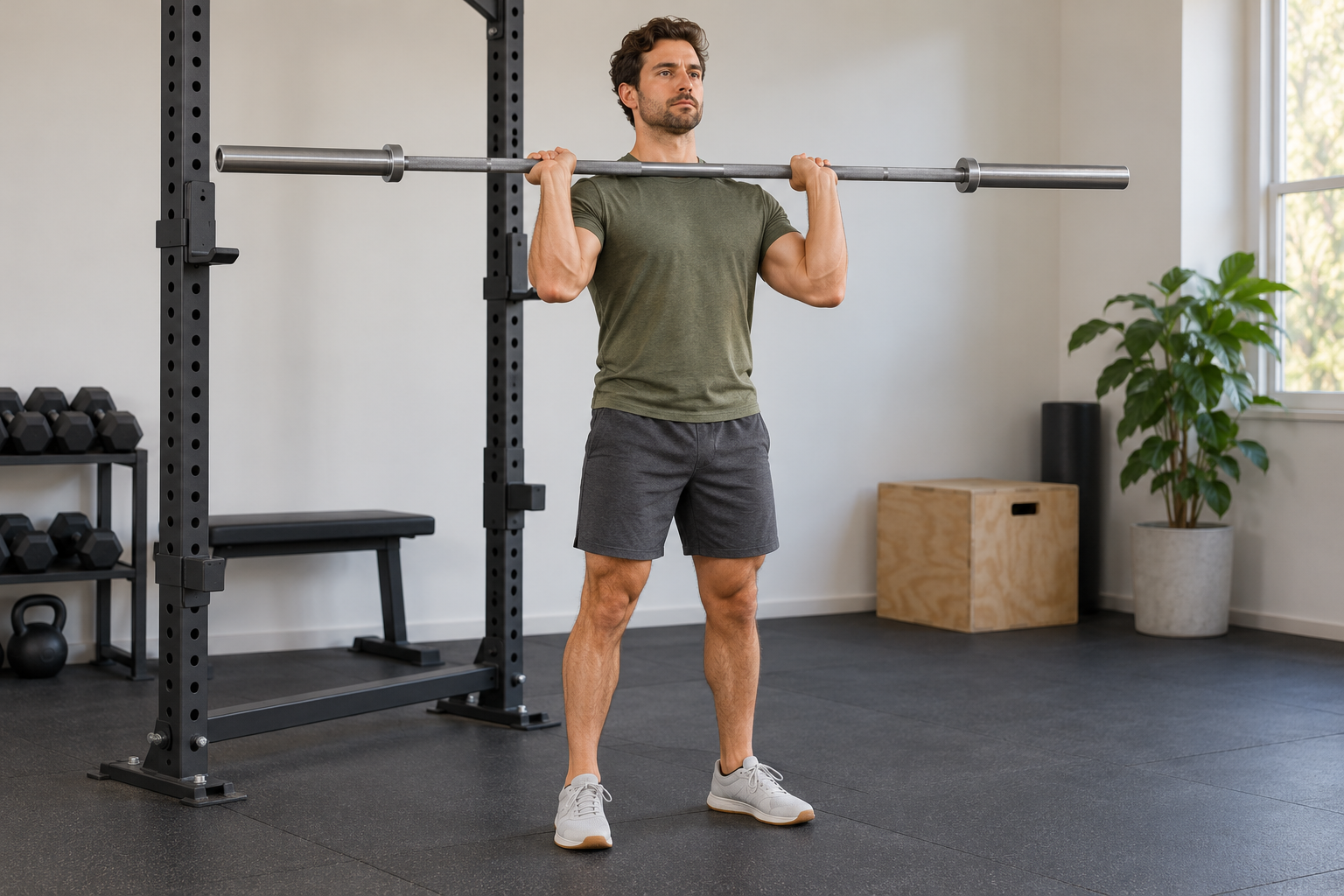
Short answer: Start by separating the barbell’s front-rack position from the press itself. In a standing shoulder press, ACE’s exercise instructions place the bar at about shoulder height, use a grip near shoulder width, rest the bar across the top of the shoulders, and point the elbows forward. Some wrist extension can occur while holding a straight bar; the practical goal is to keep your grip secure and avoid letting the wrists collapse farther back as the bar moves. If the position hurts, stop and reduce the load or choose a variation you can control.
Check where the bar sits before changing your grip
Set the bar in a rack around shoulder height so you do not have to curl it into position. Stand close enough to receive it across the front of the shoulders, take a closed grip, and step clear only after the bar is stable. ACE describes the hands at about shoulder width, with the palms facing upward in the starting position and elbows pointing forward. Your exact hand spacing may differ with your shoulder and wrist comfort, so make small adjustments rather than forcing a textbook width.
Do not confuse a front-rack wrist angle with a wrist that keeps folding under the bar. At the start, the bar is supported by the shoulders and the hands guide it. As you press, keep the bar close to a vertical path over your base of support. A useful visual check is whether the bar stays over your forearm instead of tipping toward your fingertips. This alignment cue is a practical coaching suggestion, not a measured test or a guarantee against injury.
Use a light setup check before adding weight
- Begin with an unloaded bar or a very light load. Practice taking the bar from the rack and returning it without rushing. The listed Waxman bar weighs 45 pounds, which may already be too heavy for some people to use for technique practice; choose lighter equipment if needed.
- Adjust one thing at a time. Try a slightly narrower or wider grip within a comfortable range. Keep the bar resting on the shoulders at the start instead of holding all its weight in bent-back wrists.
- Press with control. Brace your trunk, keep your back tall, and press the bar overhead as ACE describes. Do not lean backward to turn the movement into an improvised incline press.
- Return to the rack safely. Lower the bar to the shoulders first, then step into the rack and set it down on both supports. Do not look behind you while carrying the bar.
Common reasons the wrists feel uncomfortable
A grip that is much wider or narrower than your natural pressing position can make the start awkward. A bar set too low may force you to lift it out of a deep position; a bar set too high may make reracking difficult. A load that is too heavy can also make the wrists bend more as you try to finish a repetition. Check the rack height, use a manageable load, and ask a qualified coach to observe the setup if the cause is unclear.
Equipment fit matters too. The Waxman product listing describes its 7-foot Olympic bar as a 45-pound bar that fits 2-inch weights. That identifies the listed bar and plate interface; it does not confirm that the bar fits every rack or that its dimensions suit every lifter. Check the rack’s J-cup spacing and safety setup, and confirm the actual bar and rack instructions before use.
When to choose a different press
If you cannot hold a stable position without pain, do not repeatedly press through it to “build tolerance.” Stop the set. Depending on your experience and equipment, a seated dumbbell press with a comfortable neutral grip or a landmine press may be a more manageable option; use a qualified coach to check technique. ACE’s seated dumbbell press instructions specifically cue a neutral wrist, but that is a different exercise and does not prove that a dumbbell variation is appropriate for every person. A health professional can assess persistent pain, numbness, swelling, or a recent injury.
Quick form review
- Bar starts on a secure rack around shoulder height.
- Hands are near shoulder width, adjusted for a comfortable secure grip.
- Bar rests across the shoulders before the press; wrists are not carrying the entire start position.
- Use a load you can press and return under control.
- Stop if pain or loss of control appears; do not rely on equipment claims as a substitute for fit and instruction.
This guide is general technique information, not an individualized assessment. No hands-on testing or expert review is claimed.

Waxman 7ft Olympic Barbell
Listed bar weight: 45 lb · listed for 2-inch weights · $69.00 USD on the Waxman homepage when checked October 19, 2026. Rack fit and bar dimensions beyond those listing details should be confirmed for your setup. Price and availability may change.
Cover illustration: AI-generated generic overhead-press setup, not a Waxman product photo, a tested setup, or expert demonstration.
Sources
- American Council on Exercise: Standing Shoulder Press.
- American Council on Exercise: Seated Overhead Press (neutral-wrist cue applies to that dumbbell movement).
- Waxman homepage product card (bar name, listed weight/fit, and price checked October 19, 2026).
Leave a Reply