
No products in the cart.
How to Breathe During a Dumbbell Bench Press
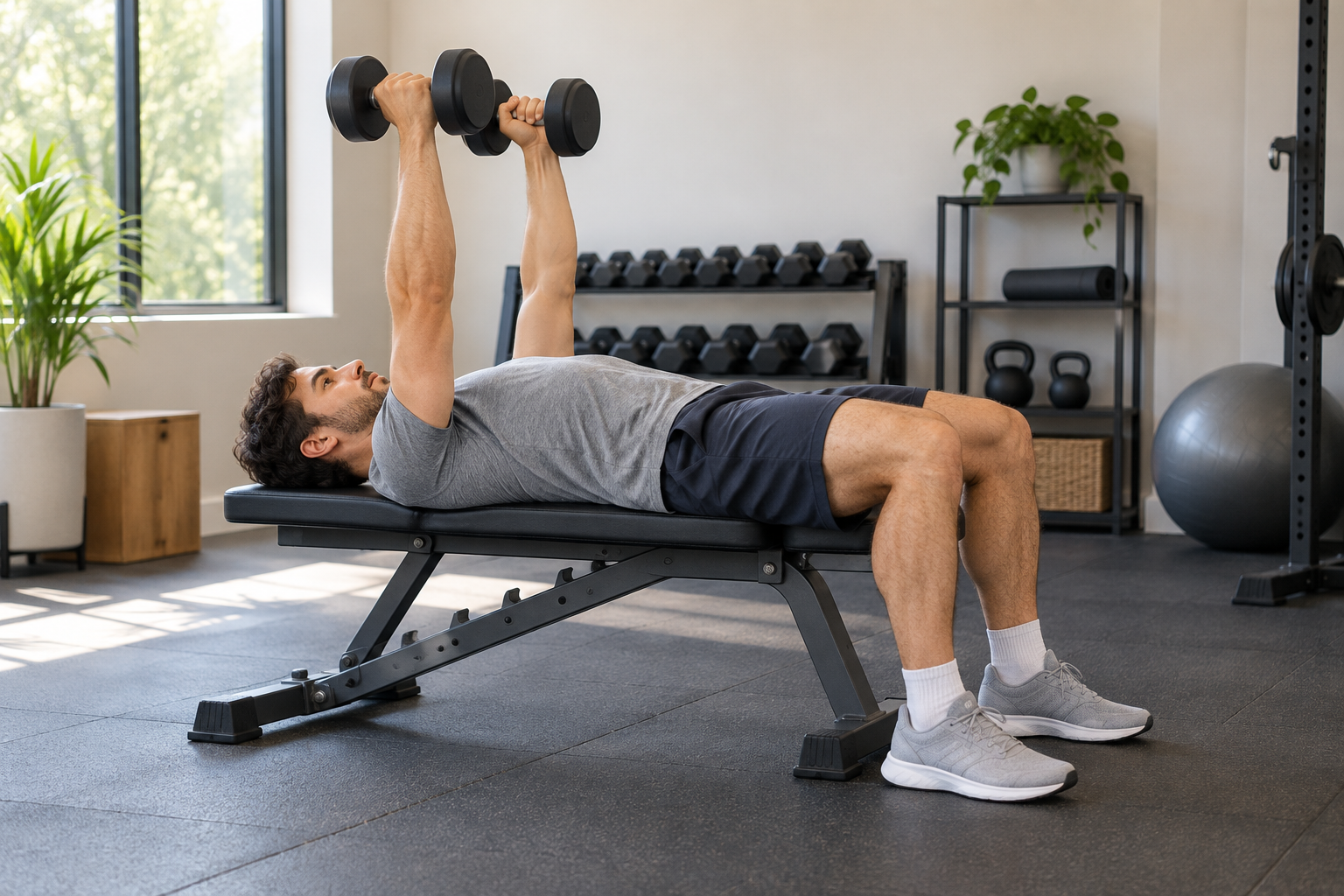
Cover illustration: AI-generated illustration of a person performing a dumbbell bench press. It is illustrative only, not a product photo, coaching session, or exercise test.
Quick answer: Keep breathing through the repetition: inhale as you lower the dumbbells, then exhale as you press them up. Use a load you can control without holding your breath, straining, or losing your position. This is a simple starting cue, not a substitute for individualized coaching or medical advice.
Breathing can become easy to forget when a set feels difficult. A steady rhythm helps you notice when the weight is too heavy: if you cannot breathe normally or keep the dumbbells under control, end the set and reduce the load before trying again. The goal is a repeatable movement, not forcing a particular breathing pattern through a hard repetition.
Pair the breath with each phase
- Set up before the repetition. Place both feet securely, settle your upper back on the bench, and hold the dumbbells over your chest with control. Take a comfortable breath before you begin.
- Lower on an inhale. As the dumbbells move down, breathe in smoothly. Keep the motion controlled and stop at a range you can manage without pain or the shoulders rolling forward.
- Press on an exhale. As you press the weights upward, breathe out through the effort. You do not need to force all the air out; a steady exhale is enough.
- Reset between repetitions. At the top, keep the weights controlled and take the next comfortable breath. Do not rush the next lowering phase to keep up with a count.
The rhythm does not need to match a metronome. A slower repetition may take a longer inhale or exhale; keep the breath smooth and let the movement determine the pace. If you pause at the top, do so only while you can keep the weights stable and continue breathing.
If the timing feels awkward, rehearse the pattern with no dumbbells or a very light pair before beginning a work set. Move through a few slow repetitions and coordinate the inhale with lowering and the exhale with pressing. The purpose is to make breathing comfortable, not to force a deep breath or hold one at a specific point. If you feel rushed, shorten the set, rest, and restart at a pace that lets you stay in control.
Avoid holding your breath through the press
Some lifters deliberately brace and hold their breath during heavy lifting, a technique often called the Valsalva maneuver. The American College of Sports Medicine warns that breath-holding during resistance exercise can produce very high blood-pressure responses, dizziness, or fainting, and says it should be avoided during resistance training. For a general home workout, use the continuous-breathing cue above and select a load that does not require a prolonged breath hold.
If you have high blood pressure, cardiovascular disease, or another condition that affects exercise, ask a qualified healthcare professional about safe resistance training before increasing load or effort. Stop if you feel faint, unusually short of breath, or have chest pain; seek appropriate medical help rather than trying to correct the issue by changing your breathing mid-set.
Use the breath as a form check
Breathing is not a score of how strong you are. It is one practical signal among several. Stop the set if you have to jerk the dumbbells, arch or twist to finish, lose control on the way down, or cannot keep a comfortable breath. Rest until you feel recovered, then use lighter dumbbells or fewer repetitions. If the same problem returns, end the exercise for the day.
Before starting, check that the bench is on a level, nonslip surface and that you have enough room to lower and return the weights safely. Place dumbbells where you can pick them up without twisting or reaching across the bench. If you cannot set them down in a controlled way, ask a trained spotter for help or use a safer setup. A bench does not replace a spotter or make an uncontrolled load safe.
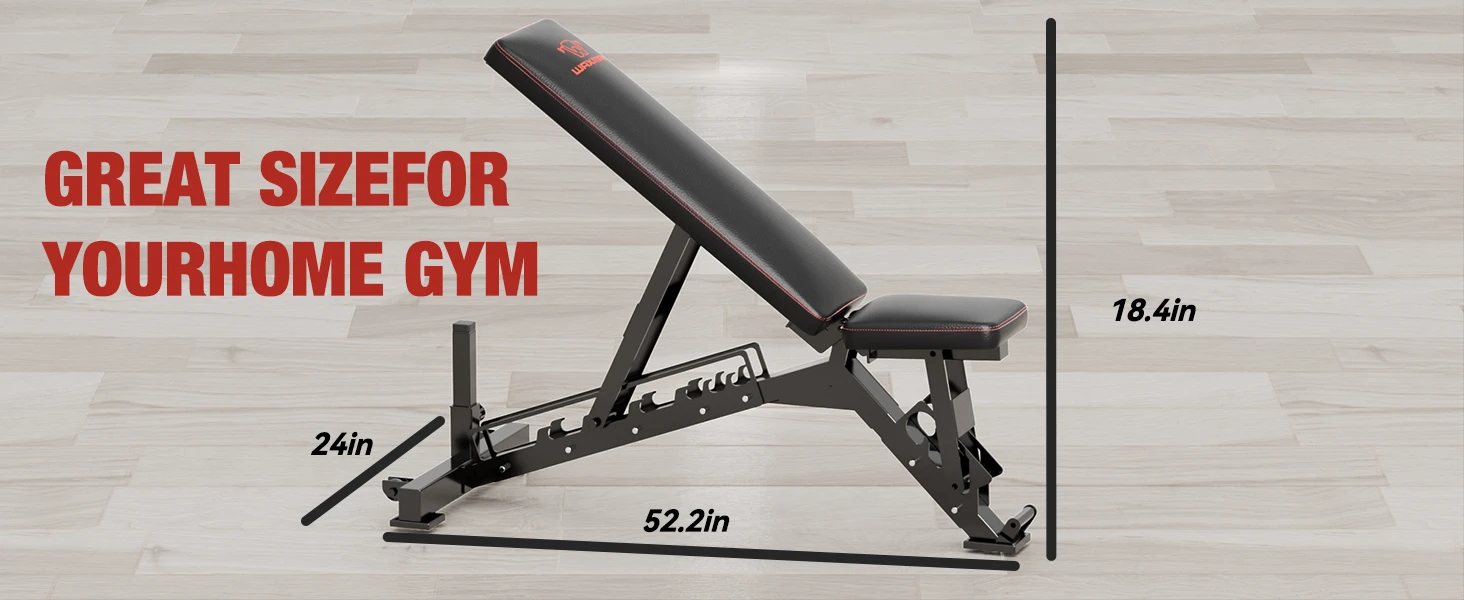
Waxman’s current listing is for an adjustable weight bench intended for strength exercises, including bench pressing. It does not establish that a particular bench or position is suitable for every lifter. Check the product instructions, inspect the frame and adjustment mechanism before use, and choose a position that feels stable for the movement.
Leave a Reply