
No products in the cart.
How to Check Whether Weight Plates Fit Your Barbell
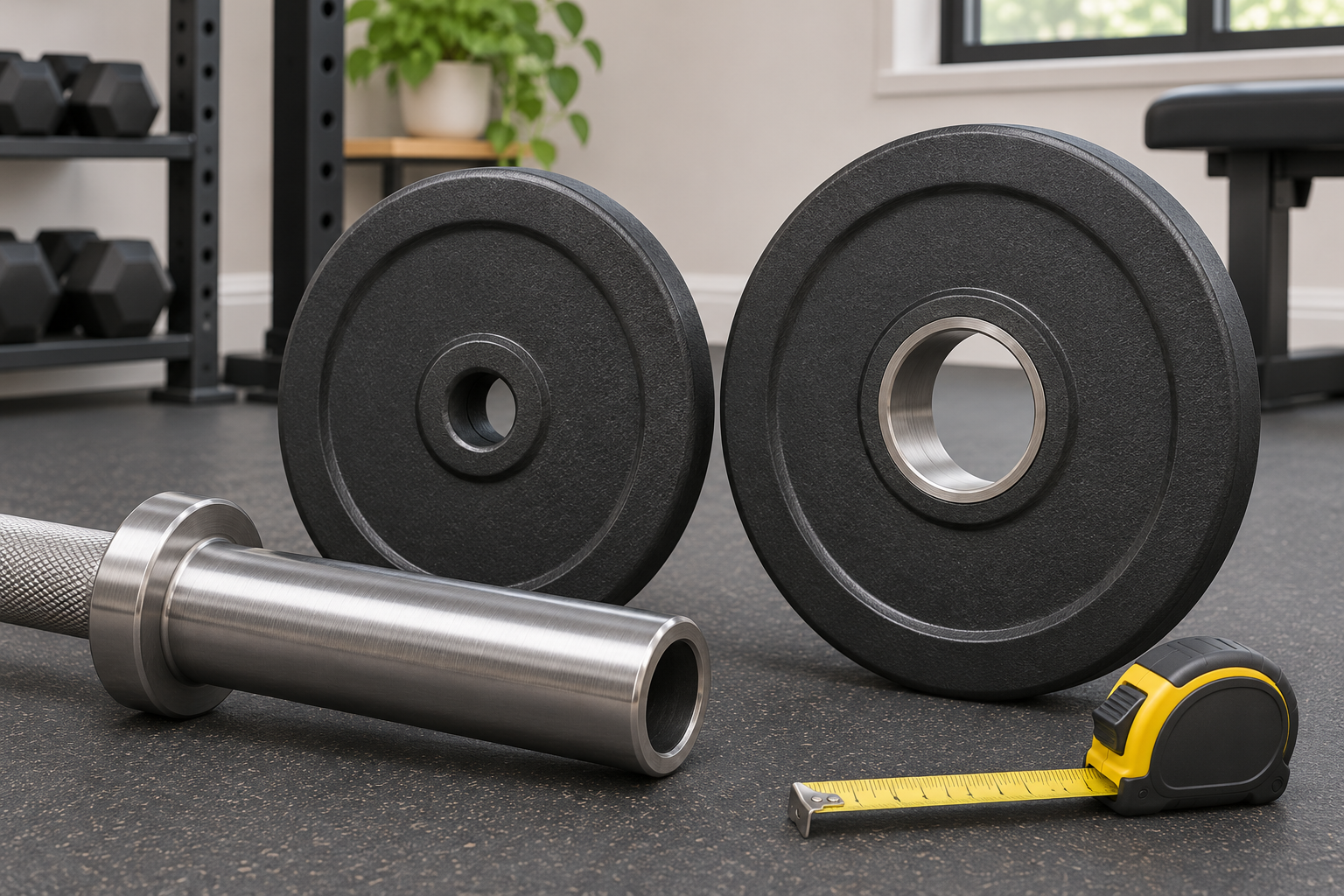
Cover image: AI-generated illustration for this guide; it is not a Waxman product photo or a fit test.
Short answer: Match the plate’s center opening to the barbell sleeve diameter. A 2-inch Olympic plate belongs on a bar with a compatible Olympic-size sleeve; a roughly 1-inch standard plate is for a different bar style. Check both pieces’ specifications, and test the fit with an unloaded bar before buying a set or loading weight. “Seven foot” describes bar length, not plate compatibility.
Plate fit is a simple measurement, but product labels can make it easy to assume that any bar called “Olympic” or “standard” will work. Treat the terms as a starting point, then verify the actual sleeve and plate opening. If a plate will not slide on smoothly, rocks noticeably, or binds, do not force it or use a makeshift spacer. Confirm the sizes with the manufacturer.
Know which measurement matters
The sleeve is the section at the end of a bar where plates slide on. The plate’s center hole, also called the bore, must be designed for that sleeve. The shaft diameter is a separate measurement: the part you grip can be narrower than the sleeve. Bar length is separate again. A 7-foot bar can still have different sleeve and shaft specifications, so overall length alone cannot tell you which plates fit.
Olympic-style plates are commonly described as having a nominal 2-inch center opening, while standard plates commonly use a smaller opening around 1 inch. Actual fit is governed by the manufacturer’s dimensions and tolerances. Ivanko’s plate and bar specifications, for example, describe a small clearance between sleeve and plate opening, rather than both parts having exactly identical measurements. That clearance lets the plate slide on; it should not be confused with a loose or unstable fit.
Check compatibility before you order
- Read the bar listing or manual. Find the sleeve diameter or the exact plate system the manufacturer says it accepts. Do not rely only on “7-foot,” “45-pound,” or a photograph.
- Read the plate listing. Confirm the center-hole size and whether the plate is designed for Olympic or standard bars. If a set has multiple plate types, check each one separately.
- Compare like with like. Inches and millimeters can both appear in product descriptions. Convert carefully: 2 inches is 50.8 mm. A nominal label is not a promise that the measured opening is exactly that size.
- Test the unloaded fit. With the bar stable and no weight loaded, slide one plate onto the sleeve. It should move on and off without being hammered or wedged. A little movement can reflect designed clearance, but excessive rocking or binding merits a manufacturer check.
- Check collars separately. A plate that fits the sleeve still needs a compatible collar or retaining system for the bar. Follow the bar and collar instructions before training.
What to do when a plate does not fit
Stop and identify which dimension differs. Do not grind a plate, bend a sleeve, add improvised tape or shims, or strike the plate onto the bar. If you already own both items, photograph the model labels and ask the manufacturers to confirm the specifications. If you are choosing between a standard and Olympic setup, select a consistent system for the bar, plates, and collars before purchasing; adapters may change fit and are not a substitute for checking the equipment instructions.
For used or unmarked equipment, measure the sleeve and the plate bore with an appropriate measuring tool and compare the results with the seller’s documentation. Inspect for dents, burrs, cracks, or corrosion that could interfere with loading. A visibly damaged plate or bar should be set aside for qualified inspection rather than used because the nominal sizes appear to match.
A note about load limits
Compatibility only answers whether a plate can fit on a sleeve. It does not establish that the bar, collars, rack, flooring, or lifter can safely handle a particular load. Use the product instructions and the lowest applicable equipment limit. A seller’s stated capacity applies under its stated conditions and should not be treated as a recommendation for a workout load.

Waxman 7ft Olympic Barbell, 45 lb
The official listing says this bar fits 2-inch standard weights and displayed $69.00 USD when checked November 3, 2026. Availability was not confirmed. The product photo shows plates on a bar but does not establish that plates are included; check the current listing and package details. Price and availability may change; see product page.
Bottom line
To check fit, compare the plate bore with the bar’s sleeve specification—not its length or the number printed on the bar. Confirm both manufacturers’ information, test an unloaded plate without forcing it, and verify collars and equipment limits as separate questions. If the sizes or fit remain uncertain, pause and ask the seller or manufacturer before loading the bar.
Sources
- Ivanko Barbell Company, FAQ (bar-sleeve and plate-opening measurements).
- Waxman 7ft Olympic Barbell product page, checked November 3, 2026 for the listing, stated plate compatibility, displayed price, and product image.
Leave a Reply