
No products in the cart.
Will a Chest-Support Attachment Fit Your Home-Gym Rack?
Answer: Before buying a chest-support attachment for a fall home-gym reset, check the rack upright size, hole diameter, pin style, and usable clearance against the exact attachment and rack in front of you. Matching one number in a listing is not enough. Install the attachment only as its instructions allow, confirm that its pin is fully engaged, and test the setup without added weight before a workout.
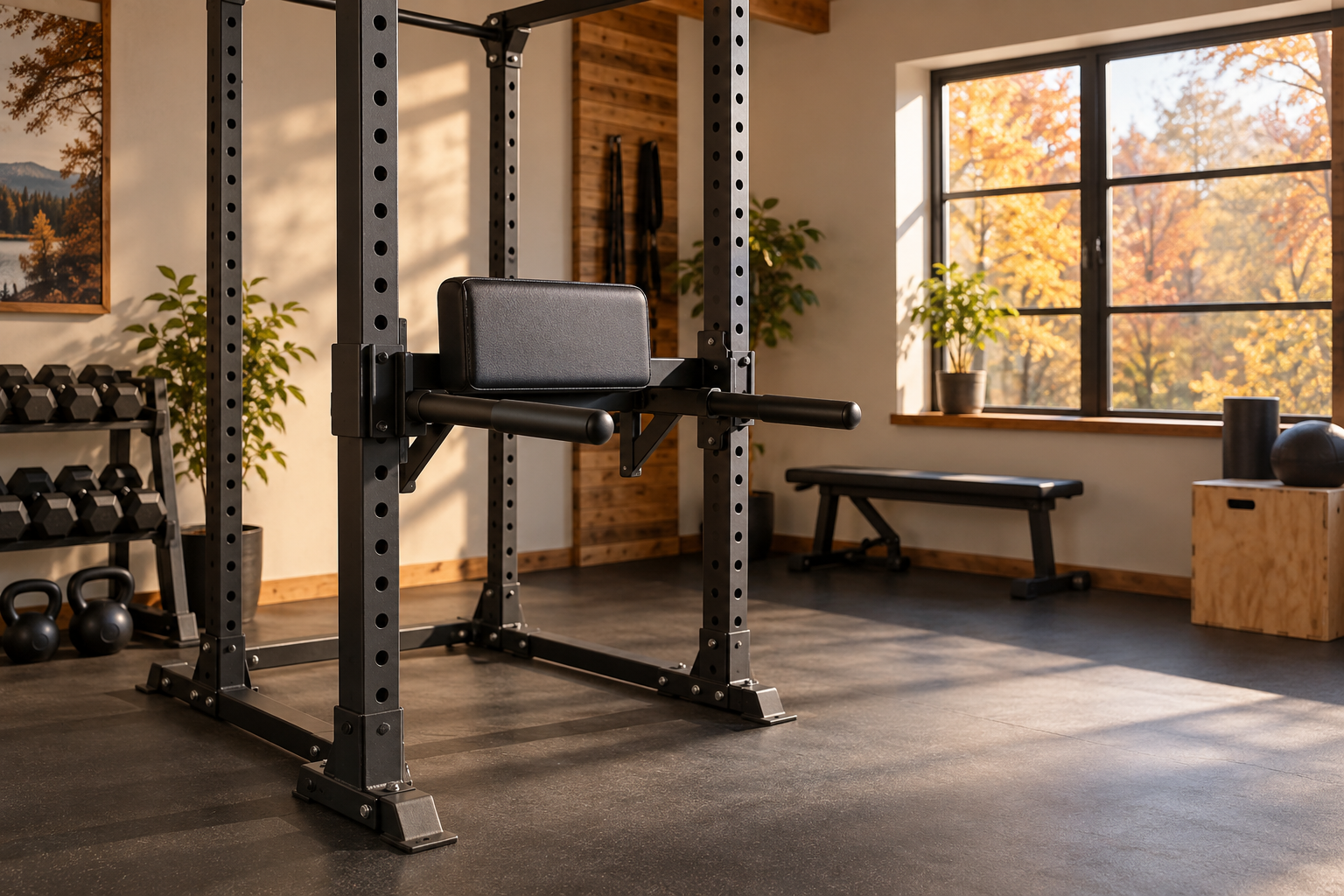
Featured image: AI-generated training-space illustration, not a photo of the listed attachment or evidence of rack compatibility.
Measure the rack you own
Begin with the outside width and depth of a rack upright, then measure a hole with a suitable gauge or the rack maker’s documentation. Do not infer hole size from a photograph. Check whether the holes on the mounting face align with the attachment’s bracket and whether a crossmember, J-hook, or cable path blocks placement. Record the measurements in inches and take a clear photo of the upright and hole pattern before comparing products.
The Waxman chest-support rack attachment listing names 2-by-2, 2-by-3, and 3-by-3-inch rack profiles with 1-inch holes. That is a vendor compatibility claim, not a guarantee for every rack using those dimensions. Hole spacing, pin length, finish thickness, and nearby hardware can still matter. If any measurement or mounting detail is unclear, ask the seller for the current installation instructions before ordering.
Check the exercise space around the pad
A chest support changes where the torso rests, but it also projects into the rack’s working area. Measure the clearance from the mounted pad to the opposing upright and to the floor. Try to picture the starting and ending positions of the movement you intend to use. Can you step into place without catching a foot on a base rail? Can a dumbbell, handle, or bar travel freely without striking the rack? A useful pad position should not force a cramped reach or an awkward neck angle.
The listing describes four angle adjustments. Treat those as available positions to verify on the delivered unit, not as four positions suitable for every body or exercise. Start with a position that permits a neutral, comfortable torso and controlled range of motion. If the pad presses uncomfortably against the chest or prevents normal breathing, change the setup or choose another exercise. No attachment removes the need to use a manageable load and sound technique.
Install, inspect, and test without load
Read the attachment and rack manuals before mounting. Make sure the rack itself is stable and installed as its maker requires. Fully seat the attachment pin or locking hardware, then gently check for unexpected movement with no weights in hand. Inspect the bracket, welds, padding, and retention hardware before each session. Stop if the attachment shifts, bends, or contacts another part of the rack. The product listing does not provide enough verified information here to state a working load limit.
Keep other people clear of the rack while adjusting the pad. A loose pin can create a pinch point even before lifting begins. Store the attachment where it cannot fall or block an exit when it is not mounted. If your rack uses a different hole system or an adapter, obtain written compatibility guidance for that combination rather than improvising a spacer or forcing the bracket into place.
Make the fall training plan realistic
As outdoor activities wind down, many people move strength sessions indoors. Set up the room for repeatable sessions rather than squeezing in every accessory at once. Leave a clear path to the rack, keep unused plates and handles off the floor, and choose one or two movements you can perform with full control. The CDC recommends adults include muscle-strengthening activity on two days each week; the guideline does not require this particular attachment or any specific rack.
If you are new to a supported row or returning after time away, begin with a load you can move smoothly and stop the set when technique changes. Adjust the pad only with the movement stopped and the area clear. Chest support may make a position feel different, but we have not tested this product, and its use should not be described as preventing injury or guaranteeing reduced back strain. For persistent pain or a medical limitation, seek advice from a qualified clinician.
The public Waxman store data currently lists this simple attachment at $69.00 USD and shows its product image; a separate Waxman product page also links to it. The direct product page did not load in our read-only check, so verify shipping eligibility, fit details, and the current listing before purchase. The price is a dated snapshot, not a standing offer.
Decision rule: If upright size, hole diameter, mounting hardware, and exercise clearance all check out, the attachment may be a useful addition. If one essential fit detail remains uncertain, wait for written confirmation. A clear fit decision matters more than a long exercise list.
Prepared with Codex assistance using the linked official product data and public guidance. No hands-on product test or human expert review is claimed.
Leave a Reply