
No products in the cart.
How to Clean Home Gym Equipment After a Workout
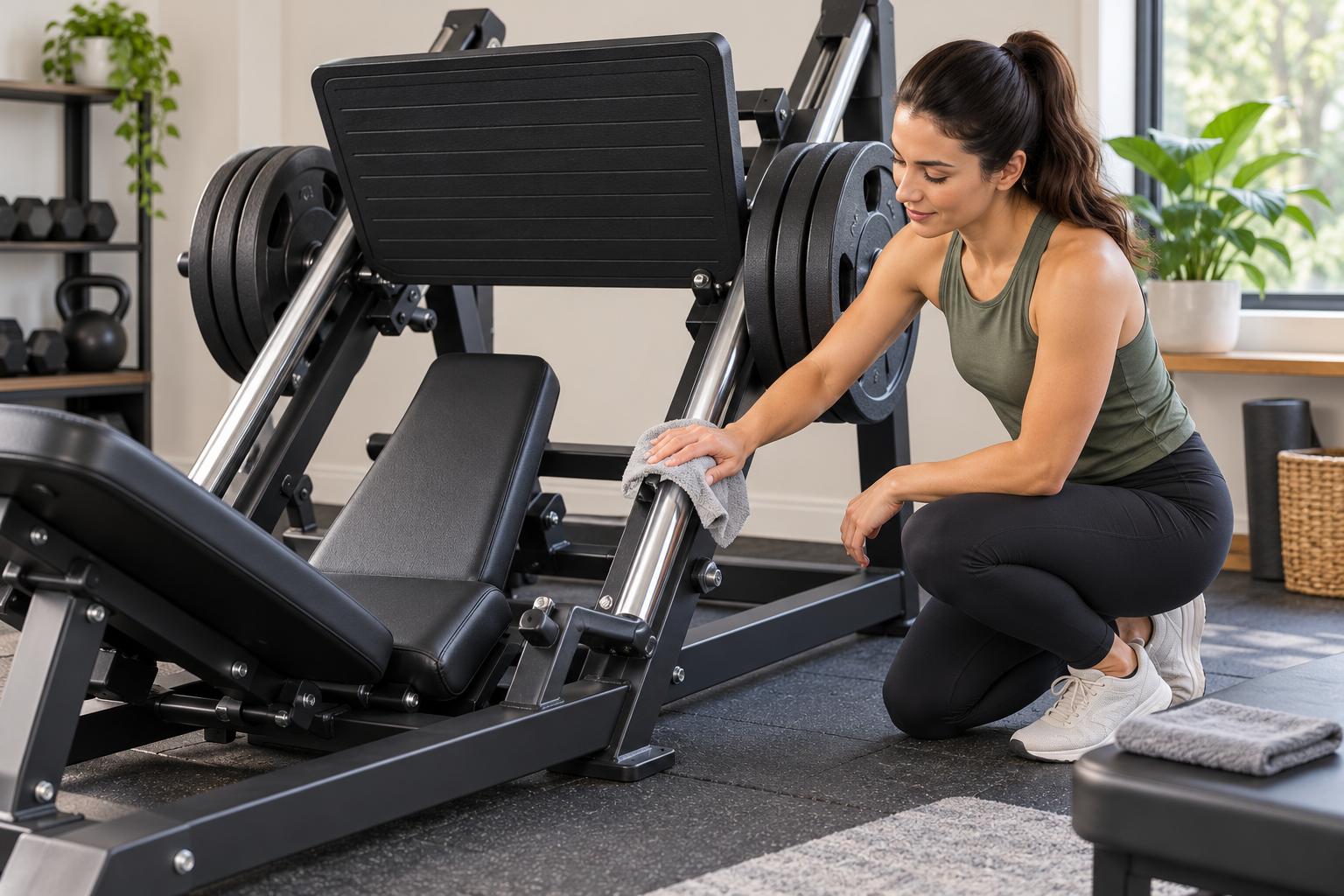
AI-generated illustrative cover; not a product photo or tested setup.
Quick answer: After a workout, remove visible sweat with a clean, soft cloth and a small amount of mild soap solution only if the equipment maker allows it for that surface. Keep liquids away from bearings, rails, cables, adjustment holes, electrical parts, and seams. Dry every cleaned area before the next session. Do not assume that a household disinfectant, alcohol, bleach, or abrasive pad is safe for a machine’s finish or upholstery.
A home gym may combine painted steel, bare metal, vinyl or other padding, rubber feet, cables, and plastic controls. Those materials do not necessarily tolerate the same cleaner. Start with the owner’s manual or the manufacturer’s care instructions for the exact model. If they specify a product or prohibit one, follow that direction. If the instructions are missing, contact the maker before applying a chemical to a visible or load-bearing surface.
A simple post-workout cleaning routine
- Make the machine safe to approach. Finish the set, unload plates if the manual calls for it during cleaning or inspection, place moving parts in the manufacturer’s recommended resting position, and keep the area clear. Do not reach between a carriage and frame or around a cable under tension.
- Use a dry first pass. Wipe sweat and dust with a clean, soft microfiber or lint-free cloth. This removes residue without adding liquid near moving parts. Use a separate cloth for the floor or other dirty surfaces.
- Spot-clean only where needed. If the manual permits damp cleaning, lightly dampen the cloth rather than spraying the machine. A mild soap-and-water solution may be suitable for some hard surfaces, but the manual takes priority. Never soak padding, seams, labels, bearings, or adjustment mechanisms.
- Dry completely. Follow with a dry cloth and allow the area to air-dry. Do not put equipment away wet or leave moisture pooled on steel, around fasteners, or under a machine mat.
Match the method to the surface
Frame and hand-contact points
For painted or coated frame sections, first remove loose grit so wiping does not drag particles across the finish. Use only a cloth and cleaner allowed by the machine instructions. Avoid scouring pads, metal brushes, and unapproved solvents; a coating that looks durable may still be damaged by abrasion or chemicals. Check corners, welds, bolts, and plate pegs while wiping. Cleaning is not a structural inspection, but visible looseness, sharp damage, or corrosion is a reason to stop using the machine and consult its manual or support.
Padding and upholstery
Blot sweat rather than scrubbing hard. Do not saturate seams or let cleaner run beneath upholstery. A product suitable for a steel frame may discolor or crack a synthetic pad. If the exact care method is not stated, ask the manufacturer instead of experimenting. Let padding dry fully before covering or using it.
Rails, bearings, cables, and adjustment points
Keep routine wipe-downs dry around these parts unless the manual gives a specific procedure. Do not add household oil, lubricant, or disinfectant: the required lubricant and service interval vary by design, and excess material can attract grit or affect movement. If a rail feels rough, a cable is frayed, or a carriage binds, stop and follow the model’s maintenance instructions rather than treating the symptom as a cleaning problem.
Cleaning is different from disinfecting
For ordinary post-workout care, visible sweat removal and routine cleaning may be all that is called for. Cleaning and disinfecting are different tasks. CDC guidance says to use a product appropriate for the surface and follow its label; some disinfectants need a specified wet contact time and adequate ventilation. That general guidance does not establish that a disinfectant is compatible with a particular gym machine. If disinfection is necessary, check both the equipment maker’s instructions and the chemical label before use. Never mix cleaning products.
How often should you clean equipment?
Wipe personal contact points after use when sweat is visible, and clean accumulated dust or residue as needed. A shared home gym may need a routine agreed by everyone who uses it, but more chemical cleaning is not automatically better. Keep cloths clean, do not reuse a sweaty wipe across the whole machine, and wash reusable cloths according to their care label. If someone is ill or has a specific infection-control concern, follow public-health guidance and ask the equipment maker about compatible products.
When not to continue
Stop cleaning and keep the machine out of service if you find a frayed cable, unstable frame, loose fastener, damaged padding that exposes a hard edge, corrosion near a joint, or a moving part that no longer travels normally. Do not conceal a defect with lubricant or cleaner. Consult the exact product manual and qualified service support. This routine is general housekeeping guidance, not a substitute for model-specific maintenance or an inspection of equipment safety.
Related equipment
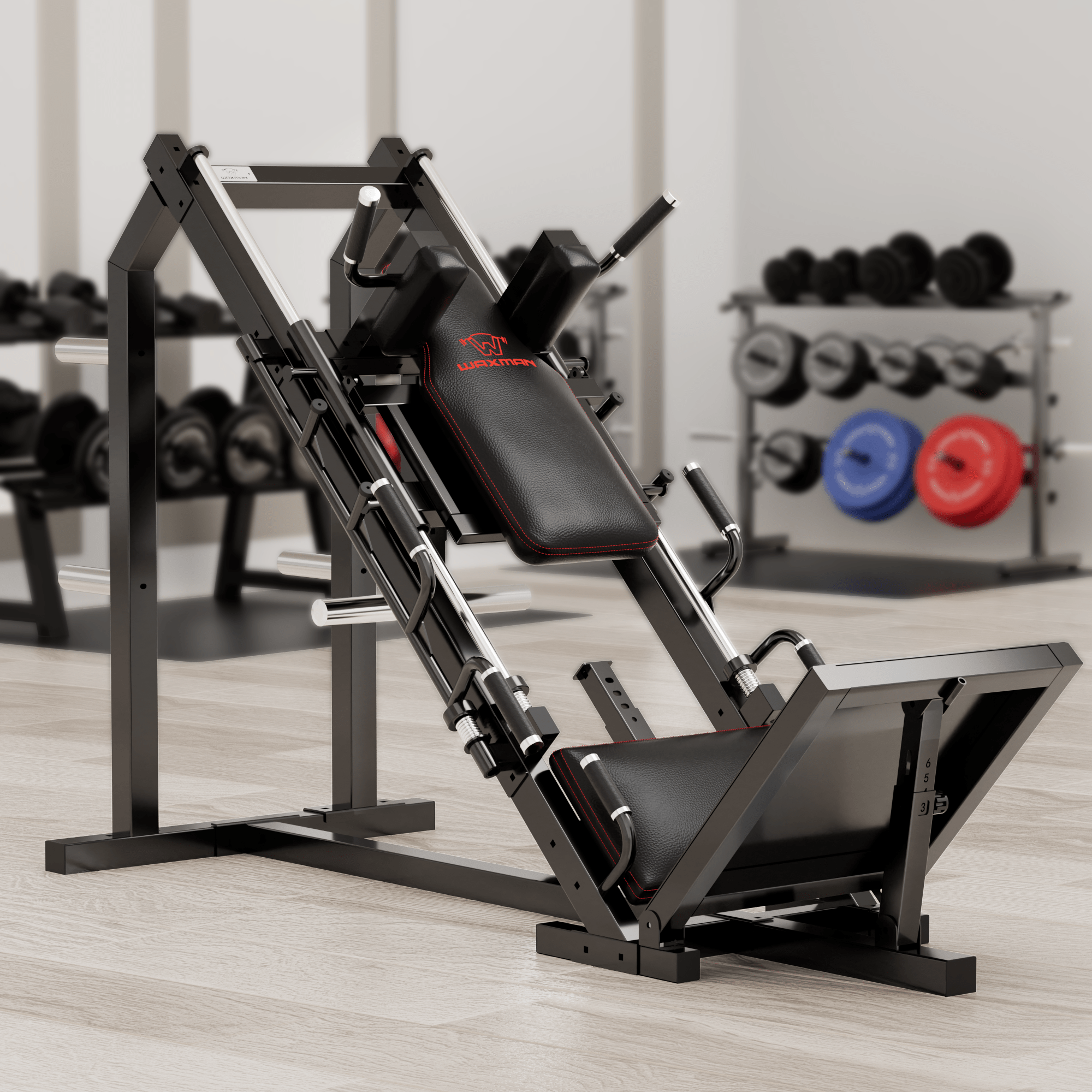
The WAXMAN Leg Press Hack Squat Machine is one example of a plate-loaded home-gym machine with a padded carriage and moving parts; its manufacturer’s instructions should determine care for each surface.
WAXMAN Leg Press Hack Squat Machine
Official listing price checked October 30, 2026: $799 USD. The listing describes a plate-loaded leg press and hack squat design, three-level adjustable safety limiters, and assembled dimensions of 77.5 × 38.3 × 57.4 inches. Check the current listing and exact model instructions before purchase or care.
Price and availability may change; see product page.
Sources
- CDC: When and How to Clean and Disinfect Your Home (surface-appropriate products, label directions and ventilation).
- Waxman official product listing (product identity, listing features, price and dimensions checked October 30, 2026).
Leave a Reply