
No products in the cart.
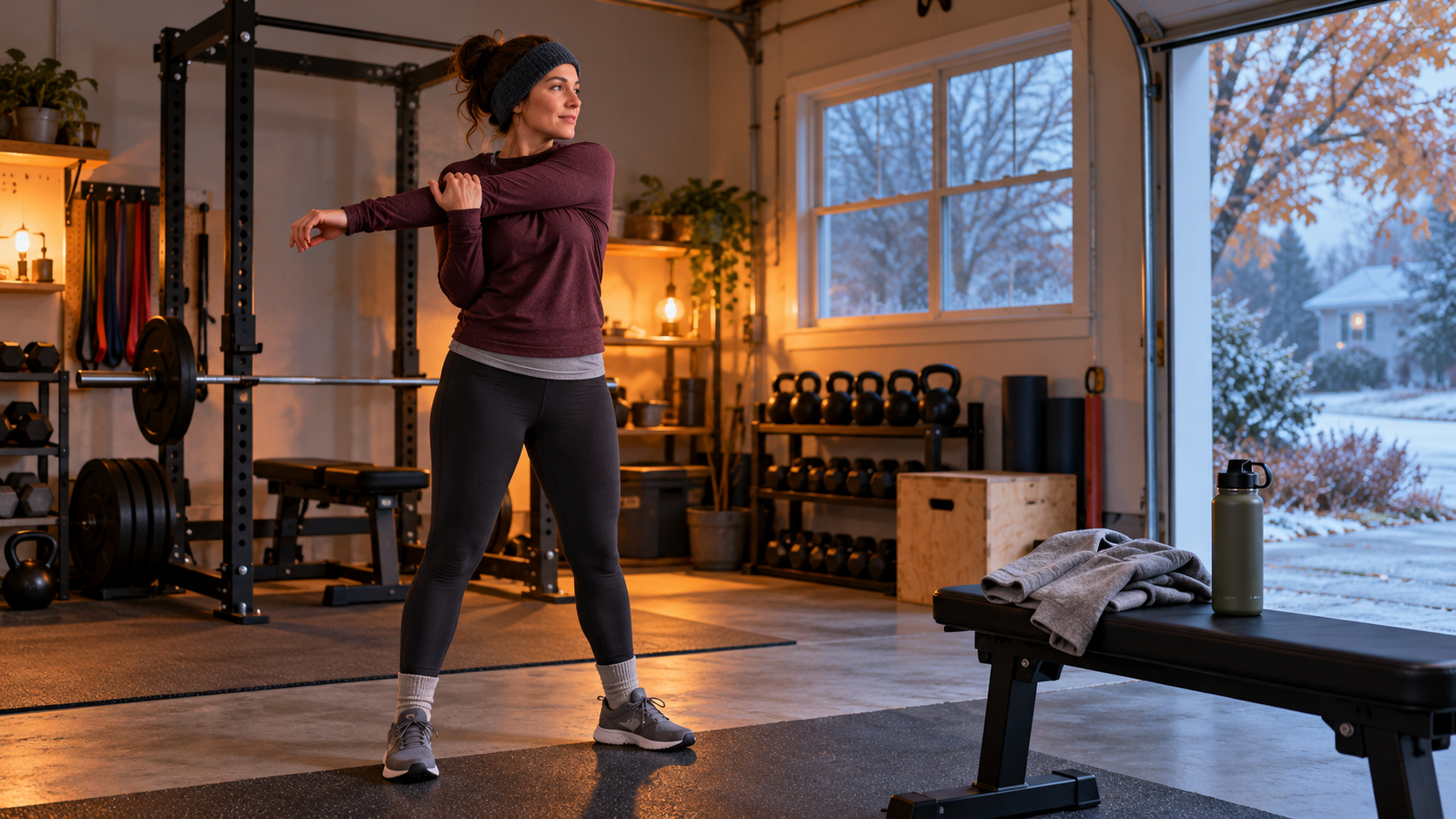
How to Warm Up for Strength Training in a Cold Home Gym
Cover illustration: AI-generated and illustrative; it does not show a tested workout or the Waxman product pictured below.
Quick answer: When a fall or winter garage feels colder than your usual training room, do not begin with your normal heavy work set. Move around until you feel ready, use easy versions of the movements planned for that session, then build toward working loads in gradual steps. If the space is cold enough to make you numb, shaky, confused, or unable to move comfortably, stop and warm up elsewhere. A warm-up can prepare you for exercise; it cannot make an unsafe environment safe.
Why the first set may feel different in a cold room
Cold weather can affect performance, especially for fast or powerful efforts. The American College of Sports Medicine (ACSM) explains that cooler muscle temperatures may reduce exercise time and power, while cold exposure also brings risks that depend on conditions and the person. Its guidance is not a precise indoor-temperature cutoff for every garage. Treat the room, dampness, clothing, and how you feel as part of the decision—not just the calendar.
That matters when your routine changes with shorter autumn days or the first cold snap. A bar, handle, bench, or floor may feel different from a warm commercial gym. The practical response is to take more time to assess and prepare, not to prove that you can keep the same pace or load.
A gradual warm-up for home strength training
1. Check the space before touching the weights
Look for wet or slippery flooring, condensation, blocked exits, and cords or stored items in the route around the equipment. Make sure lights let you see the hooks, stops, and plates clearly. If the garage is damp, icy, or too cold to move normally, choose a warmer location or postpone the session. Do not use an outdoor heater, fuel-burning appliance, or improvised heat source in an enclosed space.
2. Begin with comfortable movement
Start with easy whole-body movement such as marching in place, arm circles, hip hinges without weight, or controlled sit-to-stands. Choose motions that match the session, stay within a comfortable range, and keep moving smoothly. This is preparation, not a test. If a joint or muscle hurts sharply, or you feel dizzy, unusually short of breath, numb, or unwell, stop rather than forcing the warm-up to continue.
3. Rehearse the planned pattern with little or no load
Before a squat, press, or pull, practice the movement with body weight or the lightest sensible setup. Check your stance, range of motion, balance, and where the equipment starts and stops. On a guided machine, confirm that the bar travels as expected and that the safeties engage according to the maker’s instructions. A familiar machine still deserves a quick inspection when you return after time away.
4. Increase effort in small steps
Use a few progressively more challenging practice sets before the work sets, adding load only when the previous step feels controlled. There is no universal number of warm-up sets or fixed waiting time that fits every person, lift, or room. If movement remains stiff or your technique changes as effort rises, stay lighter, shorten the session, or switch exercises. Do not use a heavy first set to discover whether you are ready.
What to change when the room stays cold
Wear layers that let you move freely and remove a layer if you become overheated. Keep hands and feet comfortable, and avoid touching very cold metal with bare skin for a prolonged period. Take breaks in a warmer area if needed. Do not rely on a space heater placed near weights, fabric, or traffic; follow the heater maker’s instructions and local fire-safety guidance. If you cannot maintain comfortable movement, move the workout indoors.
Keep the session simple: choose fewer exercises, use familiar movements, and leave enough room to get on and off equipment safely. The Waxman Smith Machine listing describes a combined Smith machine, power cage, and cable crossover system. That range may suit someone who already plans to use those stations, but buying equipment is not necessary to warm up. Follow the exact unit’s assembly, setup, and safety instructions; product-page specifications do not establish the right load or exercise for an individual.
When to stop
Stop and move to a warm place if you develop persistent shivering, loss of coordination, numbness, confusion, or unusual weakness. Seek medical help for severe or worsening symptoms. People with conditions that affect circulation, sensation, or temperature regulation should get advice from a qualified clinician about their own exercise environment. ACSM’s cold-weather material discusses outdoor exposure and is not an individualized medical assessment.
Product details
Sources and limits
- ACSM, “Exercising Caution: The Dangers of Cold Temperatures” describes cold-related performance and exposure concerns.
- ACSM, “Exercising in Hot and Cold Environments” links to general environment guidance; it does not set a universal safe indoor garage temperature.
- Waxman product listing supports the product identity, model name, advertised features, dimensions, and listed price checked October 17, 2026.
This is general planning information, not medical advice, a training prescription, or a product test. Drafted with Codex assistance; no hands-on test or human expert review is claimed.
Leave a Reply