
No products in the cart.
How to Reduce Home Gym Noise During Holiday Visits
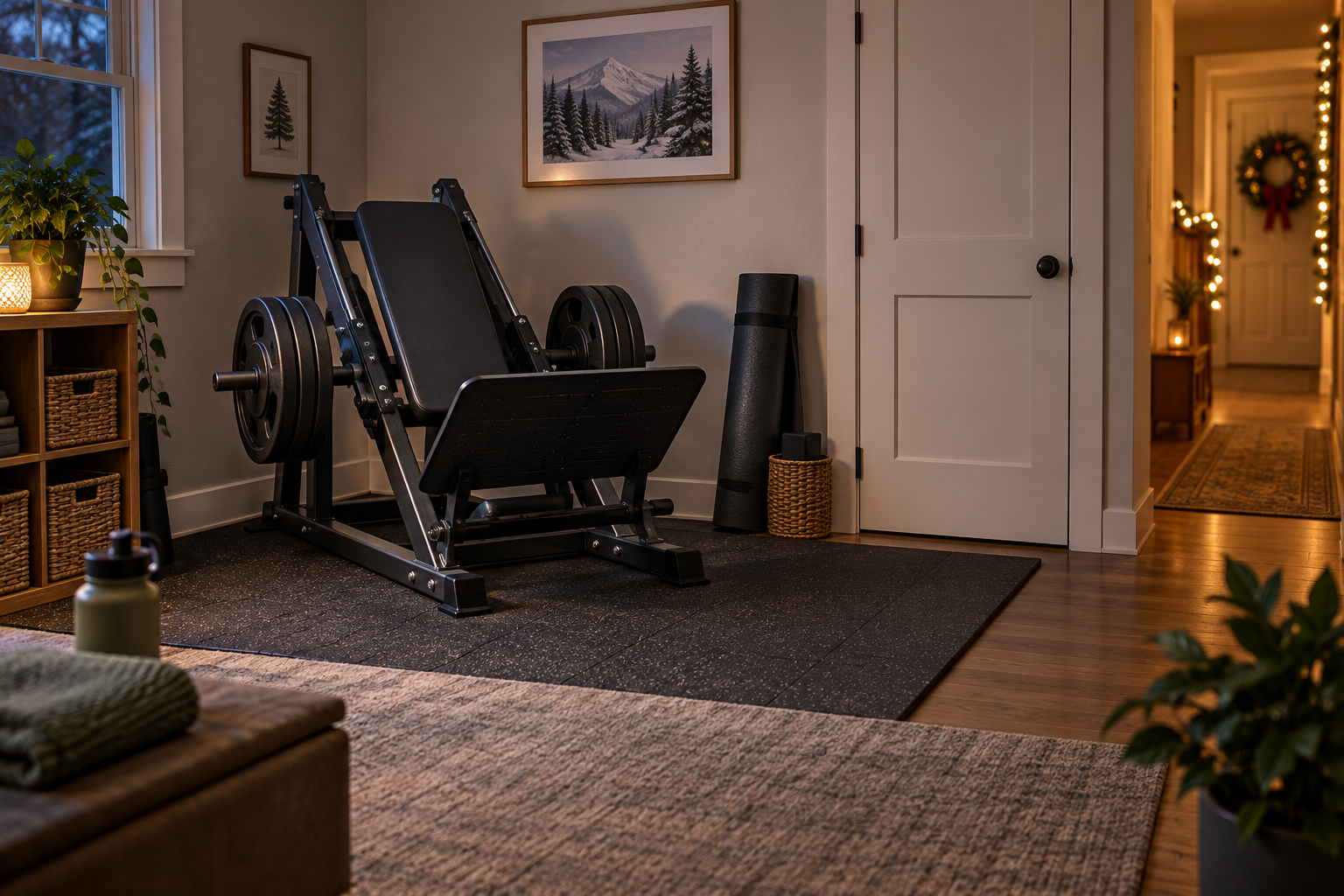
AI-generated illustrative image: this is a general home-gym scene, not a photograph of the Waxman machine or a sound test.
To make a home strength session less disruptive during a holiday visit, first identify whether the disturbance is airborne sound (metal contact, voices, music) or vibration traveling through the floor. Then reduce the source, check the equipment according to its manual, and choose a considerate workout window. A mat or closed door may help in some rooms, but neither proves that a machine is quiet or suitable for every floor.
Find what is making the noise
Listen from the room next door and, if possible, from the floor below. Note when the sound occurs: setting a plate down, changing position, moving a carriage, or during the exercise itself. A short phone recording can help you compare changes in the same room, but it is not a calibrated measurement and cannot establish a safe decibel level.
Rattling or clanking usually points toward contact between parts or weights. A low thump or buzz that is stronger in another room may be vibration passing through the structure. These are clues, not a diagnosis. Stop using the equipment if it moves, rocks, has loose or damaged parts, or behaves differently than its manual describes.
Make the session quieter at the source
- Follow the manufacturer’s assembly, inspection, loading, and maintenance instructions. Do not tighten, lubricate, or adjust a part unless the manual directs it.
- Set weights down under control and avoid dropping or striking components. Use only the equipment’s specified movement and stopping procedure.
- Keep the machine clear of walls, furniture, and stored items if the manual requires clearance. Contact can transmit vibration or create new rattles.
- Move music and phone alerts to headphones or a low-volume setting. Ask other household members which sounds carry into their rooms.
OSHA’s noise-control guidance for workplaces discusses controlling noise at its source and along its transmission path, including maintaining equipment and isolating vibration where appropriate. That is useful general context, but workplace guidance does not certify a home setup, prescribe a particular mat, or establish a residential sound threshold. Do not add isolators, wedges, or a thick mat beneath a machine unless its manufacturer confirms that the support remains stable and compatible.
Check the floor and timing
Before adding padding, check the floor type and the equipment manual. A soft layer can reduce some impact sounds, but an unstable surface can be a safety problem; the machine’s feet must sit as intended. For a heavy machine, confirm the floor and placement requirements with the building owner or a qualified professional when needed. Do not assume a floor is adequate from appearance alone.
During a holiday stay, agree on a quiet window before guests arrive. Put workouts away from sleep times and calls, and leave extra time for controlled setup and cleanup. If the only available room shares a wall with a sleeping guest, consider a no-impact session elsewhere or reschedule rather than trying to mask the sound with louder music.
When a product listing helps—and what it cannot tell you
The Waxman Leg Press Hack Squat Machine listing describes a two-in-one leg press/hack squat unit and gives assembled dimensions of 77.5 × 38.3 × 57.4 inches. Those dimensions help with a basic footprint check, but they do not specify operating clearance, floor transmission, or measured sound. The listing’s load-capacity statements conflict with the product-image text, so this article does not repeat or rely on a capacity figure. Check current manufacturer instructions and resolve any rating question before use.
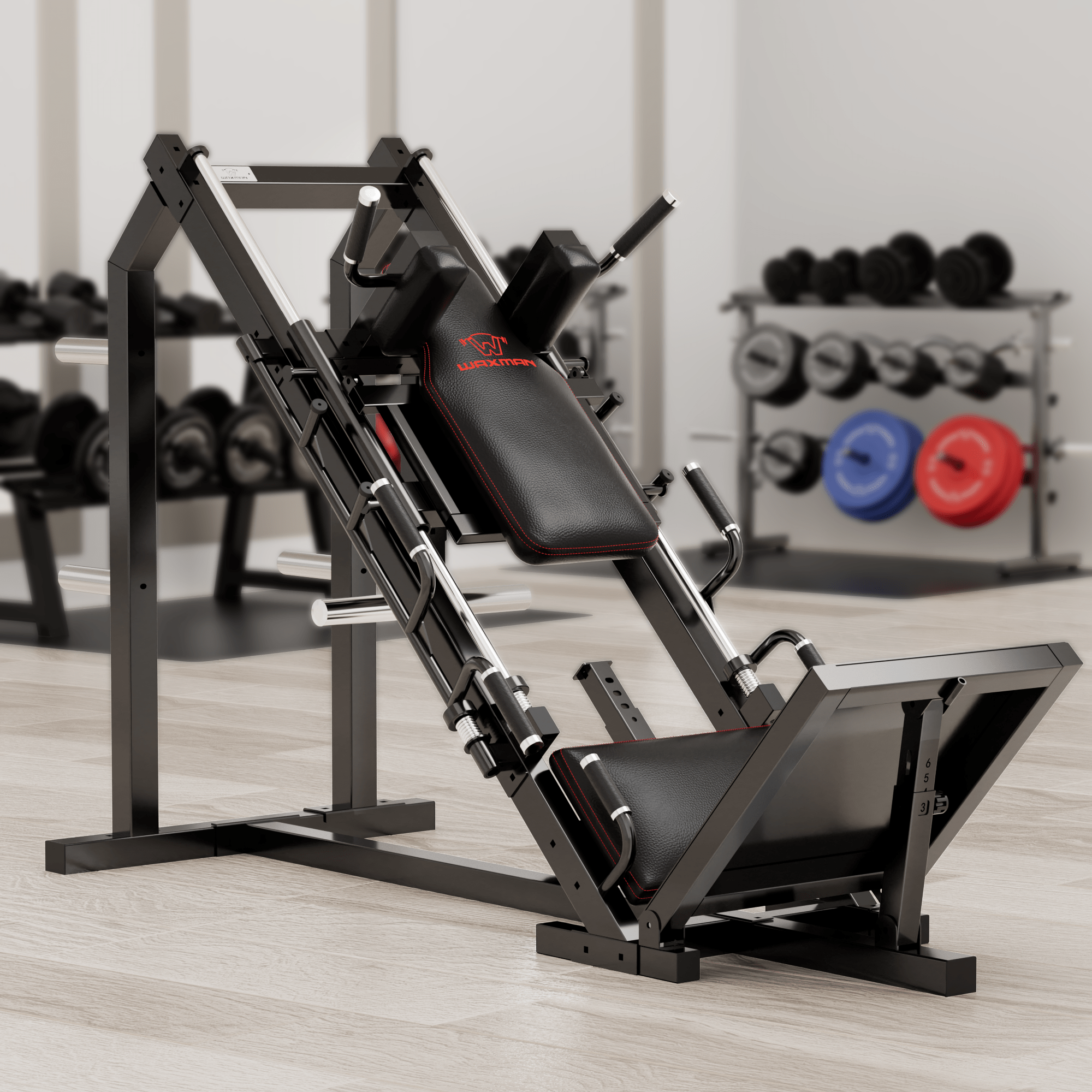
Waxman Leg Press Hack Squat Machine
Two-in-one leg press and hack squat listing; assembled size 77.5 × 38.3 × 57.4 in. Current displayed price checked October 8, 2026: USD $799.
Use the listed size for a footprint check only; operating clearance, floor suitability, sound level, and conflicting load-rating text require separate confirmation. Price and availability may change; see product page.
A quick pre-visit checklist
- Inspect the equipment and floor; follow the product manual.
- Identify rattles versus vibration and make one safe change at a time.
- Compare from the adjoining room without treating a phone recording as a sound meter.
- Agree on a workout window with the people sharing the home.
- If noise persists or the machine is unstable, stop and contact the manufacturer or a qualified flooring professional.
There is no universal mat, schedule, or sound level that guarantees a quiet workout. The practical goal is to reduce avoidable impacts, keep the equipment stable, and respect the household’s quiet hours.
Sources: OSHA, Occupational Noise Exposure: Exposure & Controls; Waxman product listing. Product listing and price checked October 8, 2026. Written with Codex assistance; no equipment or acoustic testing was performed.
Leave a Reply