
No products in the cart.
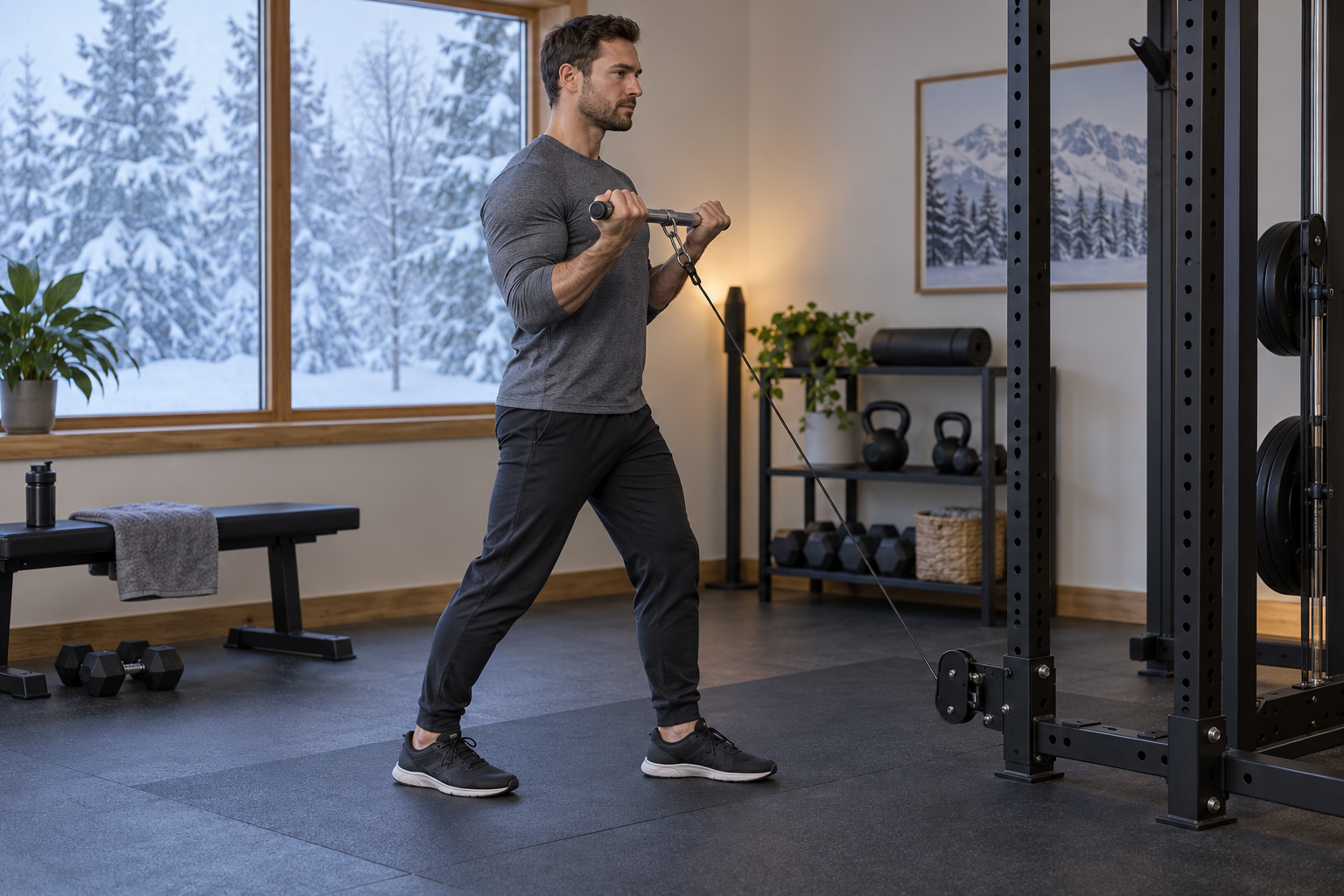
How to Set Up a Home Cable Biceps Curl Without Body Swing
Quick answer: For a standing low-pulley biceps curl, face the pulley, choose a stance that lets the cable pull smoothly from below, and keep your torso still as your elbows bend. Use a resistance you can lift without rocking, shrugging, or letting your elbows travel far forward. If the cable pulls you off balance or the anchor moves, stop and correct the setup before continuing.

Confirm that the low pulley is safe to use
Before adding plates, read the pulley system instructions and verify that the anchor point is approved for a low-pulley pull. Check that the strap, carabiner, cable, pulley and loading pin are seated as intended and free of visible damage. A product listing that describes a low-pulley or lift-up mode does not prove that every rack, beam, door or strap installation is safe.
Make sure the plates clear the floor throughout the movement and cannot hit your feet, the rack or nearby furniture. Stand where the cable can travel without rubbing on a sharp edge. If the rack slides, tips or flexes, the anchor rating is unclear, or you cannot keep a stable stance, do not perform the exercise there. The advertised maximum for a pulley system is not the rating of the external structure.
Find a balanced starting position
Face the low pulley with feet about hip-width apart or use a comfortable staggered stance. Stand far enough away that the cable is taut at the start, but not so far that it drags your arms behind your body or pulls you forward. Keep knees soft, ribs stacked over hips and shoulders relaxed. Grip the bar or handle with wrists aligned to your forearms. Do not use a wide stance or lean back to counterbalance a load you cannot control.
ACE’s standing biceps-curl instructions use a band rather than this specific pulley, but provide a useful general cue: bend the elbows while keeping them close to the sides and lower slowly. That movement cue is not product-specific engineering advice or a prescription for load, range, or frequency.
Curl without swinging
- Begin with arms comfortably extended and elbows close to your torso. Avoid locking the elbows or letting the cable pull your shoulders forward.
- Exhale as you bend your elbows and bring the handle upward. Keep your chest and hips facing forward rather than rocking back to start the repetition.
- Stop when you reach a comfortable curl range and can still keep your elbows near your sides. Do not force the handle toward your shoulders by shrugging or moving your upper arms.
- Lower the handle slowly until your arms return to a comfortable starting position. Keep tension controlled so the plates do not drop or swing.
It is normal for the exact elbow position and comfortable range to vary. The goal here is a repeatable motion you can control, not a specific number of repetitions or a claim about muscle results. Breathe continuously; do not hold your breath while the handle moves.
Fix the most common problems
- Your body rocks backward: Lower the resistance and shorten the range until your torso stays steady.
- Your elbows drift forward: Move slightly closer to the pulley or reduce the load; avoid reaching the handle upward by swinging the shoulders.
- The cable slackens at the bottom: Adjust your starting distance only after confirming the cable path and anchor are approved.
- Your wrists bend: Regrip or choose another included handle only if the product instructions allow it.
- The plates swing or strike something: Stop the repetition and allow them to settle. Clear the area and use a lighter controllable load.
- You feel sharp or worsening pain: Stop. Do not try to solve pain by forcing a different grip or range; seek qualified help if it persists.
Cold-weather home gym considerations
In fall and winter, home workouts may move to a garage or a room that has been unused. Check that the floor is dry, the rack and surrounding area are clear, and the attachment moves freely before the first loaded repetition. A brief general warm-up can help you ease into an indoor session, but this guide does not prescribe an exercise program. If you are new to strength training or unsure about setup, ask a qualified trainer to review the equipment and movement.
Product details checked October 9, 2026. Price and availability may change; see the product page.

Waxman Fitness LAT and Lift Pulley System
Listing describes lift-up and pull-down modes, 70-inch and 90-inch cables, and biceps-curl use. Advertised maximum system load: up to 280 lb; this is not a rack or anchor rating.
$43.00 USD (listing checked October 9, 2026). Price and availability may change; see product page.
Sources and scope
- ACE: Standing Bicep Curl — general elbow and controlled-lowering cues using a resistance band.
- Mayo Clinic: Strength training — general form and pain guidance.
- Waxman product listing — listed low-pulley mode, use cases and price snapshot.
Leave a Reply