
No products in the cart.
How to Check a Weight Bench Floor Setup for Fall Workouts
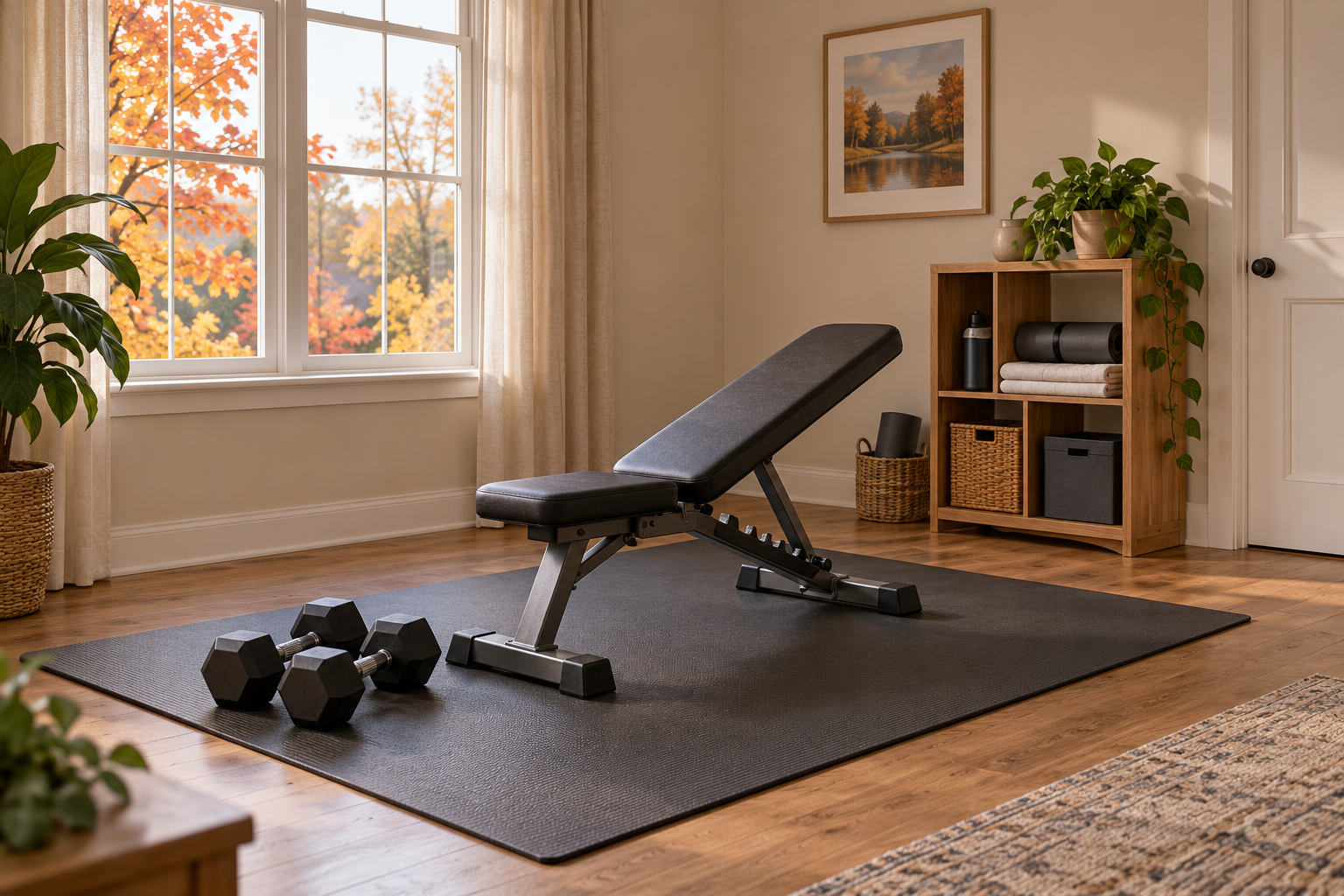
AI-generated illustration for explanation; it is not a product photo or evidence of testing.
When cooler fall weather moves strength training indoors, put the bench on a dry, firm, level surface and check that its feet stay planted before loading it. A mat can protect the floor, but a thick or soft mat may compress or shift; the goal is a stable base, not extra cushioning. If the bench rocks, slides, sits on a damp patch, or has a loose adjustment mechanism, do not use it until the cause is corrected.
Start with the floor, not the mat
Clear the intended footprint and the space around it. Remove cords, toys, loose rugs, leaves tracked in from outside, and anything that can roll under a bench foot. Sweep or vacuum grit that could scratch a hard floor or make a mat uneven. Check for moisture, especially in a basement or garage in fall: condensation, a small leak, or damp concrete can make a mat slick and can trap moisture against some floor finishes.
Look across the bare floor from a low angle and press each corner of the mat area with your hand. The surface should not have a loose board, raised threshold, curled flooring edge, or obvious dip beneath a support point. This is a practical screening check, not a measurement of the floor’s structural capacity. If the floor is visibly damaged, flexes, or you are concerned about the combined load of people and equipment, ask the property owner or a qualified building professional before setting up.
Choose floor protection that stays put
Use the bench maker’s instructions first. If they do not specify a mat, choose one made for exercise equipment and large enough that every bench foot remains on it in each intended backrest position. A mat that is too small can leave a foot partly on and partly off the edge; one that curls or bunches can create its own trip or rocking point.
Material matters as much as thickness. A dense, firm pad may protect a finished floor while keeping the bench stable. Very soft foam or a thick plush rug can compress unevenly under narrow feet. Carpet can also hide a small object or let a support settle differently as load shifts. Do not assume a general yoga mat, children’s play tile, or a random scrap of plywood is suitable. Follow the flooring and equipment manufacturers’ guidance; the surface advice from another fitness-equipment brand is general context, not approval for a particular bench or floor.
On a hard floor, place the mat only after both surfaces are clean and completely dry. On carpet, be cautious: a mat may protect the pile but cannot automatically make an uneven or deeply cushioned surface stable. If the bench rocks on a firm, level surface, do not improvise with loose folded cardboard, towels, or stacked shims. Relocate it or contact the bench manufacturer for a model-specific correction.
Run an unloaded stability check
- Set the bench in its working position and confirm that all feet rest fully on the floor or mat. Check that no edge is folded underneath.
- With no weights on the bench, press down gently at the seat and backrest from different sides. Look for rocking, sliding, a shifting mat, or a foot lifting.
- Adjust the backrest only as the product instructions describe. Confirm that the adjustment pin or lock is fully engaged and that the frame is not caught against a wall or another item.
- Repeat the gentle check after moving the bench or changing its angle. Stop if a support moves, a joint clicks unexpectedly, or the frame appears bent or loose.
This check does not certify a bench, floor, or workout as safe, and it does not replace the manufacturer’s assembly and maintenance instructions. Do not test stability by jumping on the bench, dropping weights onto it, or asking someone to sit on one end while you push the other.
Keep workout clearance and floor condition in view
Leave enough room to get on and off without stepping over weights, furniture, or a mat edge. Keep the path to the room’s exit open. In a shared room, move the bench after the session only by following its instructions; do not drag it across finished flooring. Recheck the setup if household furniture is moved, the room gets wet, or a mat has shifted.
After exercise, wipe sweat or water from the floor and mat and allow them to dry before putting the bench back. Periodically lift the mat, when practical, to check for grit, moisture, or floor discoloration underneath. Dampness under a mat is a reason to dry the area and address the moisture source before training there again.
When to stop and get help
Do not train on a visibly uneven, slippery, wet, or damaged surface. Stop if the bench continues to rock after you have cleared debris and placed it on a firm level spot, or if a locking part will not engage as the instructions describe. Ask the manufacturer about equipment-specific setup; ask a building professional about a questionable floor. This guide offers a room and surface checklist, not a load rating or an engineering assessment.
For readers comparing equipment, the Waxman Adjustable Weight Bench is listed by the seller as an adjustable strength-training bench. Confirm the product details and instructions on the listing before purchase or setup.
Sources and limits
- CENTR: What surfaces can I use fitness equipment on? General equipment-surface guidance, including cautions about soft or uneven surfaces; this is not Waxman-specific approval.
- American College of Sports Medicine: 3 Essentials for Building a Home Gym General advice to choose a suitable long-term exercise space that does not disrupt housemates.
- WaxmanUSA product record, ID 8607 Checked October 6, 2026 for listing identity, image, price, purchase status and stock indication.
Written with Codex assistance. No bench or floor test was performed for this article.
Leave a Reply