
No products in the cart.
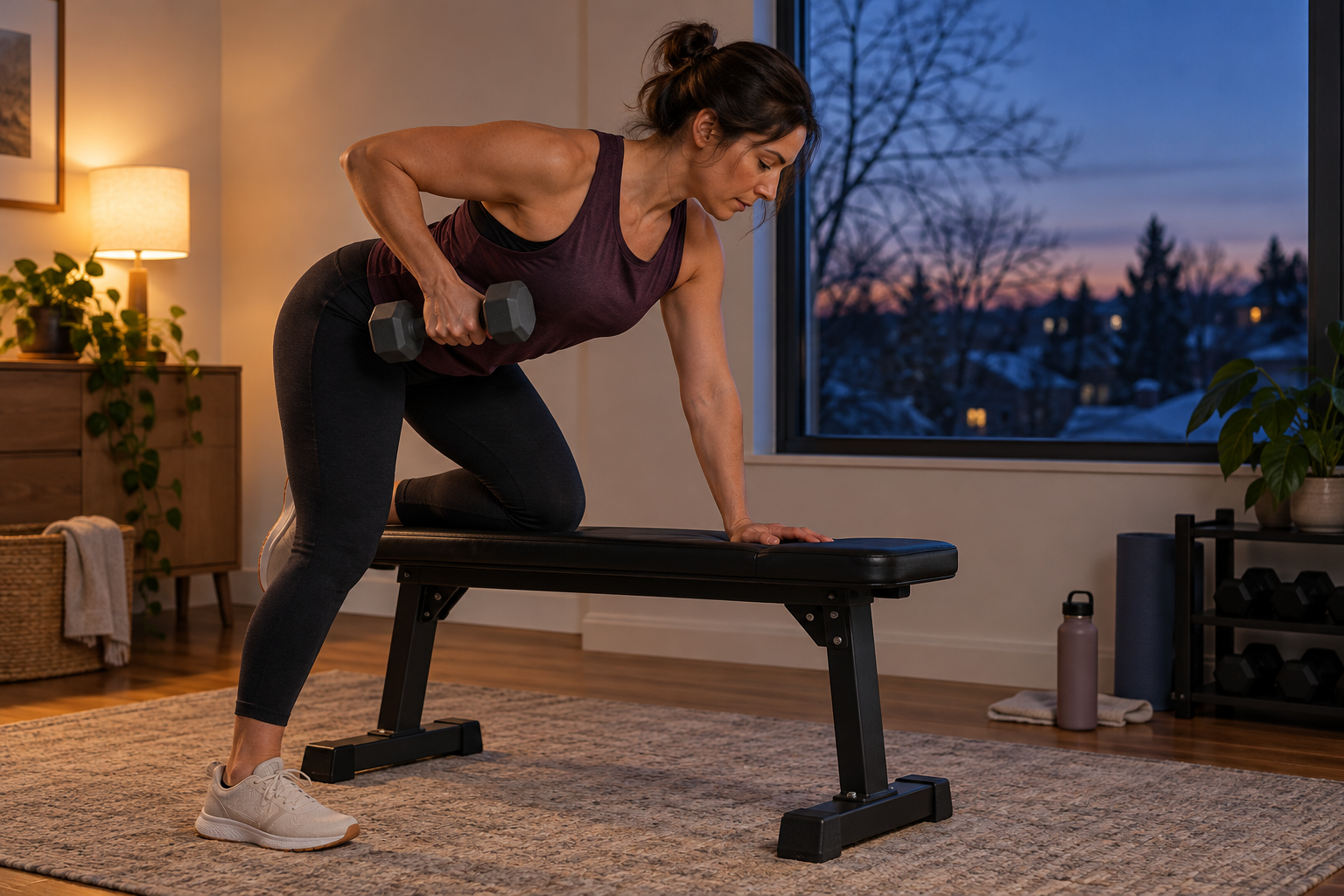
How to Keep a Strength-Training Routine as Days Get Shorter
Short answer: When daylight shrinks, keep strength training by anchoring two manageable sessions to times you can protect indoors, then begin with a small routine and build gradually. You do not need to “make up” missed workouts with long or punishing sessions. The U.S. Physical Activity Guidelines recommend muscle-strengthening activity on at least two days a week for adults, but people who are currently inactive can work toward that amount over time.

Make the schedule fit the darker season
Shorter daylight can change when outdoor activity feels convenient, but it does not require abandoning a routine. First, choose two repeatable days and a time that already fits your week: after work, during a lunch break, or before other evening plans. Put the sessions on a calendar as appointments. A consistent cue—finishing a work call, changing clothes after arriving home, or starting a familiar playlist—can reduce the number of decisions between planning and beginning.
Keep a backup option for days when the original time falls apart. That could be a shorter indoor session or a different day later in the week. The purpose is to preserve the habit, not to squeeze every missed minute into one workout. If winter travel or holiday plans disrupt your usual schedule, treat the week as a temporary adjustment and resume the next planned session.
Start with a routine you can repeat
If you have been away from strength training, start with a few movements that cover the main patterns you want to practice: a squat or sit-to-stand, a hip hinge, a push, a pull, and a trunk-stability exercise. Choose body-weight movements, resistance bands, or weights you can control. One easy-to-moderate set of each movement may be enough for an initial session; the exact exercise and resistance should match your experience, available equipment, and comfort.
Use a range of motion you can manage with steady control. Stop a set when your form starts to change, you cannot complete the movement smoothly, or pain appears. Rest between exercises as needed. This is a practical starting point, not an individualized prescription: people with injuries, chronic conditions, recent surgery, or specific medical restrictions should follow advice from their clinician or qualified professional.
Build in small steps instead of catching up
The federal guidelines advise people who are inactive to begin with small amounts and work up over time. Apply that principle to resistance work as well: first make the sessions regular, then add a modest amount of work only when the current routine feels manageable. You might add a repetition, another set, or a small increase in resistance to one exercise, rather than increasing every variable at once. Leave enough recovery between challenging sessions, especially when returning after several weeks away.
Keep a simple log of the movement, resistance, repetitions, and how it felt. That helps distinguish a sustainable progression from a rushed attempt to return to previous numbers. Strength and exercise tolerance vary by person; there is no universal calendar that guarantees when an old workload will feel comfortable again.
Make the indoor space safer and easier to use
Clear a stable area before exercising. Check that the floor is dry, there is enough room to move without striking furniture, and any bands or weights are in usable condition. If you train near a window, keep the exercise area clear of cords and blind hardware. Wear footwear appropriate to the surface and the movement. For a shared home, store equipment so it will not become a trip hazard between sessions.
Do not use a dark, cluttered room simply because it is the only available space. A brighter room, a lamp, or moving the session earlier can make setup easier. If you prefer outdoor activity, choose a familiar, well-lit route and weather-appropriate clothing; visibility and footing matter more as evenings get darker.
Keep expectations realistic
Two weekly muscle-strengthening days are a public-health guideline, not a pass-or-fail test for a particular week. Some activity is better than none, and the guideline is a longer-term destination for people starting from inactivity. If a short session is all you can fit, use it as a manageable step and continue your plan. Avoid doubling volume because of guilt or trying to train through sharp or worsening pain.
For general adult recommendations and examples of activity schedules, see the CDC’s adult activity guidance and the U.S. Physical Activity Guidelines questions and answers. These sources provide general population guidance, not a personal training plan. If your health, medications, or recovery status affect exercise, ask a healthcare professional what level and type of activity is appropriate for you.
Leave a Reply