
No products in the cart.
How to Keep a Winter Home-Gym Floor Dry and Safe
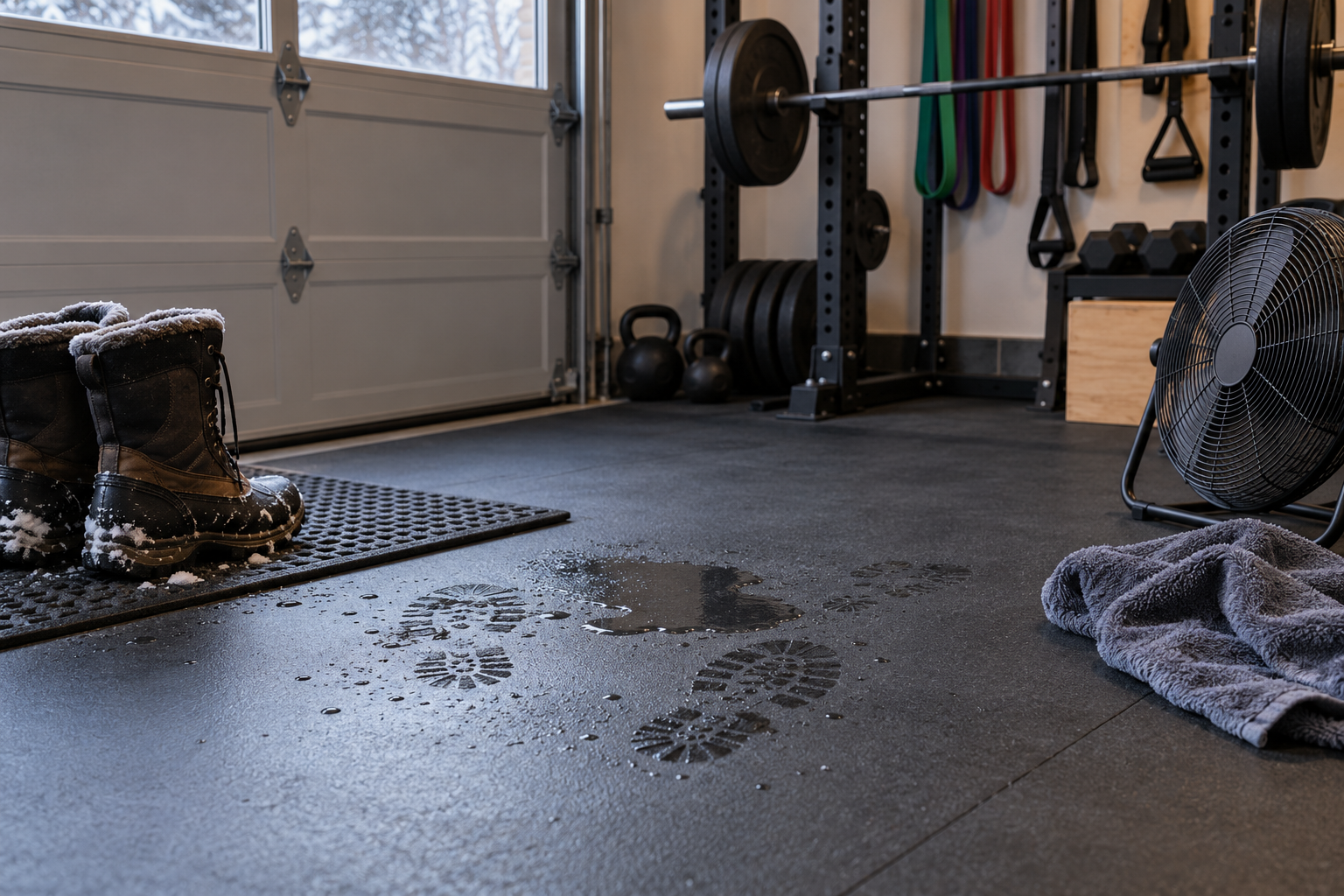
Short answer: If winter moisture, melted snow, or condensation has made your home-gym floor slick, pause the workout until the walking and lifting area is clean, dry, and stable. Dry the floor and mat according to their care instructions, remove clutter and cords, then check for loose edges or water returning from a leak. A towel or rubber mat laid over a wet surface does not make it safe. If you cannot make the area dry and firm, move the session or wait.
Cold-weather training often moves indoors, while wet shoes, dripping coats, and damp garage floors can bring water into the same space where you step back, brace, or carry weights. A slick patch can be easy to miss when attention is on a set. OSHA’s walking-working-surface guidance calls for clean, dry floors where feasible and correction of hazards before use. That standard applies to workplaces, not household gyms, but the basic housekeeping principle is useful at home too.
Find where the moisture is coming from
Before wiping the floor, identify whether the water is a one-time spill or a recurring condition. Common winter sources include wet footwear, snowmelt near a garage entrance, condensation on a cold slab, a damp towel, or a plumbing leak. Check the floor edges, the underside of movable mats, and the area around exterior doors. If water is coming from a leak or repeated condensation, drying the visible patch alone will not solve the cause.
Keep electrical cords, chargers, fans, and powered equipment away from water. If water is near an outlet or appliance, do not handle it while standing in the wet area; move away and get qualified help if there is an electrical concern. Do not use an electric fan or heater where it could contact water or be exposed to a wet floor.
Make the training surface safe before setting up
- Remove the immediate hazard. Pick up weights, bands, and other gear from the affected area. Blot or mop the water using a method suitable for the floor. Follow the floor and mat manufacturers’ cleaning and drying instructions; some materials can be damaged by harsh cleaners or heat.
- Let the surface dry fully. Do not rely on a surface looking dry from standing height. Check under a mat and along seams where moisture can be trapped. If a mat is damp, lift it and let both it and the floor dry before replacing it.
- Inspect the mat and floor. Look for curled edges, gaps, grit, cracked flooring, or a mat that slides when pushed. A mat helps only when it is designed for the floor and stays flat and secure. Avoid stacking loose mats to cover a wet or uneven spot.
- Clear the route around the equipment. Remove cords from walking paths, put unused weights away, and leave enough room to enter and exit the workout area without stepping around clutter. Turn on adequate lighting so damp spots and raised edges are visible.
- Check footwear and equipment contact points. Change out of wet shoes and inspect soles for mud or water. Wipe equipment handles and bench surfaces if they are wet. A dry floor does not help if your shoes or hands are still slippery.
Adjust the session if the room is still cold or damp
Do not try to compensate for uncertain footing by lifting more cautiously through a slippery movement. Reduce the session to exercises you can perform on a verified dry, stable area, or choose a different location. Avoid carrying heavy plates across a damp path. If a movement requires stepping, pivoting, or getting down to the floor, check the whole route and contact area first.
Keep ventilation and temperature comfortable, but do not direct a space heater at rubber flooring, foam mats, or electrical cords. Follow heater and equipment manuals, and keep heat sources clear of combustible materials. If condensation returns quickly, consider whether the room needs a longer drying period or a building-maintenance fix before it is used for workouts.
When to stop and address the room
Skip the workout in that area if water keeps returning, the floor feels soft or uneven, a mat shifts, an electrical item is wet, or you cannot identify the source. A recurring damp smell, visible mold, or water beneath flooring is a building-moisture issue rather than a gym-cleaning task. Resolve the underlying condition and use another dry location in the meantime.
After a session, hang wet towels to dry, return weights to storage, and check the floor where footwear entered. A quick routine at the door—remove wet shoes, dry the entry strip, and keep a clear path—can reduce the amount of moisture reaching the workout area. Recheck after storms or thawing weather rather than assuming yesterday’s dry floor is still dry.
Bottom line
For a safe winter home workout, dry the floor and mat completely, remove the moisture source, and verify that the surface stays flat and secure before lifting. Do not cover a wet patch and continue. If the floor remains damp, unstable, or electrically unsafe, move the workout and fix the room condition first.
Sources
- OSHA, 29 CFR 1910.22: General requirements for walking-working surfaces (workplace standard; used here for general dry-floor and hazard-correction principles).
- OSHA, Slips/Trips/Falls housekeeping guidance (clean and dry floors, immediate spill cleanup, clear passageways).
- CDC, 6 Tips to Stay Active This Winter (indoor activity options when outdoor conditions change).
Leave a Reply