
No products in the cart.
How to Keep Your Wrists Straight During a Dumbbell Bench Press
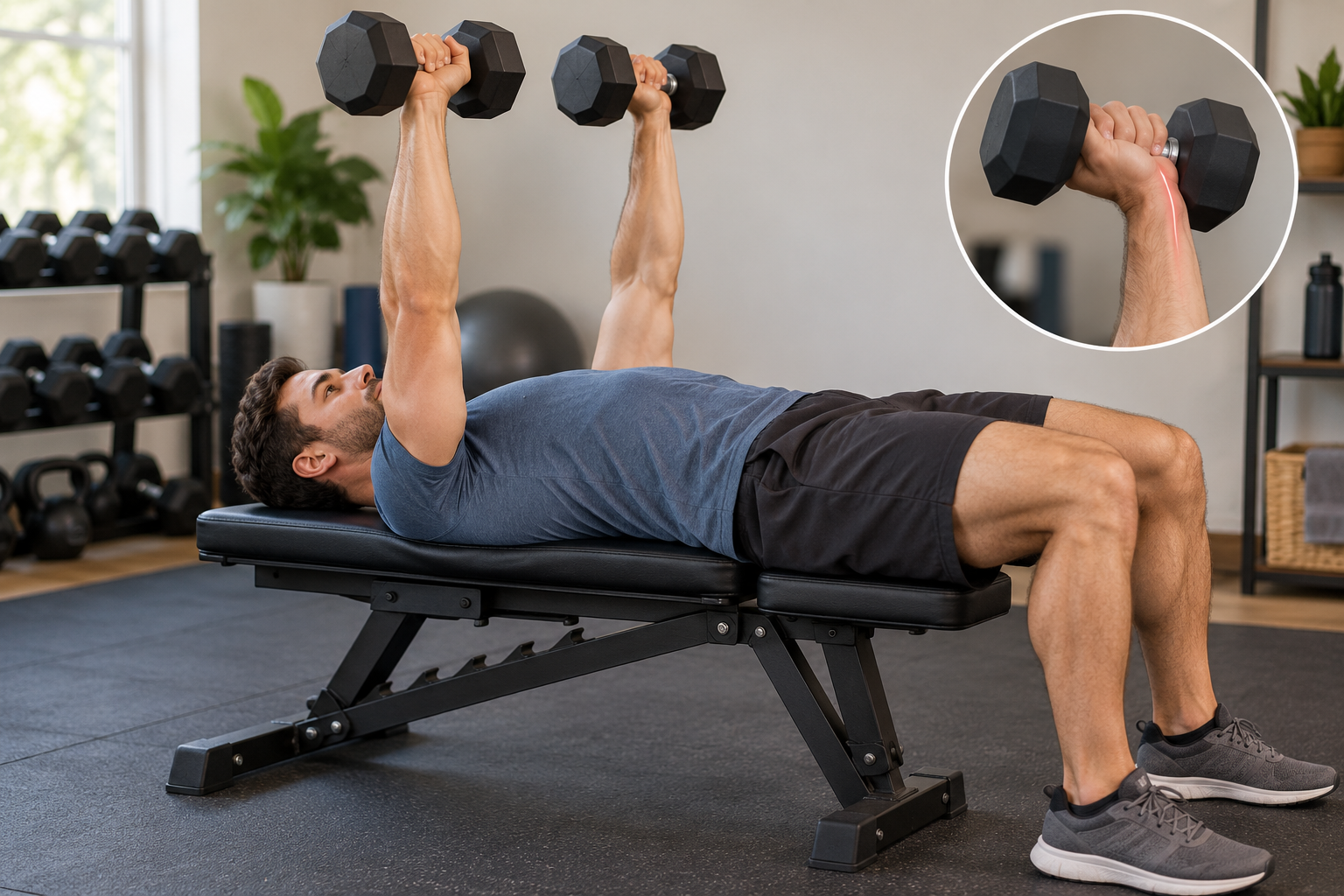
Cover image: AI-generated educational illustration. It is not a product photograph or evidence of testing.
Quick answer: During a dumbbell bench press, keep each wrist stacked over its forearm so the hand does not fold sharply backward or toward the little-finger side. Hold the dumbbell securely across the heel of your palm, lower under control, and use a load you can manage without losing that alignment. A straight wrist is a technique cue, not a diagnosis or a guarantee against pain.
If you are setting up a home press station, first check that your bench is locked at the intended position and stable on the floor. The Waxman Adjustable Weight Bench product page lists multiple backrest positions; always use the exact setting and assembly instructions for your unit.
What “stacked wrist” means
Look at your arm from the side: the back of the hand and forearm should form a nearly straight line, rather than a pronounced angle at the wrist. From above, avoid letting the hand collapse inward or outward as the dumbbell moves. Your grip should feel secure, with the handle resting in the palm rather than balanced on the fingers. Do not squeeze so hard that you create unnecessary tension, and do not let the weight roll toward the fingertips.
The American Council on Exercise (ACE) describes maintaining a neutral wrist during the dumbbell chest press, including while lowering and pressing. The useful principle is to keep the wrist position consistent through the repetition—not to force a rigid pose that feels painful or unnatural.
Set up before lifting
- Check the station. Place the bench on a level, non-slippery surface. Confirm the backrest is fully engaged in its selected notch and that the frame does not rock. Keep the area clear of loose plates, pets, and obstacles.
- Choose manageable weights. Start with a load that lets you control the lowering phase and keep both wrists aligned. If you cannot get into or out of position safely, reduce the load or ask a capable spotter for help.
- Get stable. Sit with the dumbbells resting on your thighs, then lie back with control. Keep your head, upper back, and hips supported; place your feet firmly on the floor or on a stable platform if needed. Do not kick heavy dumbbells into position alone.
- Find a comfortable grip. Wrap your fingers and thumb around each handle. Position the handle low enough in the palm that the weight is supported over the forearm, without forcing an extreme wrist angle.
Use a simple alignment check
Before the first repetition, pause with the weights above your chest and elbows softly extended. Ask a spotter to look from the side if available, or use a light load to observe your own alignment. The dumbbells should feel centered over your hands, not pulling your wrists backward. During each repetition, lower the weights slowly toward the sides of your mid-chest, keeping wrists in line with forearms. Press smoothly upward without bouncing or letting one hand tilt as fatigue builds.
Keep the range of motion comfortable. The dumbbells do not need to touch your chest if doing so makes your shoulder position, control, or wrist alignment deteriorate. Stop the set when you can no longer control the path. A spotter can help with the weights, but should not grab them unexpectedly or distract you during a repetition.
Common wrist-position problems
- Hands bent backward: The dumbbells sit too high toward the fingers, the load is too heavy, or the wrists are drifting as you lower. Reposition the handle in your palm and reduce the load.
- Hands tilted sideways: The elbows and hands may not be tracking comfortably together. Try a lighter weight and a grip angle that keeps the forearms aligned without forcing the elbows into a fixed position.
- One wrist loses alignment first: Stop and set both weights down safely. Fatigue, grip differences, or discomfort can affect one side sooner; do not keep pressing just to match repetitions.
- Pain, numbness, or tingling: End the exercise. Do not try to solve persistent symptoms by changing wrist angle alone. Seek advice from a qualified health professional, especially after an injury or if symptoms recur.
Adjustments and limits
Some lifters are more comfortable with a slightly turned-in grip, while others prefer palms facing forward. Use the hand position that lets you keep a secure grip and move without pain, and follow guidance from a qualified coach or clinician when you have an injury or medical restriction. This general article cannot determine the cause of wrist pain or prescribe rehabilitation.
If a straight wrist is difficult even with very light weights, try a stable machine press or another pain-free exercise only if appropriate for you; avoid improvised handles, loose padding, or unstable supports. Review the bench manual for setup and use limits. The product page lists this bench at $269.00 USD when checked on October 27, 2026; prices and availability may change. Listing imagery and specifications are not a substitute for checking your delivered unit and instructions.
When to stop
Stop if a dumbbell shifts, the bench moves, your grip opens, or you cannot lower the weights under control. If you are unsure how to return the weights to your sides, have a spotter help or end the set before fatigue compromises control. ACE’s chest-press guidance also emphasizes a neutral wrist and controlled movement. Progress by improving repeatable technique first; heavier weight is optional, not the goal of every session.
Product information: 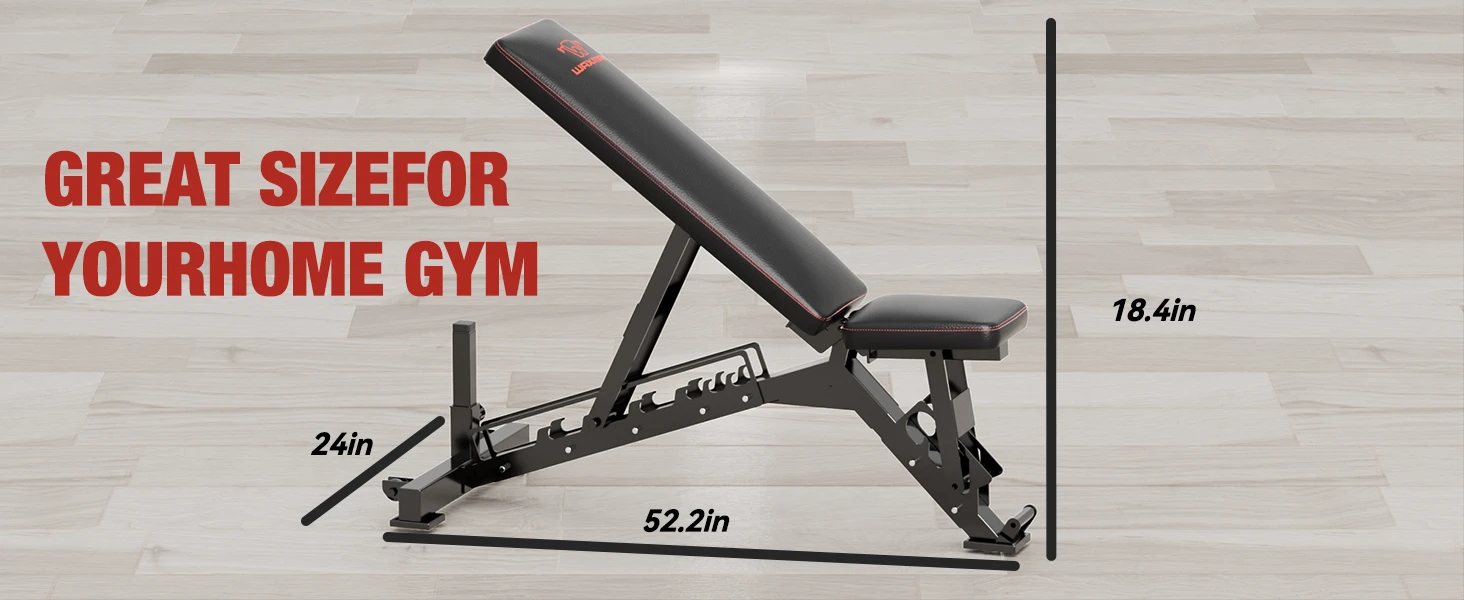
Waxman Adjustable Weight Bench
Listed with a multi-position backrest and three cushions. The product page identifies several backrest angles; follow your model’s manual and verify its locking mechanism before use.
Price: View current price. The listing showed $269.00 USD when checked October 27, 2026. Price and availability may change.
Leave a Reply