
No products in the cart.
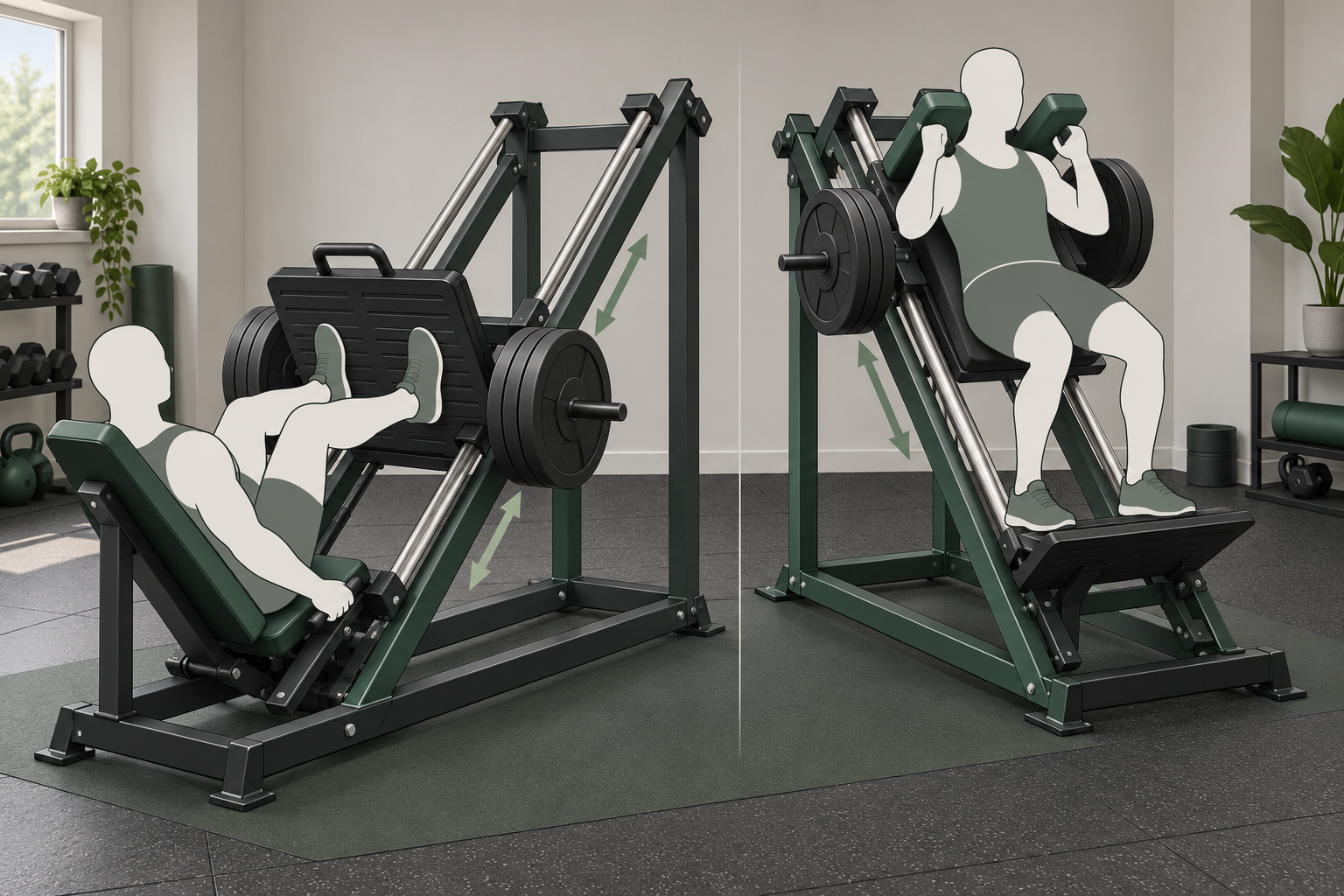
What Changes Between Leg Press and Hack Squat Mode on a Combo Machine?
AI-generated illustration comparing generic leg press and hack squat body positions. It is not a WAXMAN product photograph, an equipment demonstration, or a fit test.
Quick answer: a leg press generally has you seated or reclined while pressing a footplate away; a machine hack squat generally supports your back and shoulders as you squat along a guided carriage path. A combo machine may use different body positions, contact points, and lockout arrangements for each mode. The product label alone does not tell you how to convert a particular machine or which safety settings apply. Use the exact model’s instructions before switching or loading it.
This distinction matters when comparing a two-in-one unit with two separate machines. “Leg press” and “hack squat” name movement patterns, not a universal conversion mechanism. On a home machine, the seat, foot platform, carriage, handles, and stops may be configured differently from another brand’s equipment. A guide for a similar-looking unit is not a substitute for instructions matching the model and SKU.
How the movement patterns differ
In a typical leg press, your back is supported by a seat or backrest and your feet press a moving platform. The National Academy of Sports Medicine describes a leg-press setup with the head and back against the backrest and the feet on the platform; the legs extend to move the platform, then bend as it returns under control. The machine guides the load, so the movement is not the same as standing and squatting with free weights.
A machine hack squat is commonly performed with the body supported against a moving carriage, feet on a platform, and the carriage traveling along fixed rails as the knees and hips bend and extend. A Cybex owner’s manual illustrates that pattern for its own hack squat model. That example helps explain the general exercise name; it does not establish the WAXMAN machine’s setup, adjustment points, or safe range.
Both patterns involve the lower body, but they can feel different because your body orientation, support, and the direction the carriage travels change. One is not automatically a more advanced version of the other. Nor does the product’s stated maximum capacity tell you what resistance is appropriate for a person or prove the same load will feel equivalent in both modes.
What a combo listing does—and does not—confirm
The WAXMAN listing describes SKU 8968 as a two-in-one leg press and hack squat machine. It also lists three-level adjustable safety limiters and plate-loaded bars that fit 2-inch Olympic plates. These details confirm the advertised functions and selected features. They do not show the exact conversion sequence, which parts move or lock in each position, the right limiter setting for a user, or whether all load ratings apply identically in both configurations.
Before buying or changing modes, ask the manufacturer for the manual that matches the SKU on the machine and the current listing. Confirm that it explicitly covers both exercises and explains how to secure the carriage, position the safety limiters, and change configurations. If the manual or seller cannot resolve a point, do not improvise from a video or a different model’s instructions.
A practical way to compare the two modes
- Read the model-specific instructions first. Match the model name or SKU on the listing, product label, and manual. Check for separate setup and safety steps for each mode.
- Compare the support and movement path. Note where your back and shoulders rest, where your feet contact the platform, and which part travels. These differences can change how the movement feels; a photo alone cannot confirm clearance or setup.
- Check the safety system in each configuration. Identify the approved lockout and limiter positions in the manual. Do not assume an adjustment used for one mode is suitable for the other.
- Keep training choices separate from machine ratings. Capacity is a manufacturer’s equipment limit, not a starting load, target, or promise of equal resistance between modes. Follow the machine instructions and choose exercise resistance based on your experience and appropriate professional guidance.
- Stop if the equipment does not behave as described. Do not use a mode if a lock will not engage, the carriage moves unexpectedly, a part is damaged, or the correct instructions are unavailable. Contact the manufacturer before resuming.
Which mode should you choose?
Choose based on the movement you want to learn, the setup you can perform according to the manual, and how the supported position feels—not on a claim that one mode is universally better. If you are new to either movement, have pain, or have been given exercise restrictions, ask a qualified trainer or clinician to help you decide whether and how to use the equipment. This article is a general comparison, not individual exercise or medical advice.
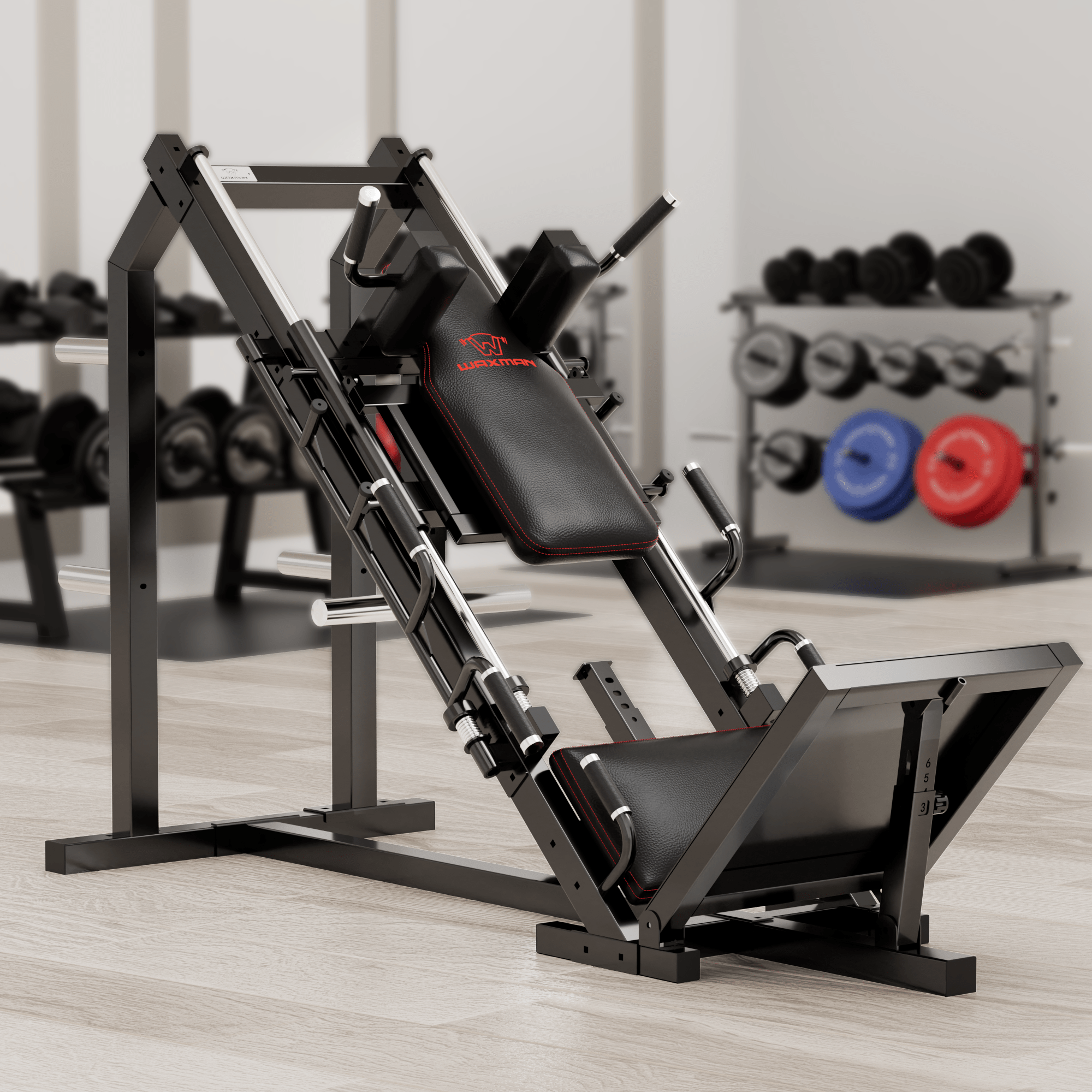
WAXMAN Leg Press Hack Squat Machine — SKU 8968
$799.00 USD (price displayed on the official listing when checked October 22, 2026).
- Listed as a two-in-one leg press / hack squat machine
- Three-level adjustable safety limiters
- Plate-loaded bars fit 2-inch Olympic plates
Use the model-specific manual for configuration and safety details. Price and availability may change; see the product page.
Sources
- WAXMAN official product listing (SKU 8968, advertised two-in-one functions, limiters, plate fit, price; checked October 22, 2026).
- National Academy of Sports Medicine, Leg Press (general leg-press movement description).
- Cybex Hack Squat owner’s manual (example of a hack-squat movement on a different model; not WAXMAN conversion instructions).
Written with Codex assistance. No human review, product test, or individualized training assessment is claimed.
Leave a Reply