
No products in the cart.
How to Make a Home Gym Quieter During Evening Workouts
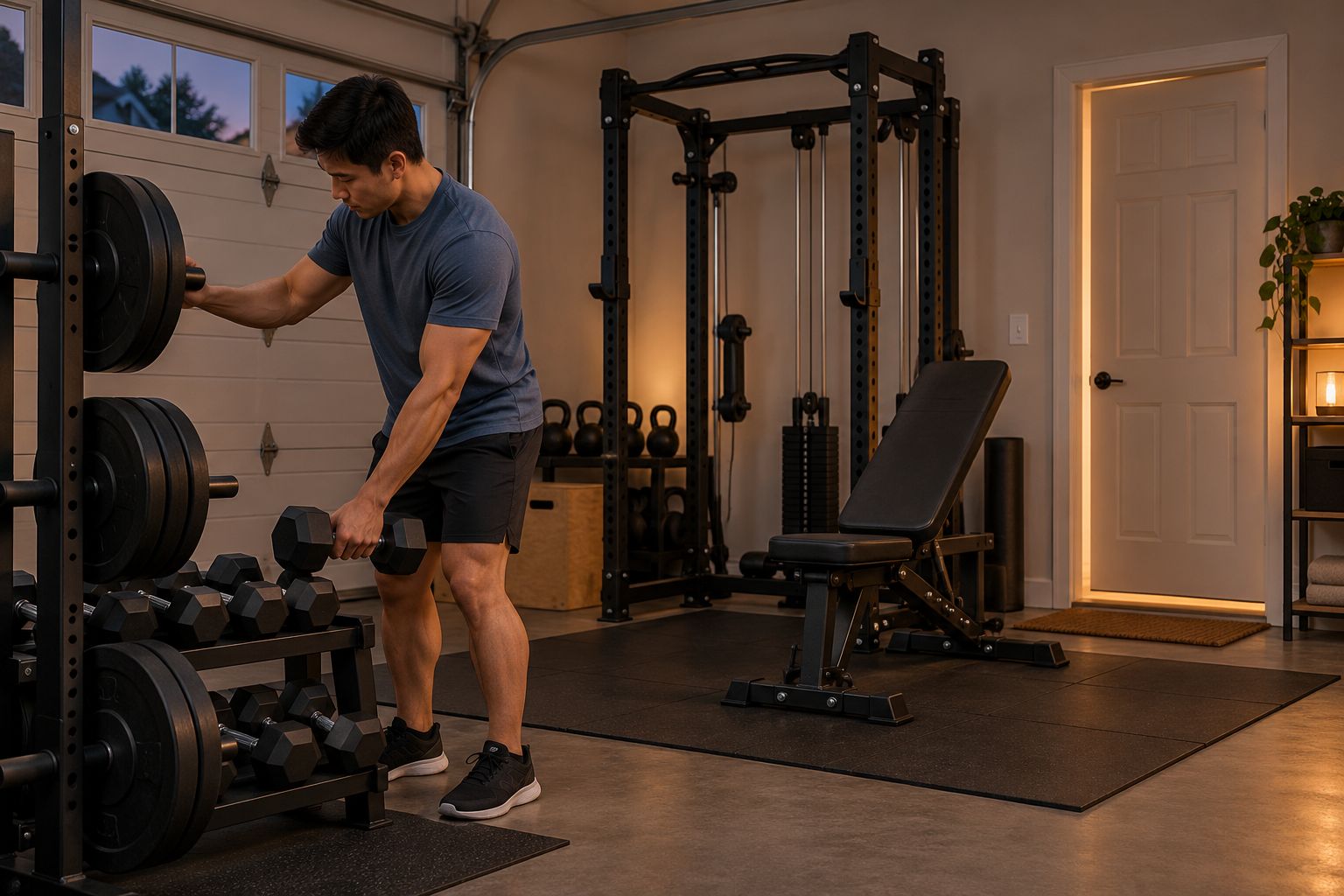
Cover illustration: AI-generated home-gym scene, not a sound test or photograph of a customer workout.
To make an evening home workout less disruptive, identify what is making the noise first: impacts, loose accessories, machine movement, or voices and music. Then adjust the workout and storage habits that cause the sound. Do not add padding, alter a machine, or tighten parts beyond its instructions just to make it quieter. If a machine rocks, shifts, or develops a new metal-on-metal sound, stop using it until you have checked the exact manual or spoken with the manufacturer.
Find the noise before changing the room
Listen during a short, unloaded check. Is the sound a plate striking another plate, a bar returning to a rack, an attachment rattling, the frame moving, or vibration traveling through the floor? Ask someone in the next room what they hear and where it seems loudest. A short note or phone recording from a safe distance can help you compare later; it is not a calibrated sound measurement.
Noise that happens only when a weight is set down points to a different fix than a continuous rattle or a floor vibration. Change one thing at a time so you can tell whether it helped. Never keep exercising through an unexplained new noise, loose frame, damaged cable, or shifting machine.
Reduce impacts during the workout
- Use controlled repetitions. Lower weights with control and avoid dropping a bar, dumbbell, or attachment. If you cannot set a load down quietly and safely, reduce the load or end that exercise for the evening.
- Return plates and handles carefully. Put accessories back on their designated storage points instead of leaving them where they can collide or fall. Follow the equipment instructions for securing plates and attachments.
- Keep the workout area clear. Loose collars, handles, bands, and tools can knock against the frame or floor. Store them where they will not create a trip hazard or interfere with moving equipment.
- Choose lower-impact movements when needed. If jumping, dropping, or rapid transitions make the floor vibrate, substitute a controlled movement that suits your plan and equipment. Do not improvise a setup that changes the machine’s intended use.
A slower return to a storage peg can help avoid a sharp impact, but do not release a load in a way that compromises control. Safety comes before quiet. If the only way to reduce noise seems to be catching or guiding a heavy moving part by hand, change the exercise or stop.
Check the machine and its position
Read the manual for the exact model and confirm that it is assembled and positioned as directed. Check the floor and machine feet for visible debris, and verify that the unit does not rock during ordinary use. Tighten or adjust only the parts and by the method the manufacturer specifies. Do not add washers, lubricant, homemade stops, or improvised padding to a moving mechanism.
Floor mats can protect surfaces, but a soft, thick, or uneven layer may change how equipment sits. Use a floor covering only if the equipment maker permits it and the finished setup remains stable. A mat is not a repair for an uneven floor or a loose frame. Ask the manufacturer or an installer before placing pads under a loaded rack or modifying its contact with the floor.
Consider the location as well. A garage door, shared wall, or bedroom above the workout area may carry sound differently from an interior room. Keep the equipment away from doorways and paths so other household members do not walk close to moving weights. If you rent or share a building, check quiet-hour rules before choosing a workout time.
Set a quieter routine with household members
Agree on a reasonable evening window, especially when people are sleeping nearby. Keep music and phone alerts low, use headphones when appropriate, and plan exercises that do not require repeated equipment changes. Lay out only the accessories needed for the session, then return them to storage at the end instead of clanking through a large reorganization after quiet hours.
These steps can reduce avoidable impacts, but they cannot soundproof a room or guarantee that a workout will be inaudible elsewhere. If you still hear strong vibration in another room, move the session earlier or ask a qualified flooring or building professional whether the floor and location are suitable for the equipment.
Equipment example
The Waxman Smith machine listing is a home-strength equipment option, not a claim that this model operates quietly. The product page does not publish a noise rating. Check the instructions for your exact equipment and room before buying or installing heavy gym equipment.

Waxman Smith Machine with Lat-Pull-Down and Cable Crossover System (WAX-SM-S02)
Price checked October 17, 2026: $1,999.90 USD (compare-at price $2,999.00); the product page showed in stock. No acoustic rating is listed. Price and availability may change; see the product page for current details.
Quick check
Control weight returns, store attachments, confirm the machine is stable according to its manual, and choose a suitable workout time. Stop and investigate new rattles or movement. Do not rely on a mat or product photo to predict how much sound will travel through a particular home.
Leave a Reply