
No products in the cart.
How to Measure a Delivery Route for Heavy Home Gym Equipment
Quick answer: Before ordering a heavy home gym machine, measure the entire delivery route—not just the room where it will be installed. Check the narrowest doorway, hallway turns, stairs, thresholds, and the final space. Ask the seller for each shipping carton’s dimensions and weight, because assembled machine dimensions do not tell you whether the boxed parts can make the trip. If a load is too heavy or awkward to handle safely, use qualified delivery help or mechanical handling equipment.
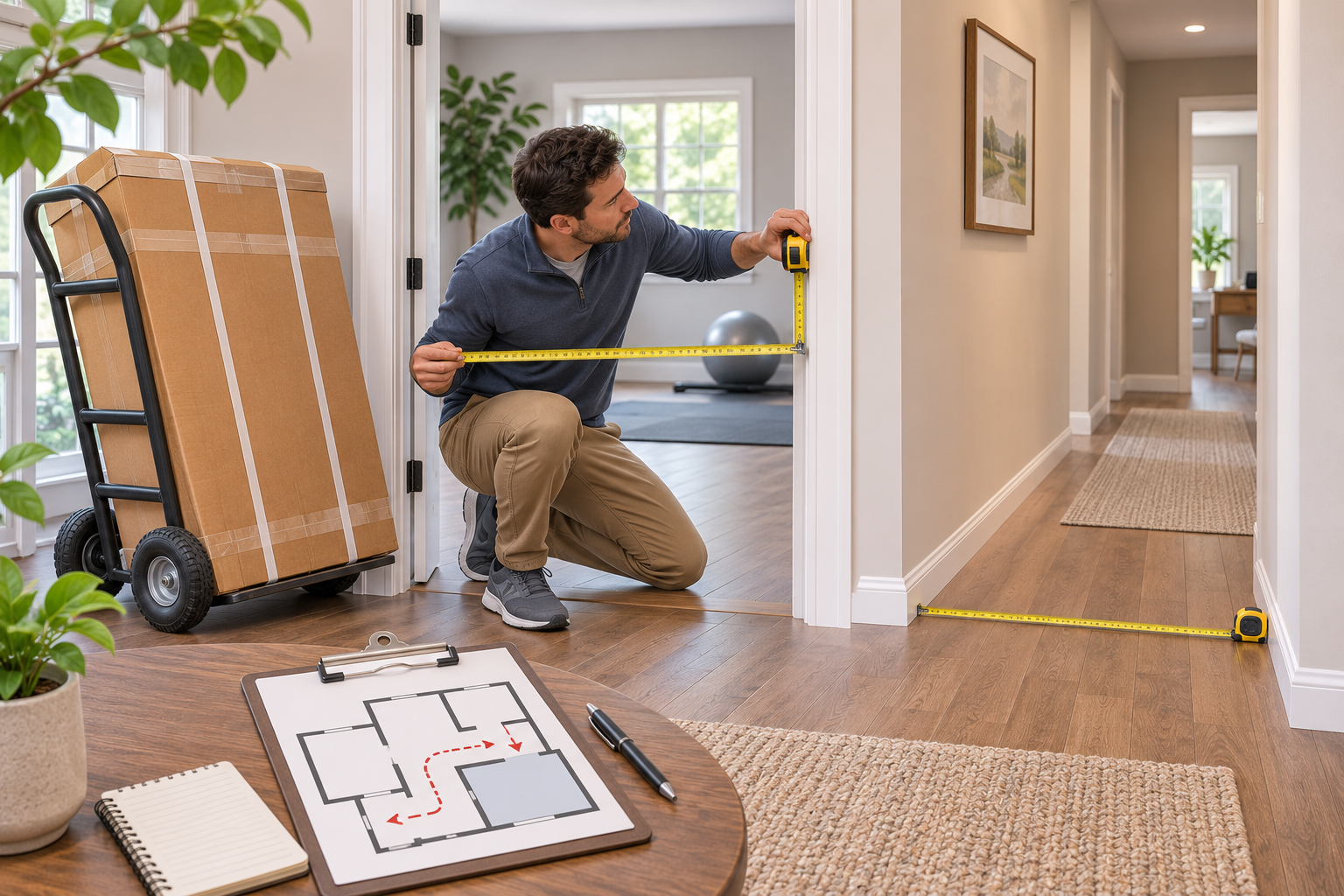
AI-generated illustration for planning; it is not a measured floor plan, a product photograph, or a record of an actual delivery.
Start with the package, not the assembled machine
A machine’s assembled dimensions help you decide where it may fit after installation. They do not describe the shape of the shipping cartons, whether the equipment arrives assembled, or how much room a box needs to turn through a doorway. Those details can determine whether delivery to a basement, upstairs room, or narrow garage is practical.
For example, the Waxman product page for its 2-in-1 leg press and hack squat lists assembled dimensions of 77.5 × 38.3 × 57.4 inches, a gross shipping weight of 230 pounds, and three shipping packages that may arrive separately. The page does not provide each carton’s dimensions in the information checked here. Do not treat the assembled width or the total shipping weight as a substitute for package measurements.
Measure the complete path in order
- List every transition. Trace the route from the delivery drop-off point to the intended room. Include exterior steps, porch turns, the entry door, interior doorways, hall corners, stair landings, and any tight approach to the final location.
- Measure clear openings. Measure the usable width and height of each doorway with the door open as far as it will normally swing. Note trim, handles, closers, and low fixtures that reduce the opening. Measure the narrowest point of a hallway or stair landing, not just the room’s broadest dimension.
- Record turns and vertical changes. A long carton may clear a doorway straight on but fail to rotate in a short hall or on a stair landing. Sketch each corner and measure the available turning space. Note steps, ramps, thresholds, and ceiling obstructions.
- Check the destination. Confirm the assembled footprint, ceiling height, and working clearance from the current product information and assembly instructions. Also check that the machine can be positioned without blocking an exit, utility access, or a normal walking route.
- Compare against every carton. Once the seller confirms the number of packages and the length, width, height, and weight of each one, compare the largest package with the tightest point on the route. Allow room for the actual handling method; a carton cannot always be tilted or rotated safely in a cramped space.
Ask the seller specific delivery questions
Get the details in writing before purchase if the route is close. Ask whether the quoted weight is total gross shipping weight or the weight of an individual box; the maximum weight of any one package; package dimensions; whether the shipment is curbside, threshold, or room-of-choice delivery; and whether stairs or a lift gate are included. Confirm whether packages arrive together and whether the carrier will bring them past the first doorway.
Do not assume a multi-package shipment means each box is light. The package count is useful planning information, but it does not reveal how the weight is divided. Likewise, do not assume a delivery crew will carry cartons upstairs or remove packaging unless the service terms explicitly say so.
Plan safe handling before delivery day
OSHA’s materials-handling guidance recommends planning access to heavy items and using mechanical aids such as hand trucks or pallet jacks where appropriate. It also warns that load weight is only one factor: awkward shape, poor handholds, posture, and the route affect handling risk. A bulky machine carton can be difficult even when its weight seems manageable.
Clear the path, protect the floor as appropriate, secure pets and children away from the work area, and make sure the planned equipment is rated for the load and the surface. Do not improvise a lift with an unverified strap, anchor point, or vehicle. If stairs, a steep ramp, a narrow turn, or an unstable load are involved, ask the seller or a qualified mover to assess the move. Stop if the package shifts, blocks the handler’s view, or cannot be controlled.
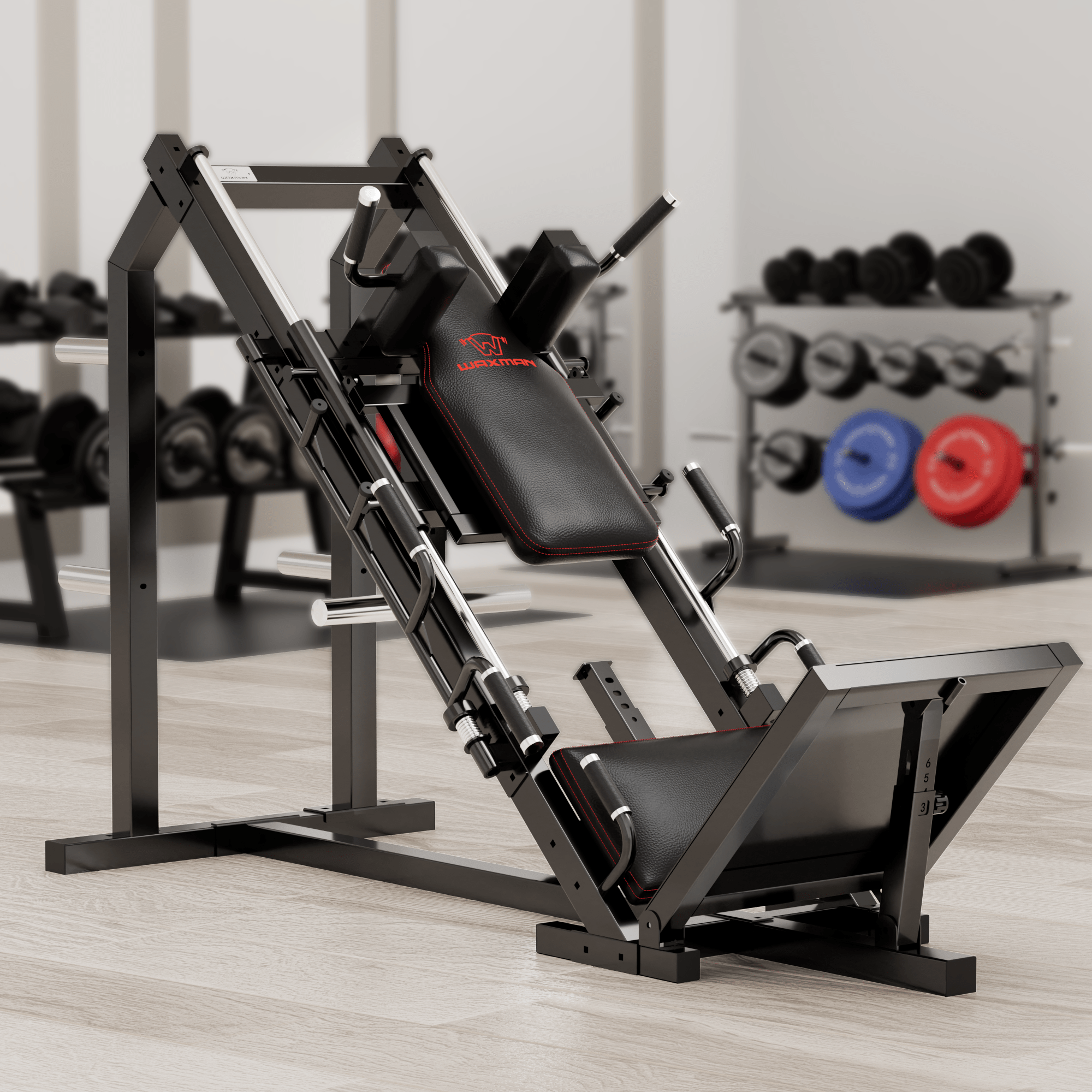
Waxman 2-in-1 Leg Press and Hack Squat Machine
$799 USD listed · checked November 23, 2026. Price and availability may change; confirm on the product page.
- Assembled dimensions listed as 77.5 × 38.3 × 57.4 inches
- Product page lists 230 lb gross shipping weight
- Ships in three packages that may arrive separately
Carton measurements are not listed in the checked page information. Confirm package dimensions and delivery service before ordering if your route is tight.
Make a go/no-go decision before ordering
Proceed only when you know the route can accommodate the actual cartons and there is a safe, realistic plan to move them. If the seller cannot confirm carton dimensions, treat a tight route as unresolved rather than guessing from the assembled machine size. Consider an alternate room, a smaller item, or a delivery option that has been confirmed for the route.
Keep your measurements, seller answers, and delivery terms together. Recheck them if the route or product changes. This simple check cannot certify that a staircase, floor, or lifting plan is structurally safe; it helps identify questions to resolve before a large shipment arrives.
Sources
- WaxmanUSA product page: 2-in-1 leg press and hack squat machine
- OSHA: Materials Handling—Heavy Lifting
Written with Codex assistance. No delivery, installation, load, floor, or product safety test was conducted. Product details above are information listed on the product page, not an independent engineering evaluation.
Leave a Reply