
No products in the cart.
How to Organize Weight Plates in a Home Gym Without Blocking Your Walkway
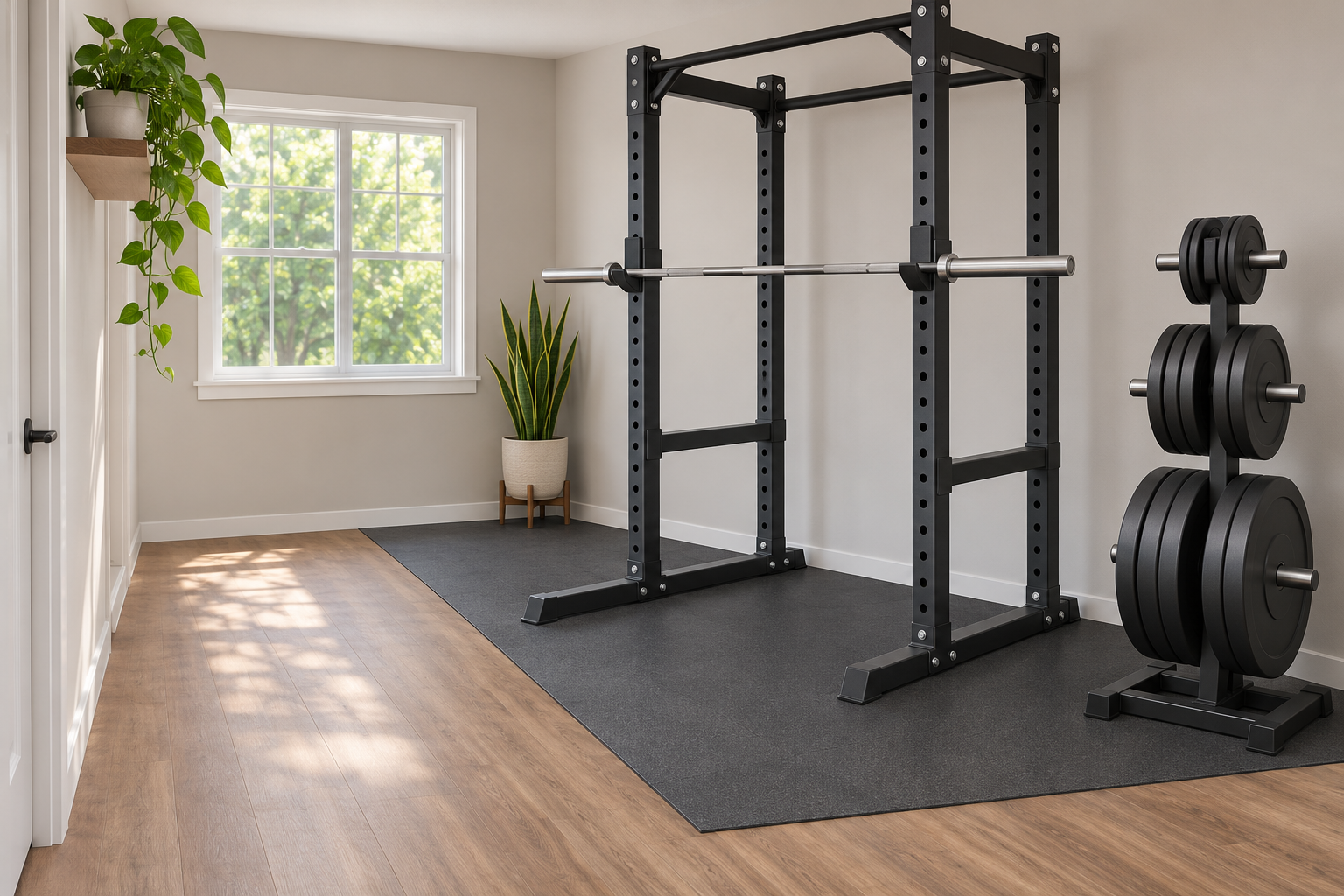
Cover image: AI-generated illustration of a generic home gym and plate storage. It is illustrative, not a product photograph or a tested setup.
Store weight plates in one predictable location beside the equipment where you use them, while keeping the route through the room clear. The safest layout depends on the equipment, floor, available space, and the plate manufacturer’s instructions; there is no universal clearance measurement that fits every home gym. Before adding storage, map the working area and walking path, then test the layout with the equipment unloaded.
Start with the route, not the storage rack
Stand at the room entrance and trace the path you use to reach the rack, bench, or exit. Include the space needed to carry a plate with both hands and turn without stepping over cords, mats, or other equipment. Keep doors, stairs, electrical panels, and emergency exits unobstructed. If another person shares the room, make sure the same route remains open when they are exercising.
Next, identify the movement area for each exercise. A barbell may extend beyond the uprights, and a bench or adjustable attachment may change where people move. Follow the equipment manuals and allow enough room to load and unload plates without reaching across another person or a walkway. Do not use a sketch or a rule of thumb as proof that a setup is structurally safe.
Choose a storage spot that matches your plates
Use storage designed for the type, diameter, and quantity of plates you own. Check the storage maker’s stated limits and instructions before loading it. A pin or sleeve that fits one plate opening may not fit another. Keep plates stable and arranged so you can remove one without pulling a stack toward yourself. Do not lean heavy plates against a wall or leave them upright where a small bump could make them fall.
Place storage on a level surface that the equipment manufacturer considers suitable. If the floor is uneven, soft, damp, or visibly damaged, do not try to correct it by wedging loose objects under loaded equipment. Ask the equipment manufacturer or a qualified installer what surface and anchoring method are appropriate. This is especially important for wall-mounted equipment: a general home-gym layout guide cannot verify the wall, fasteners, or installation.
Keep the floor and handling area clear
After a set, return plates to the same storage position rather than leaving them beside the bar. Keep collars, clips, bands, and small accessories in a separate container so they do not become trip hazards. Route any cords away from the walking lane and moving equipment. If you use a mat, check that its edges lie flat and that it does not slide under the loads or movements involved.
Pick up a plate with a controlled grip and a clear path. Avoid twisting while carrying it or reaching around a loaded bar. If a plate is too heavy or awkward to move safely, use a lighter load or ask for help. The U.S. Department of Health and Human Services recommends choosing safe environments and appropriate equipment for physical activity; it also advises people to increase activity gradually. Those broad precautions do not replace the instructions for a particular rack, plate, or storage system.
Test the arrangement before training
- Put all equipment in its intended position and remove loose items from the floor.
- Walk the route from the entrance to the equipment and back, carrying no load first.
- Practice loading and unloading a light plate while the bar is secured as its manual directs.
- Check that the storage remains stable and the route stays open after equipment is moved.
- Repeat the check whenever you add equipment, change the room layout, or move storage.
Stop if the storage rocks, the floor shifts, the equipment moves unexpectedly, or the route becomes crowded. Do not exceed any stated capacity or improvise a mounting method. Contact the relevant manufacturer or a qualified installer for equipment-specific questions.
When the room is too small
If you cannot preserve a clear route and a usable training area at the same time, reduce the amount of equipment in the room or choose a different activity space. Folding or compact equipment still needs safe operating room when opened and used. A tidy appearance is not a substitute for adequate movement space, stable storage, and manufacturer-approved installation.
Key point: organize plates around a clear route, compatible storage, and the equipment manuals. Recheck the setup whenever the room or equipment changes.
Sources
- U.S. Department of Health and Human Services, Physical Activity Guidelines for Americans — appropriate equipment and safe environments; gradual activity increases.
Prepared November 19, 2026. General layout information only; equipment and building conditions vary. Follow the instructions for your exact products.
Leave a Reply