
No products in the cart.
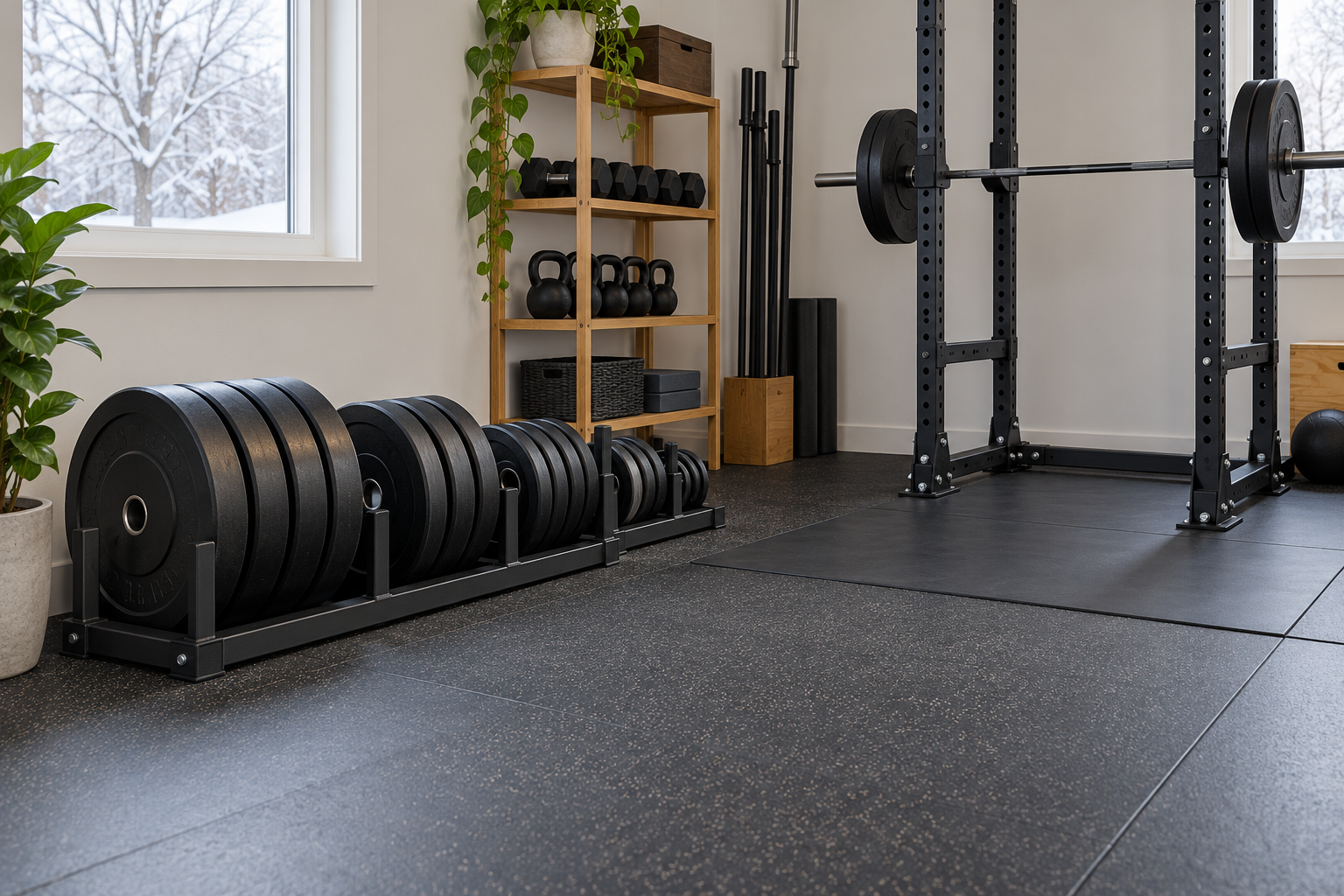
How to Organize Weight Plates in a Compact Home Gym
Cover illustration: AI-generated illustration of an unbranded home gym; it is not a photograph of Waxman equipment or an installation guide.
Short answer: Organize plates by the bar or station where you use them, keep the route through the workout area clear, and store them only on a rack or holder whose instructions match your plates, wall or floor, and planned load. In a very small gym, return plates to the same location after each session and avoid leaving them leaning where they can roll or tip. A wall-mounted holder may save floor area, but do not choose anchors or assume capacity from a product title alone.
Weight plates are awkward because they are dense, round, and often handled while someone is tired. The most useful storage plan is one that makes the next workout simple while keeping plates stable between sessions. It should also match the exact equipment and building surface rather than relying on a generic “fits most gyms” assumption.
Start with the plates and the room
List the plates you own by diameter, center-hole size, and weight marking. Do not rely on color alone; colors vary by brand and set. If plates are not clearly marked or you are unsure of their type, verify the product information before pairing them with a bar, sleeve, peg, or holder. A 1-inch plate and a 2-inch Olympic plate do not use the same opening, and a storage peg designed for one may not fit the other.
Next, map the space while equipment is in use, not just when it is parked. Include the bar path, bench movement, doors, and the area where you need to stand to load or unload plates. Keep a clear walking lane and do not place storage where plates must be carried across a doorway or around another person. If the storage location interferes with the movement you intend to perform, it is not a good location even if the plates fit there.
Choose a storage method that matches the load
Use only a storage system designed for the plate type and the intended load. Check the product’s instructions for compatible openings, mounting surface, fasteners, installation steps, and load limits. If any of that information is missing, contact the manufacturer rather than guessing or adapting a mounting method. A wall-mounted unit depends on the wall structure and correct installation; a floor-standing option still needs a stable base and space where people will not bump it.
The Waxman Weight Plate Storage Rack is listed as a wall-mounted holder for 1-inch and 2-inch plates. Its product page was checked October 29, 2026 and listed a price of $109.00 USD. The page does not give a load rating, wall-fastener details, or installation instructions in the visible product information reviewed here. Treat it as an option to investigate, not proof that it fits your wall or the amount of weight you own. Read the provided instructions and confirm those details before purchase or installation.

Waxman Weight Plate Storage Rack
Listing says it is a wall-mounted plate holder for 1-inch and 2-inch plates.
Price checked October 29, 2026: $109.00 USD. Price and availability may change; see product page.
View product
Limit: the page reviewed does not state load capacity or mounting details. Verify the exact instructions and wall compatibility before use.
Make returning plates part of the workout
- Choose one home for each plate size, using the markings rather than memory.
- Before training, remove only the plates needed for the session; keep other equipment and stored plates clear of the lifting path.
- After use, return plates to their assigned location instead of leaving them on the floor or leaning against a wall.
- Check that plates sit fully on the intended peg or holder and cannot slide off under ordinary contact.
- Periodically inspect the storage unit and mounting points using the product’s instructions. If anything is loose, cracked, bent, or unstable, stop using it until the issue is assessed.
Do not stack plates higher than the product allows or use a rack as a step, bench, or substitute for a plate-loaded exercise station. Avoid rearranging heavy plates overhead or while twisting through a narrow path. If lifting or moving a plate is uncomfortable, ask for help or use a different storage arrangement that suits your ability.
Keep the floor and equipment compatible
Storage is only one part of the setup. Follow the equipment maker’s guidance about floor protection and placement, and make sure the storage unit does not interfere with the rack, machine, or barbell manufacturer’s required clearances. Do not put mats or pads under a wall-mounted holder as a substitute for correct mounting. Avoid storing plates where water, grit, or temperature swings could damage equipment or make handling slippery.
When buying a holder, compare your actual plate openings and available installation area with the product documents. Ask the seller or manufacturer about capacity and fastening when those details are not published. The practical goal is a consistent home for every plate, with safe access and a clear floor—not maximum storage density at any cost.
Sources
- Waxman product listing: Weight Plate Storage Rack — name, wall-mounted description, stated 1-inch and 2-inch plate fit, and price; checked October 29, 2026.
- Waxman FAQs — recommends checking dimensions, package contents, compatibility, and asking support when details are unclear.
Written with Codex assistance. No equipment installation, strength test, or human expert review is claimed.
Leave a Reply