
No products in the cart.
How to Plan a Workout on a Multi-Station Home Gym
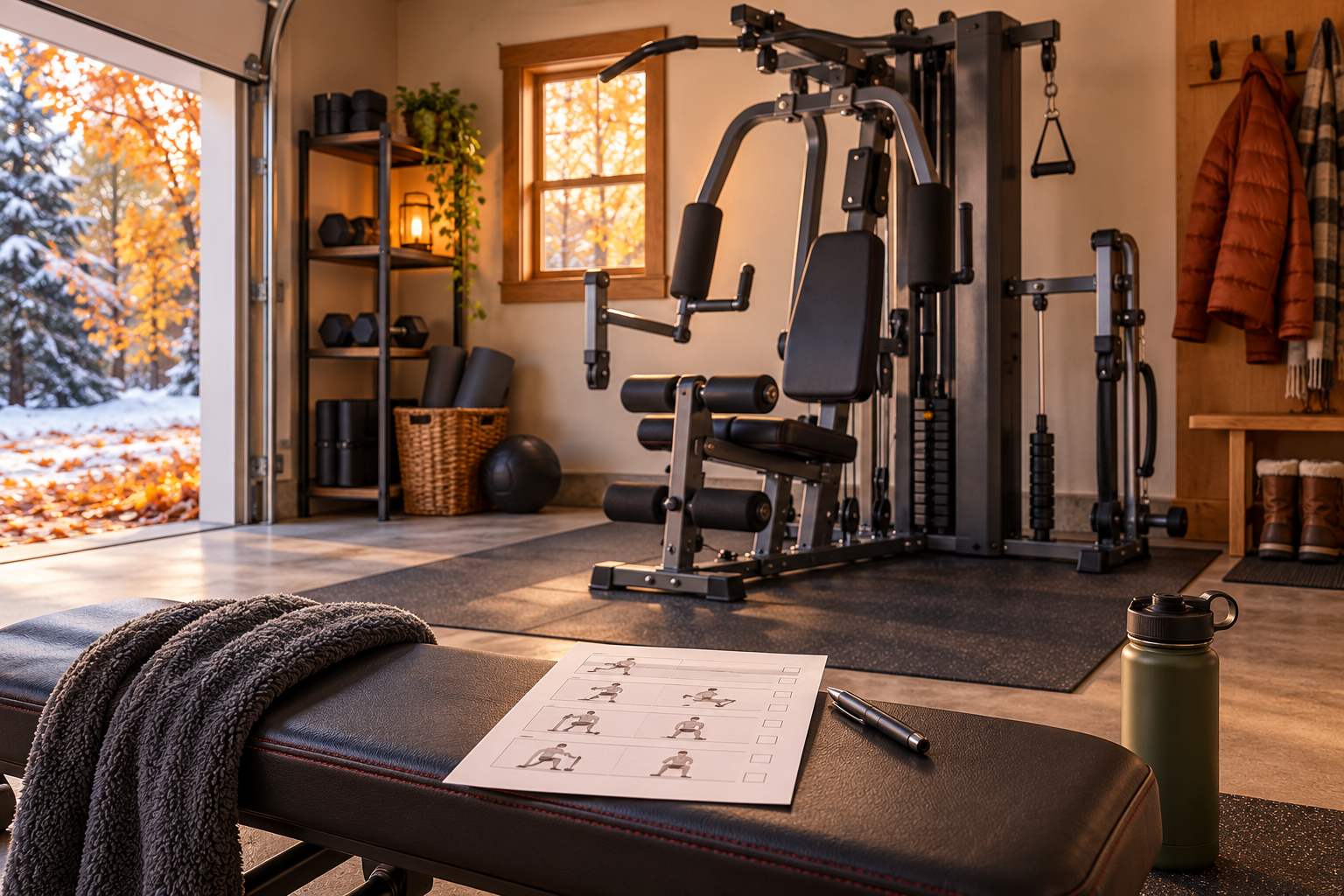
Cover image: AI-generated planning illustration. It is not a product photograph, a tested workout, or a depiction of the exact Waxman machine.
Quick answer: Pick one main goal for the session, choose a small number of movements that fit that goal, and write down the station, setup, and order before you begin. A multi-station machine gives you options; it does not require you to use every attachment in one workout. For a busy fall or winter schedule, a repeatable plan with a few familiar exercises is easier to follow than a long circuit that depends on constant equipment changes.
Start with the outcome, not the machine
Before choosing handles or adjusting a bench, decide what you want this session to do. A strength-focused workout, a general full-body session, and a short practice session can all use the same equipment differently. The American College of Sports Medicine’s 2026 overview for healthy adults emphasizes consistency and matching the training plan to the goal. Its summary describes different programming emphases for strength, muscle growth, and power; it is not an individualized plan and does not mean every person should use those prescriptions.
For a home session, make the goal concrete but modest: for example, practice a few familiar push and pull patterns, or complete the exercises already prescribed by your qualified coach or clinician. If you are new to resistance training, returning after a long break, managing an injury, or unsure how to use a station, get appropriate instruction before loading it. A product listing cannot determine which exercises are suitable for you.
Map exercises to stations before training
Many combined systems advertise a rack, Smith bar, cable station, and pull-up area in one footprint. Treat each advertised feature as an option to learn, not a checklist to complete. Make a simple plan with three columns: exercise, station or attachment, and setup notes. Include the adjustment you need to remember, such as the handle position or bench orientation, but consult the machine’s own manual for setup and safety steps.
- Choose familiar movements first. Use exercises you can perform with controlled form and a comfortable range. Do not add a new attachment just to make the session feel more complete.
- Group by setup. If two planned movements use the same station with a similar setup, doing them together may reduce unnecessary changes. Keep the area around moving parts clear.
- Limit the number of transitions. In a shared household, a shorter plan can make it easier to reset the equipment and leave the room orderly for the next person.
- Write down adjustments. Record the setting that worked for you, then recheck it at the next session. Do not assume another user left the machine in your preferred position.
This is a planning method, not a claim that one exercise order or station arrangement produces better results for everyone. If your program specifies an order, follow that program. If you are training without a prescribed plan, keep the session simple and stop any movement that causes sharp pain, unexpected instability, or other concerning symptoms.
Use a practical session sequence
1. Prepare the room
Especially when daylight is shorter or the garage is used for storage, check lighting, floor dryness, and access around the equipment. Move loose items out of the workout path. Confirm that the attachments you intend to use are present and that the machine is set up according to its instructions. This quick check is not a substitute for the manufacturer’s inspection or maintenance guidance.
2. Warm up and rehearse
Begin with comfortable movement, then practice the patterns in your plan with little or no resistance. The aim is to confirm that the setup feels familiar and controlled. Add effort gradually only if the movement remains steady. There is no single number of warm-up sets that fits every person and session.
3. Complete the priority work
Do the movement that matters most to your stated goal while you are fresh, unless your coach or clinician has given you another order. Rest enough to keep the next repetition controlled. A multi-station system may make it tempting to move rapidly from one exercise to another, but speed is not required for a useful workout.
4. Finish, reset, and record
When the planned work is complete, return attachments and weights to their designated storage positions as the product instructions allow. Note what you completed and anything that needs adjustment next time. A short log can help you repeat a workable session without relying on memory, especially when family members share the same machine.
How to adapt the plan in fall and winter
Seasonal routines often change because evenings are darker, rooms are cooler, or family schedules become less predictable. Make the plan resilient: keep a shorter version for limited time, choose a warmer indoor location if the garage is uncomfortable, and avoid setting a weekly target that depends on perfect conditions. If you miss a session, resume with the next planned workout rather than trying to make up every missed set at once.
For a multi-station machine, the best plan may use only one or two stations in a given session. More stations do not automatically mean a better workout. The equipment is most useful when its available functions match exercises you understand, the room accommodates the setup, and you can follow the instructions for the exact model.
Product details
Sources and limits
- American College of Sports Medicine, “5 Things to Know About Creating an Effective Resistance Training Plan” (2026) summarizes general resistance-training principles for healthy adults; it does not prescribe a personal program.
- Waxman product listing supports the listed model, stations, dimensions, price, and product image checked October 17, 2026.
This article is general planning information, not medical advice, a personalized exercise prescription, or a product test. Drafted with Codex assistance; no hands-on test or expert review is claimed.
Leave a Reply