
No products in the cart.
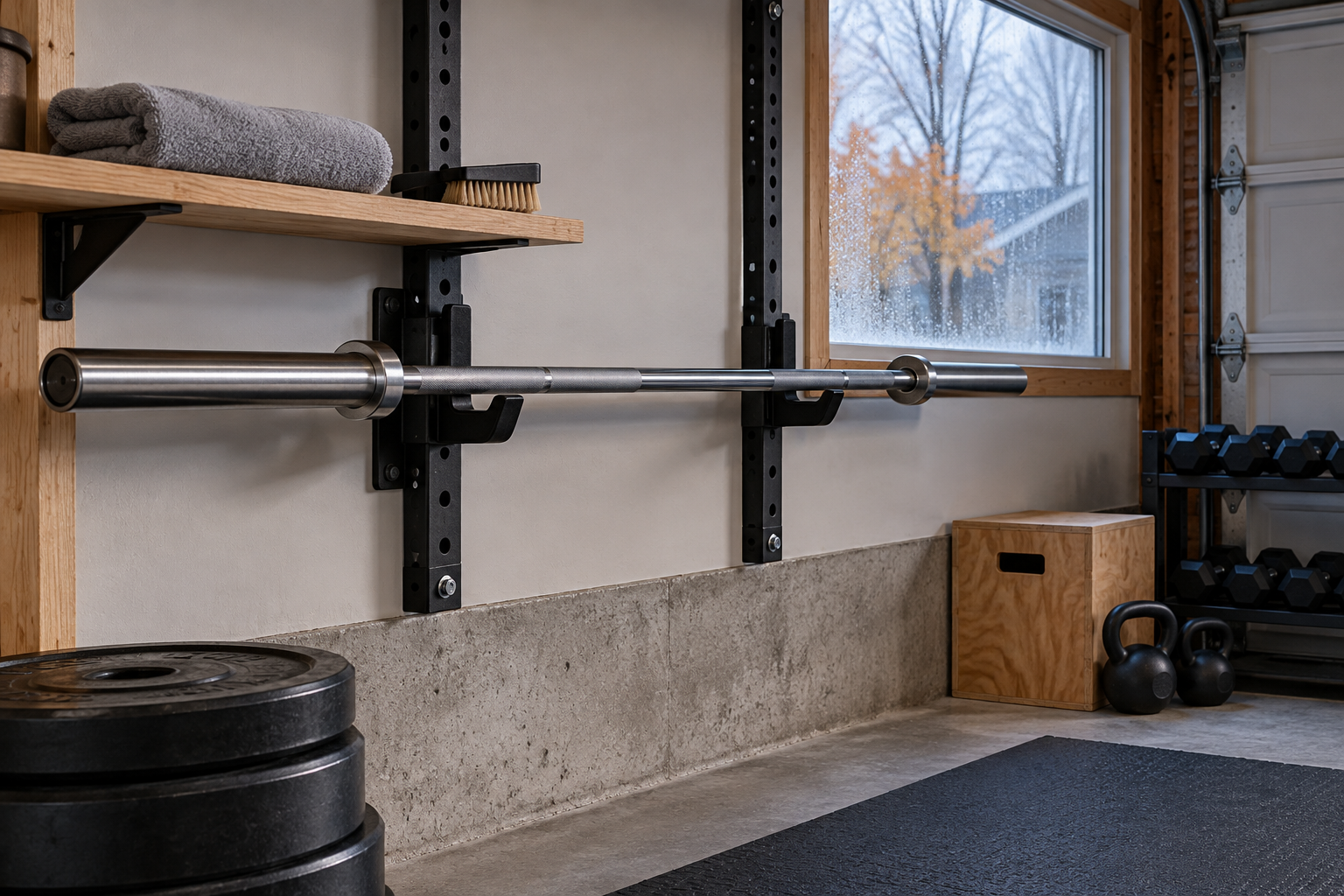
How to Protect a Barbell from Rust in an Unheated Garage Gym
Quick answer: In an unheated garage, a barbell is most vulnerable when moisture stays on the shaft or collects in the knurling. Wipe it dry after each session, keep it off damp floors and away from leaks, and check it more often during humid weather or temperature swings. Use a brush and lubricant suited to the bar’s finish; do not assume one cleaner or brush is safe for every coating.

Why a garage bar can rust in winter
Rust needs moisture at a steel surface. A garage can expose a bar to wet shoes, a leaking roof, humid air, sweat, chalk that holds residue, and condensation during temperature changes. An unheated room is not automatically a problem, but repeated dampness and slow drying raise the risk. A cold bar brought into warmer, humid air may also collect condensation; if you notice a damp film, dry the bar before storing it.
Coatings can slow corrosion, but they are not a reason to ignore moisture. The bar’s finish matters: bare steel, chrome, stainless steel, and other coatings may call for different care. If you know the manufacturer and model, follow its care instructions first.
A simple after-workout routine
- Unload and inspect. Remove plates and collars. Look over the shaft, sleeves, and knurling for sweat, chalk buildup, dampness, or new discoloration. Do not use a bar with damage that affects safe handling.
- Wipe away sweat and dust. Use a clean, dry lint-free cloth. Pay attention to the knurling, where chalk and skin residue can collect. Avoid leaving a wet cleaner on the surface; a strength-equipment care guide warns that spraying cleaner directly on equipment and letting it evaporate can contribute to surface rust.
- Brush residue gently. For most finishes, use a quality nylon or synthetic brush. Cheap steel bristles can alter some finishes and may contribute to corrosion. Some manufacturers specify a stainless brush for stainless or hard-chrome bars, so check the care guide rather than improvising.
- Dry before storage. If you used any damp cloth or approved cleaner, follow its directions and dry the bar fully. Never cover or store it while wet.
Set up a drier storage spot
Keep the bar on a secure rack, not leaning where it can roll or rest against a wet wall. Avoid direct contact with concrete, a garage door that collects condensation, and locations under pipes or roof leaks. Leave enough space around it to wipe and inspect the shaft. Do not wrap a damp bar in plastic: trapped moisture can remain against the metal. A breathable cover can help keep off dust after the bar is completely dry, but it cannot fix a humid storage area.
When weather changes, check the room as well as the bar. If the floor, window, or nearby metal fixtures are damp, move the bar farther from that area if practical. Ventilate the garage when outdoor conditions are drier, and address water intrusion. A dehumidifier may help a persistently damp space, but choose and operate it for the room’s conditions and keep electrical equipment away from standing water.
When to use oil—and when to stop
Some barbell manufacturers recommend a small amount of oil-based lubricant for stubborn chalk or early surface corrosion; they also advise brushing the area and wiping away all residue. That is not a universal prescription. Check the bar’s manufacturer instructions and finish before applying anything. Keep oil off grip areas before lifting, plates, flooring, and hands; a slippery shaft can compromise handling. Do not use an abrasive pad or aggressive wire brush on an unknown coating.
If rust is widespread, deep, returns quickly, or appears with pitting or structural damage, stop using the bar and contact its manufacturer for model-specific advice. A home-cleaning routine cannot establish whether a damaged bar remains safe.
How often should you check?
Wipe after every workout and inspect the bar during that wipe. In a damp garage, add a brief weekly look at the knurling, sleeve ends, and any scratches in the finish; check again after a humid spell, a leak, or visible condensation. Adjust the schedule to what you observe. There is no universal calendar interval that guarantees a bar will stay rust-free.
Choosing a bar for a garage gym
Before buying, confirm the bar’s length, weight, sleeve compatibility, finish, and care guidance against your rack, plates, and available storage. For example, Waxman lists its 7 ft Olympic Barbell at 45 lb, with sleeves for 2-inch standard weights. The listing price was $69 on October 31, 2026; price and availability may change. Check the current listing and confirm its specifications and included items before ordering.

Waxman 7 ft Olympic Barbell
Listed as 45 lb and designed for 2-inch standard weights. Verify the product details and your equipment compatibility before purchase.
$69.00 USD (checked October 31, 2026). Price and availability may change; see product page.
Bottom line
Dry the bar after use, clear residue from the knurling with a finish-appropriate brush, store it securely away from damp surfaces, and inspect it more often when the garage is humid. Use only care products allowed by the bar maker, then wipe away excess. These steps reduce avoidable moisture exposure; they cannot guarantee that every finish or bar will remain rust-free.
Leave a Reply