
No products in the cart.
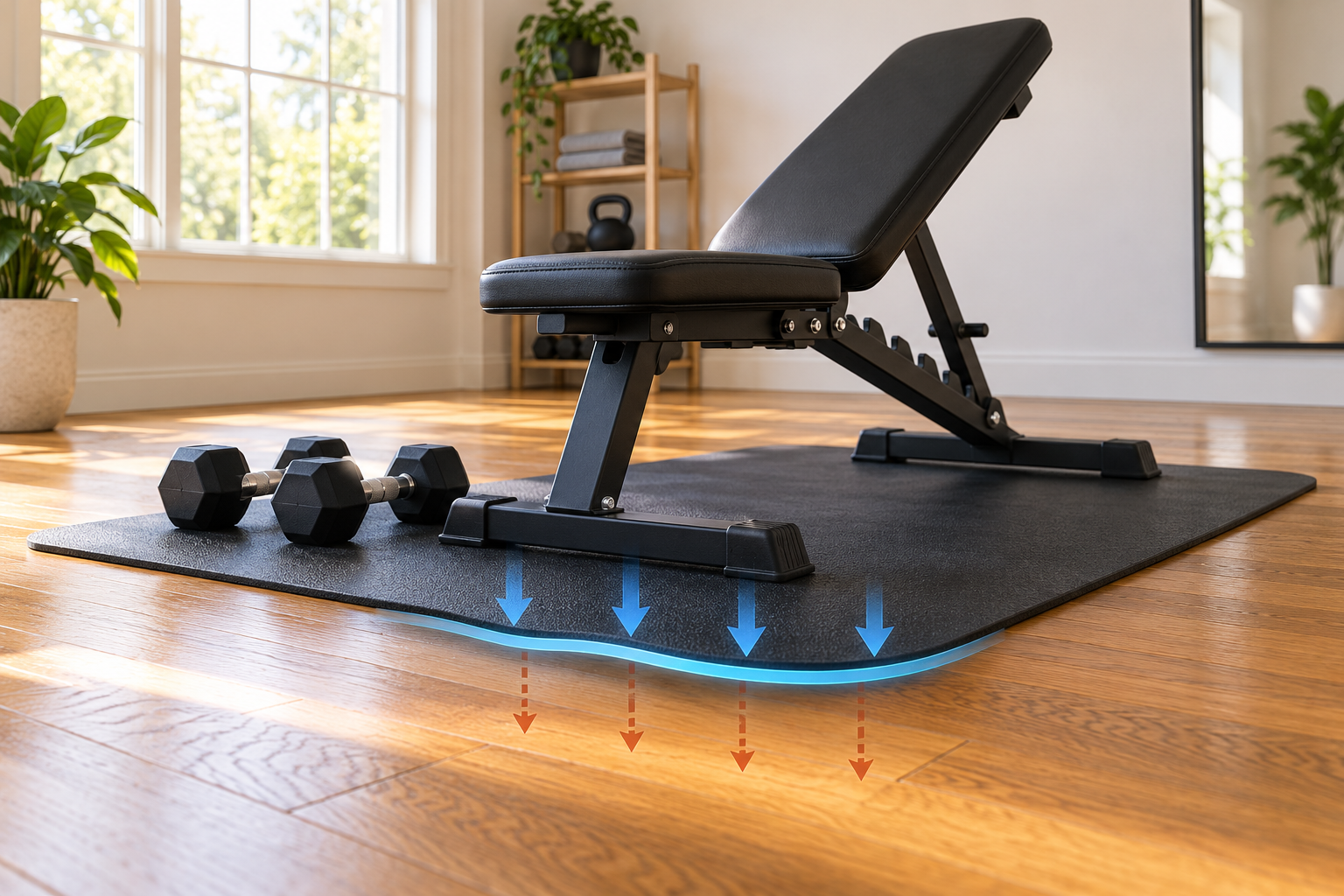
How to Protect a Hardwood Floor Under a Weight Bench
Quick answer: Before putting a weight bench on hardwood, check both the flooring and bench instructions, then choose a clean, non-staining protective layer that stays flat and does not make the bench rock or slide. A mat can reduce direct contact with grit and moving feet, but no generic mat guarantees against dents, finish changes, trapped moisture, or damage under concentrated loads. If the floor maker prohibits a material or the bench manual specifies another setup, follow those instructions.
Why hardwood needs a different check
A weight bench may look stationary during a workout, yet its feet can shift slightly as you sit down, adjust the backrest, or move the bench. Grit caught beneath a foot or mat can act like an abrasive. Concentrated contact can also leave an indentation, while some mat backings or trapped moisture may affect a floor finish. The risks depend on the floor construction, finish, load, bench feet, and the mat material; there is no universal thickness or product that makes every setup safe.
The National Wood Flooring Association recommends using floor-maker-approved care methods and warns that excess moisture can damage wood flooring and its finish. Its guidance is not a bench-specific load rating. Check the flooring warranty or ask the flooring manufacturer about protective mats, rubber or PVC backings, and long-term coverage before leaving a mat in one place.
Choose a protective layer without creating a new problem
- Start with the floor instructions. Look for approved protection materials and any limits on rubber, plastic, adhesives, moisture, or heavy equipment. “Hardwood” includes different finishes and engineered products, so do not assume a rule for one floor applies to yours.
- Use a clean, non-staining material. If the manufacturer approves a mat, choose one intended for the floor type. Avoid unknown backing compounds and adhesive pads. A mat that protects from abrasion can still stain or trap moisture.
- Keep the layer flat and firm. A thick, soft pad may compress differently beneath each foot and make the bench less stable. Confirm that every foot sits fully on one level surface and that no edge curls into a trip hazard.
- Size it for the whole contact area. Place all bench feet on the mat in each permitted adjustment position. If dumbbells or other equipment will sit nearby, protect their contact points separately rather than letting them rest partly on a mat edge.
Set up and inspect before lifting
- Move the bench aside and remove grit from the floor and bench feet with a soft, dry cloth. Do not use a cleaner unless the flooring maker recommends it.
- Lay the selected layer on a dry floor. Check that it lies flat, does not curl, and does not visibly transfer color onto a clean white cloth when tested according to the mat maker’s directions.
- Put the unloaded bench in its intended position. Check that all feet are supported, the bench does not rock, and the mat has not shifted. Recheck after adjusting the backrest.
- Inspect the setup periodically and after moving equipment. Lift the mat to look for dust, moisture, discoloration, or finish changes; follow the floor maker’s cleaning instructions before replacing it.
If the bench rocks, a foot sits partly off the mat, the mat slides, or the floor changes appearance, stop using that arrangement. Do not wedge objects under the frame or add loose layers to compensate. Contact the bench maker about the bench and the flooring maker about the floor.
When a mat is not enough
For a heavy bench that will stay in one location, or a floor with a delicate, newly applied, or unknown finish, get written guidance from the flooring manufacturer or installer before placing equipment. A broad rigid load-spreading panel may seem protective, but its material, edges, and interaction with the floor also need approval. Do not attach a panel to finished flooring with tape or adhesive unless the floor maker explicitly approves it.
The Waxman Adjustable Weight Bench product listing is one example of a bench with a product-specific manual and configuration to check. The listing does not certify compatibility with a particular hardwood floor or mat. Use the instructions supplied with your exact bench and ask Waxman about the contact feet if those directions do not address floor protection.
Product details

Listed price: $269.00 USD (checked October 28, 2026). See the official listing and your included instructions for exact configuration and floor-contact guidance. Price and availability may change; see product page.
View product
Illustration note: The featured AI-generated image is a general illustration, not a photograph of the Waxman product, a flooring test, or a guarantee of protection.
Sources: National Wood Flooring Association, Installation Guidelines; Shaw Floors, Engineered Hardwood Installation Instructions; Waxman product listing.
Leave a Reply