
No products in the cart.
How to Reset a Home Gym After Holiday Guests Use It
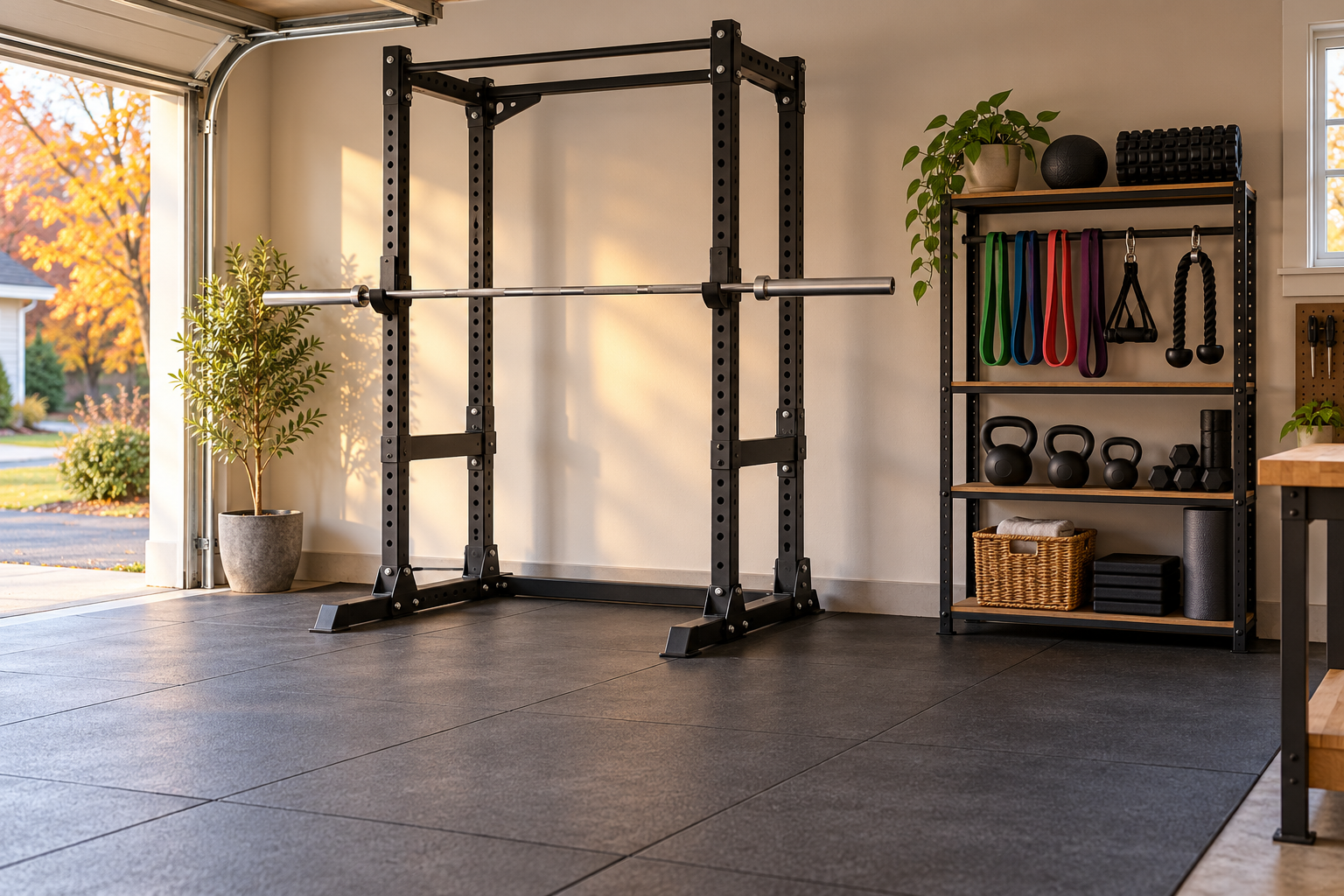
Cover image: AI-generated editorial illustration. It is not a product photograph, a safety inspection, or a depiction of the exact Waxman machine.
Quick answer: After holiday guests have used a home gym, reset the room before your next workout: remove personal items, check equipment against its manual, return attachments and weights to their intended storage, and make a clear path around the stations you will use. If a part is damaged, missing, unusually loose, or behaving differently, stop using that station and contact the manufacturer for model-specific instructions. A visual reset is not a substitute for maintenance or an inspection by a qualified technician.
Shared workouts can make a home gym more useful during the busy holiday season, but different users may adjust seats, handles, safety arms, or cable attachments in different ways. A short, consistent reset helps you notice what has changed and start the next session with the equipment configured for your own plan. It does not prove that a machine is safe or ready for use.
Start with a room reset
Begin by clearing the floor, not by loading a bar. Pick up towels, water bottles, bags, phones, and anything else that does not belong in the training area. Return plates and accessories to the storage locations specified for your equipment. Keep walkways, doors, and access to emergency exits unobstructed. If the room also stores seasonal decorations or guest luggage, move those items outside the workout footprint instead of squeezing around them.
Look for spills, damp patches, loose mats, or cords crossing a walking route. Clean or dry a surface using methods appropriate for that flooring; do not assume a mat will stay in place under every movement. If moisture has reached electrical equipment or an outlet, do not use the affected equipment until the issue has been safely addressed.
Check the equipment the way its manual specifies
Use the operating and maintenance instructions for the exact make and model. A combined rack can have several stations and different adjustment points; the setup for one attachment does not automatically apply to another. Confirm that the parts you plan to use are present and positioned as instructed. Look over visible pins, hooks, cables, pads, handles, and other parts involved in your planned movement. Do not improvise a repair, substitute a pin, or tighten a component by guesswork.
Stop if you see a crack, deformation, fraying, a missing retaining part, a damaged cable, or a component that does not engage as the manual describes. Do not try a light test repetition to see whether a questionable part will hold. Keep others from using the affected station and contact the manufacturer or a qualified service provider. A product’s advertised maximum capacity is not a personal lifting recommendation and does not tell you whether a used, damaged, or incorrectly assembled machine is safe.
Restore adjustments and accessories deliberately
Before a set, check each adjustment that matters for the exercise you chose. Confirm the selected hook, stop, seat, cable handle, or attachment is in the correct position and secured as directed. Remove attachments that are not part of the session so they cannot become a trip hazard or be mistaken for an installed component. Do not assume a guest returned a setting to its prior position.
If you share the equipment, keep a small written note of your usual settings or use any manufacturer-provided adjustment markers. Record only what helps you reproduce your setup; do not use a note as a substitute for checking that a part is properly engaged each time. If a control feels different from before the gathering, stop and consult the manual rather than forcing it.
Make the next session manageable
Choose familiar movements and a modest first session after a break. The CDC says adults can build weekly activity from shorter bouts, and its general guidance recommends muscle-strengthening activity on at least two days each week; those are population-level guidelines, not an individual prescription. The American College of Sports Medicine’s 2026 summary also emphasizes matching resistance training to a person’s goals and abilities. Neither source tells you how much weight to lift on a particular machine.
Write down the stations you plan to use, then set up one at a time. Keep the area around moving parts clear and avoid leaving a loaded bar or cable attachment unattended. If you are unfamiliar with the machine, have a health condition, are returning after an injury, or are unsure how to use a station, get qualified instruction before loading it. Stop if you feel unwell or experience pain that concerns you, and seek appropriate professional advice.
Use a simple reset checklist
- Clear the floor and remove other people’s belongings.
- Check the exact manual for the stations and accessories you intend to use.
- Look for visible damage or missing parts; stop if anything seems wrong.
- Return unused attachments and weights to their specified storage places.
- Confirm the walking route and workout area are clear.
- Choose familiar movements and verify each adjustment before use.
A multi-station setup may suit a household that wants several exercise options in one home gym, but size, instructions, and package contents vary by model. Waxman’s WAX-SM-S02 Smith Machine listing describes a Smith machine, power cage, cable crossover, and pull-up station. Check the current listing and the model’s instructions to decide whether its stations and dimensions suit your space. This article does not review the machine or certify its condition.
Product details
Sources and limits
- CDC, Adding Physical Activity as an Adult (updated December 4, 2025): general weekly activity guidance and advice to choose activities that match ability.
- American College of Sports Medicine, 2026 resistance-training guidelines summary: general recommendations for healthy adults; not a personal program.
- Waxman WAX-SM-S02 product listing and public Store API checked October 17, 2026 for the current displayed price, image, listed dimensions, and stations.
This is general home-gym organization information, not medical advice, a personal exercise prescription, a maintenance manual, or a product test. Drafted with Codex assistance; no hands-on inspection or expert review is claimed.
Leave a Reply