
No products in the cart.
How to Set Up a Dumbbell Chest Fly on a Weight Bench
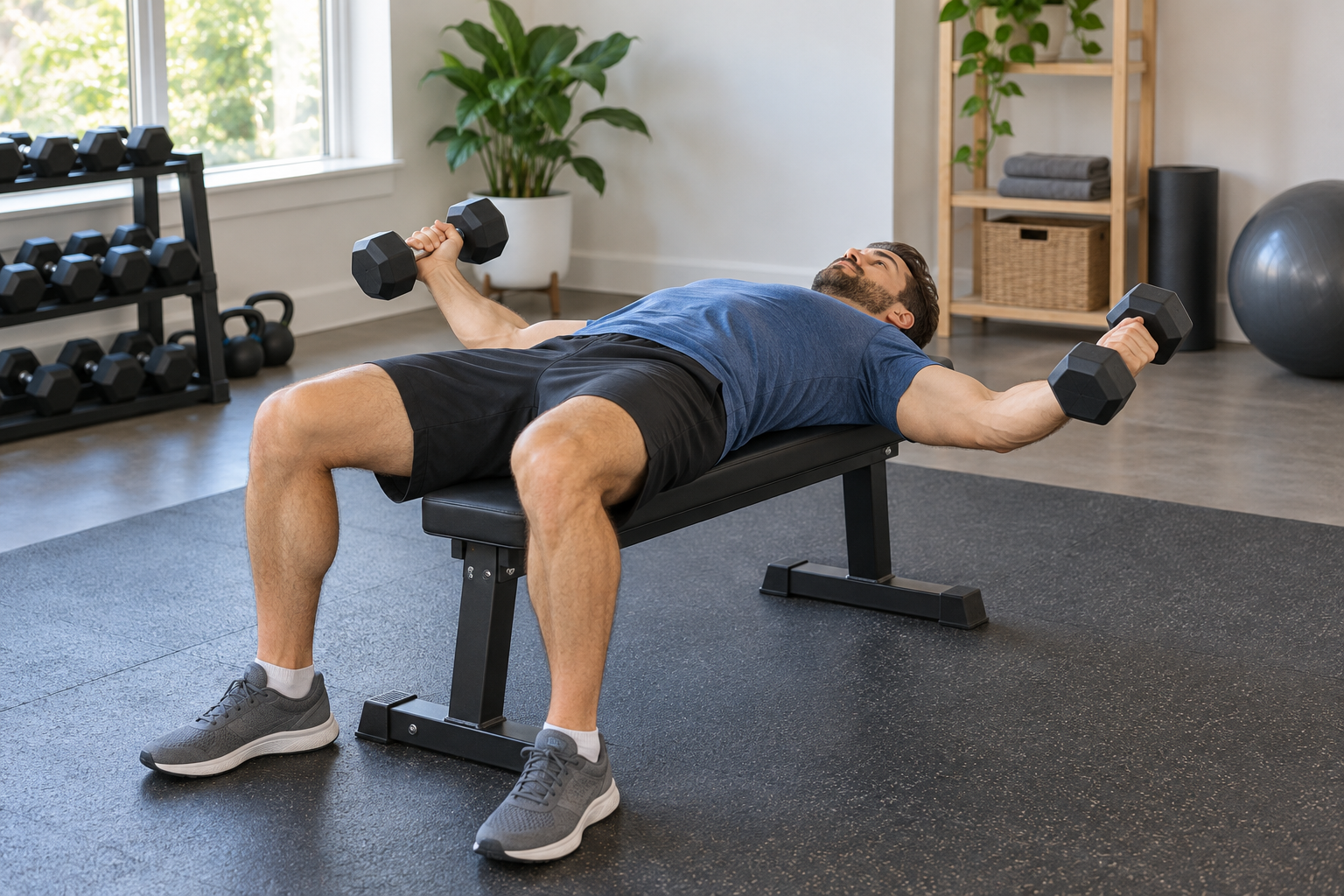
Illustration: AI-generated for general explanation only. It is not a product photo, coaching session, or tested demonstration.
Quick answer: Set up a chest fly on a flat, locked, stable bench; use a load light enough to control; keep a small bend in your elbows and wrists neutral; and lower only as far as your shoulders can move comfortably. Bring the dumbbells back together over your chest without banging them together. If your shoulders hurt, your elbows straighten, or you lose control, stop and choose a smaller range or a different exercise.
A dumbbell fly uses a wide arc, so it feels different from a press. The main setup goal is to keep your body and bench steady while the arms move. The steps below follow the American Council on Exercise’s lying chest fly guide; they are general information, not individualized coaching or medical advice.
Check the bench before picking up weights
For a standard lying chest fly, use a flat bench on a level surface. Confirm that the bench is fully unfolded and any backrest adjustment is locked in the flat position. Push lightly on the frame and pad before loading it: if the bench shifts, rocks, folds, or has a loose adjustment pin, do not exercise on it until the issue is resolved using the manufacturer’s instructions.
Make sure the bench gives your head, upper back, and hips stable support. Plant both feet on the floor. If your feet do not reach comfortably, use a firm, nonslip platform that cannot slide; do not balance on a loose stack of plates or unstable objects. The aim is a steady base, not an exaggerated arch in your lower back.
Choose a manageable load and get into position
- Start lighter than your press weight. A fly uses a longer lever and asks the shoulders to control the dumbbells through a wide path. Begin with light weights or rehearse the arm path without weights. The correct starting load is the one you can lower and raise smoothly without changing your position.
- Set the dumbbells securely. Sit near the middle of the bench with a dumbbell resting on each thigh. Lie back while guiding the weights to a position above your chest, one at a time. If you cannot move them into place without a sudden heave or a loss of control, ask a competent spotter for help or select lighter weights.
- Set your contact points. Keep your head, shoulder blades, and hips supported by the bench. Keep feet planted or supported on a stable riser. Draw the shoulders gently down and back, without forcing them into an uncomfortable position.
- Stack the start position. Hold the dumbbells above the chest, roughly shoulder-width apart. Keep wrists straight and elbows softly bent. That elbow bend should stay nearly the same through the repetition; the motion is an arc from the shoulders, not a press or an elbow curl.
Lower only through a comfortable arc
Inhale as you open the arms slowly and evenly. Keep the palms facing inward or slightly forward according to the grip you can control, and keep the dumbbells level with one another. Stop when your upper arms approach the plane of your torso or sooner if you feel a stretch becoming painful, your shoulders roll forward, or you lose contact with the bench. There is no need to make the dumbbells touch the floor or chase a deep stretch.
Exhale as you bring the weights back along the same wide arc. Finish above the chest with control; do not slam the dumbbells together. Use a smooth tempo that lets you keep the same elbow bend and neutral wrists. If one side descends faster or the weight wobbles, shorten the range, rest, or reduce the load.
Common setup problems and fixes
- Shoulders feel pinched or painful: stop. Try a smaller range only if it is comfortable; persistent or sharp pain is a reason to skip the movement and seek qualified guidance.
- Elbows bend more as the weights come up: the load may be too heavy or the movement may be turning into a press. Reduce the weight and practice a smaller arc.
- Lower back arches to finish repetitions: end the set and reset with a comfortable trunk position. Do not force the ribs upward to lift heavier dumbbells.
- Weights drift over the face or head: stop and regain control over the chest before continuing. If you cannot do that safely, end the set with help rather than dropping the weights.
- The bench shifts: stop using it. Recheck the floor and the bench’s locking mechanism according to its manual; do not wedge it with improvised objects.
When to use a spotter or choose another movement
A spotter can help hand off and receive dumbbells, especially when the weights are difficult to position. Agree on the handoff before starting, and do not ask a spotter to pull on your arms during the repetition. If you train alone, use a load you can safely move into and out of position, and stop before fatigue makes control uncertain.
Chest flies are optional. A dumbbell press, machine movement, or other exercise may be a better choice if the fly’s shoulder range does not feel comfortable. Anyone returning from an injury, managing a health condition, or unsure about safe movement should ask a qualified clinician or fitness professional for individualized advice.
About the bench shown
The Waxman Adjustable Weight Bench is listed at $269.00 USD when checked on October 28, 2026. The official listing describes a three-cushion bench and adjustable backrest; confirm current details on the product page because the page title and description differ on the number of back positions. This product link does not imply that the bench has been tested for this article.

Waxman Adjustable Weight Bench
Listed at $269.00 USD on October 28, 2026. The listing describes three cushions and an adjustable backrest. Check the exact product details before ordering.
Price and availability may change; see the product page.
Sources
- American Council on Exercise, Lying Chest Fly (movement setup and execution).
- Waxman Adjustable Weight Bench official product listing (product identity, listing image, description, and price checked October 28, 2026).
Leave a Reply